


A Science Adventure in the Smoky Mountains: Wildlife Wonders and Fun at Anakeesta

Educational travel experiences that combine hands-on learning with outdoor adventure create lasting memories and deep understanding for students. The Great Smoky Mountains National Park, accessible through the gateway city of Gatlinburg, Tennessee, offers unparalleled opportunities for wildlife conservation student travel and earth science educational trips. At the heart of this educational destination lies Anakeesta, a mountaintop adventure park that transforms traditional field trip experiences into immersive science adventures.
Planning a Smoky Mountains student science trip requires careful consideration of both educational objectives and student engagement. The region provides a living laboratory where students can observe biodiversity, study ecosystems, and experience conservation in action while participating in thrilling educational activities that make learning unforgettable.
Understanding the Smoky Mountains Ecosystem
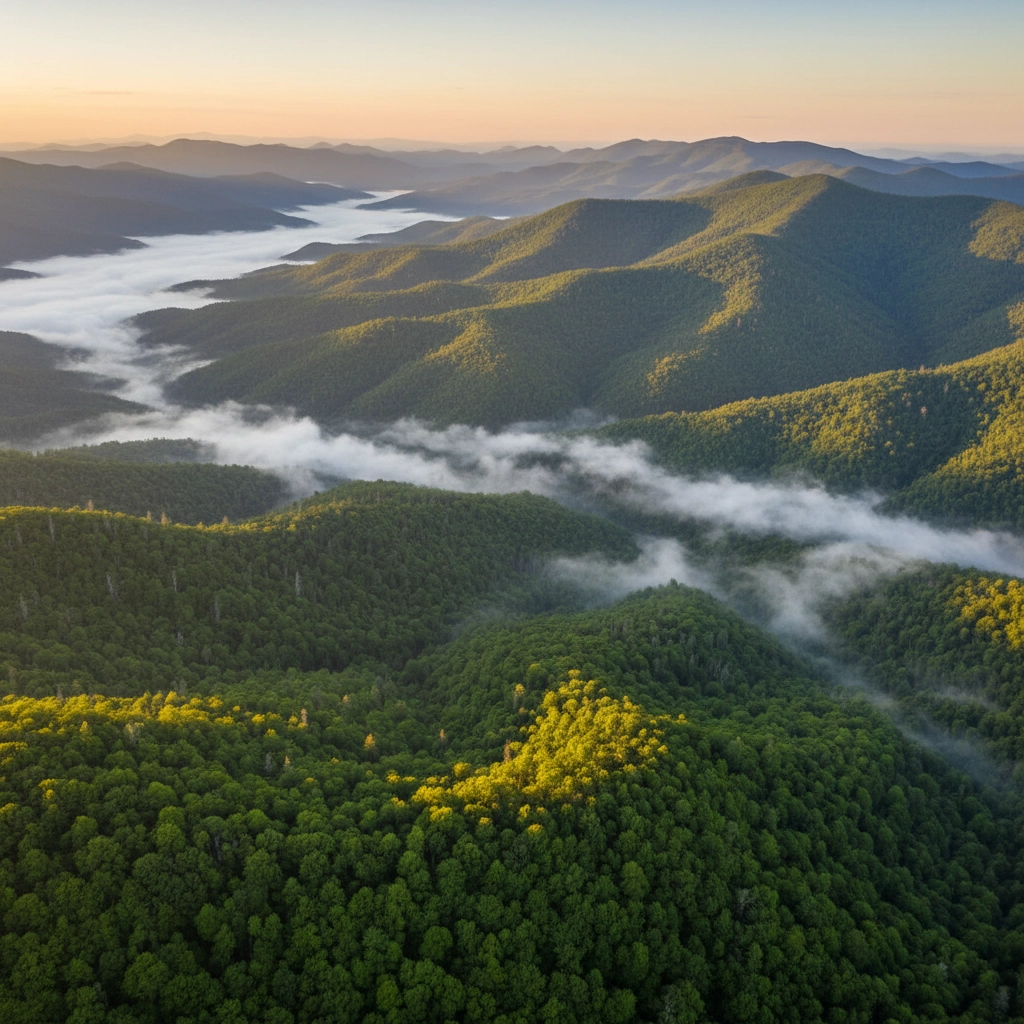
The Great Smoky Mountains National Park represents one of the most biodiverse regions in North America, hosting over 19,000 documented species with scientists estimating that an additional 80,000 to 100,000 undocumented species may exist within the park boundaries. This extraordinary biodiversity makes the Smokies an ideal destination for middle school field trips focused on life sciences and environmental education.
Begin your educational exploration by emphasizing the park's designation as a UNESCO World Heritage Site and International Biosphere Reserve. These designations highlight the global significance of the ecosystem students will be studying. The park's elevation range from 875 to 6,643 feet creates diverse habitats that support different species communities, providing excellent opportunities for students to observe how environmental factors influence wildlife distribution.
The Appalachian Mountains' ancient geological history offers additional learning opportunities. Encourage students to observe rock formations, understand erosion patterns, and recognize how geological processes have shaped the landscape over millions of years. These observations connect directly to earth science educational trip objectives and provide concrete examples of concepts typically taught in classroom settings.
Wildlife Observation and Conservation Learning
Wildlife viewing in the Great Smoky Mountains requires preparation, patience, and respect for natural habitats. The park hosts approximately 65 mammal species, 200 bird species, and numerous reptiles and amphibians, creating abundant opportunities for hands-on learning trips focused on animal behavior and habitat requirements.
Black bears represent the park's most iconic wildlife, with an estimated population of 1,500 bears throughout the region. Establish clear safety protocols for bear encounters and emphasize the importance of maintaining proper distances from all wildlife. Students should understand that observing wildlife requires responsible behavior that prioritizes both human safety and animal welfare.
Early morning and late afternoon provide optimal wildlife viewing opportunities. Create structured observation activities that encourage students to record animal behaviors, identify species, and note habitat characteristics. These activities develop scientific observation skills while fostering appreciation for wildlife conservation efforts.
Bird watching offers excellent educational value throughout the year. The park serves as a critical stopover point for migratory species and provides permanent habitat for numerous resident birds. Provide students with field guides and encourage them to document species diversity, migration patterns, and adaptation strategies observed during their visit.
Anakeesta's Educational Adventures
Anakeesta transforms outdoor education through innovative attractions that combine scientific learning with memorable experiences. Located 600 feet above Gatlinburg, this mountaintop adventure park offers unique perspectives on forest ecosystems and mountain environments that enhance traditional wildlife conservation student travel programs.
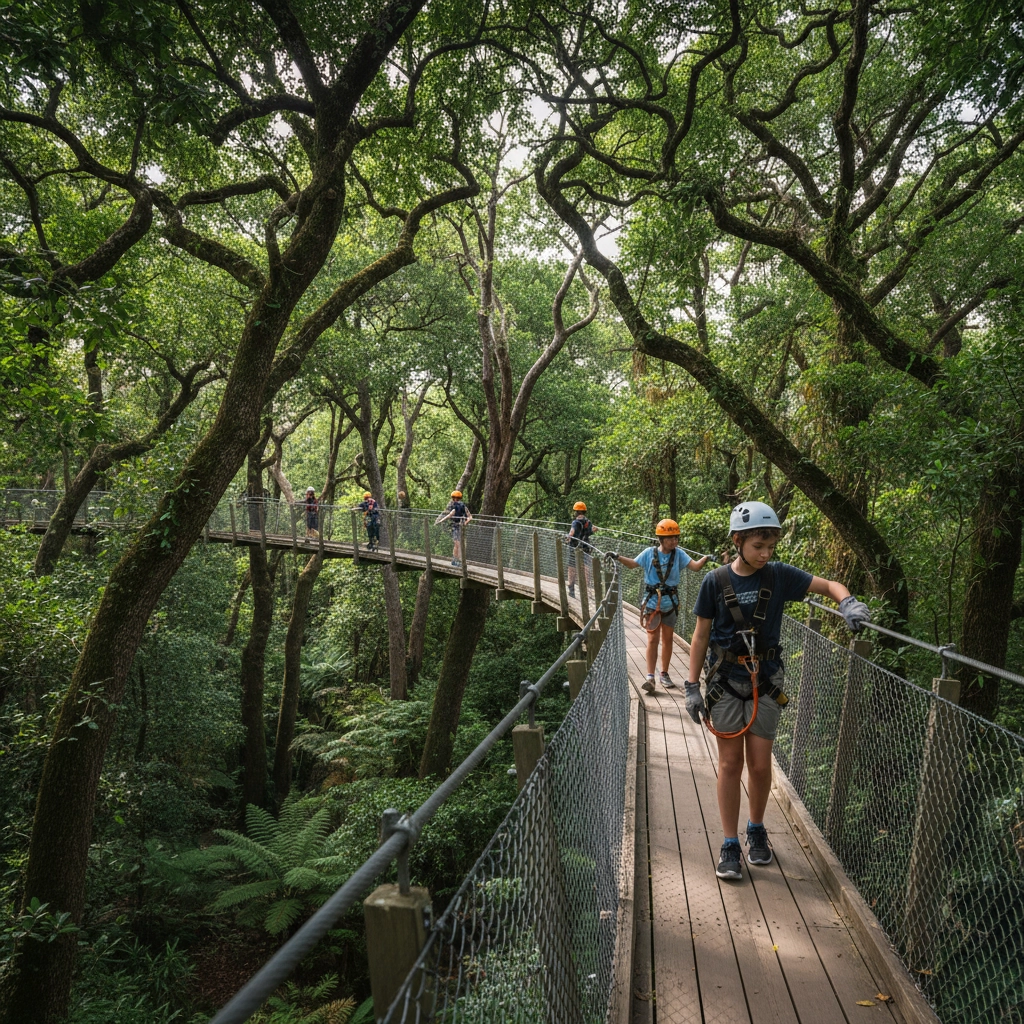
The TreeTop Skywalk provides an extraordinary opportunity to experience forest canopy ecosystems firsthand. This 16-bridge walkway, suspended 50 to 60 feet above the forest floor, allows students to observe the forest's vertical structure and understand how different species utilize canopy environments. Encourage students to identify plant species, observe bird behavior, and recognize how elevation affects ecosystem characteristics.
Vista Gardens serves as an outdoor classroom for botanical education. This multi-sensory botanical garden showcases native Smoky Mountain flora while providing scenic overlooks of the surrounding landscape. Students can observe plant adaptations, study ecological relationships, and understand how elevation and microclimate influence plant communities. The garden environment offers controlled observation opportunities that complement wilderness experiences within the national park.
AnaVista Tower, standing as Gatlinburg's highest accessible point, provides 360-degree views essential for understanding landscape-scale ecological processes. From this vantage point, students can observe weather patterns, identify geographic features, and appreciate the vast scale of protected wilderness areas. These observations support curriculum connections related to geography, meteorology, and environmental science.
Hands-On Science Activities
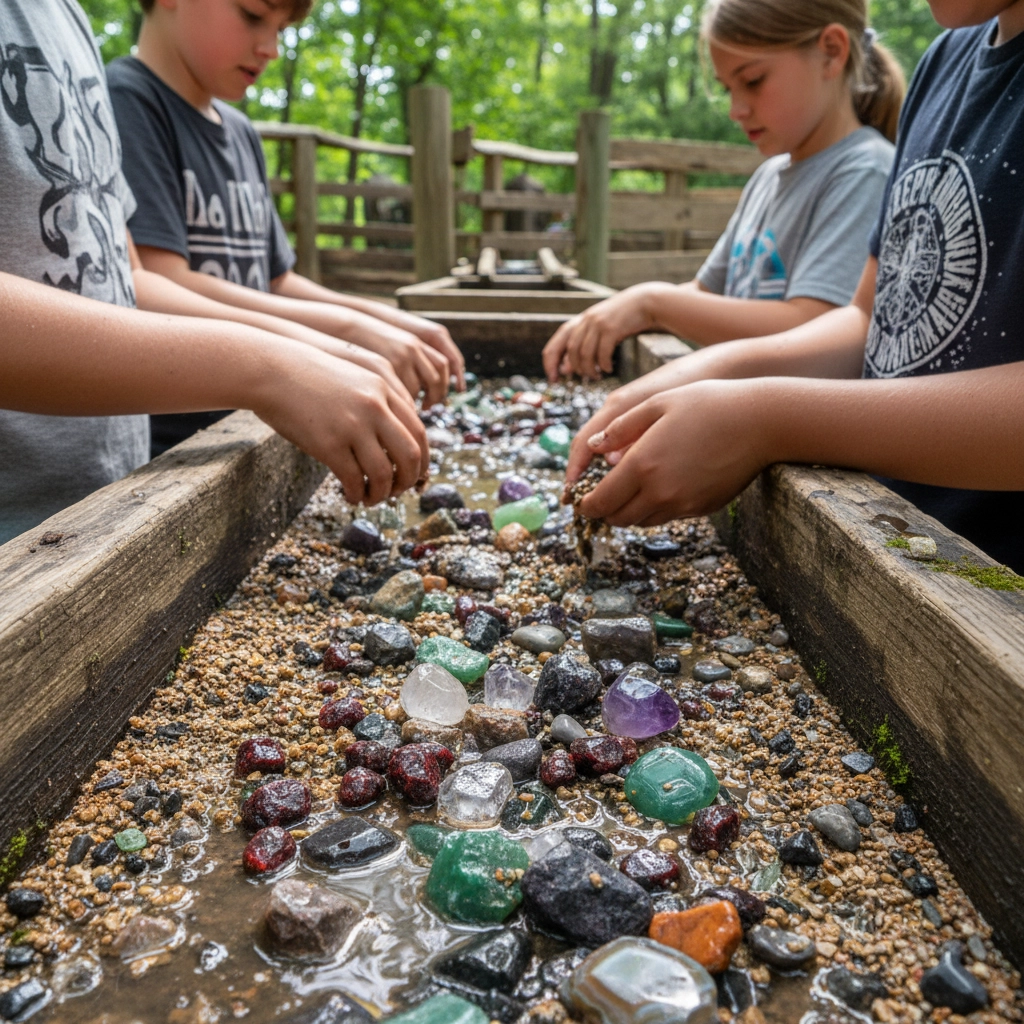
Gem mining experiences at Anakeesta introduce students to geological concepts through interactive discovery. Students learn about mineral formation, rock types, and the geological processes that created the Appalachian Mountains. This activity connects directly to earth science educational trip objectives while providing tangible souvenirs that reinforce learning long after the trip concludes.
The park's elevation changes, accessed through the Chondola transportation system, demonstrate how environmental factors change with altitude. Students can observe temperature differences, vegetation changes, and atmospheric conditions that vary with elevation. These observations provide concrete examples of environmental gradients and their effects on living organisms.
BirdVenture and other wildlife-themed areas offer structured learning environments where students can safely explore animal behavior concepts without disturbing natural habitats. These controlled environments allow for detailed observation and discussion that might not be possible during wildlife viewing in natural settings.
Encourage students to maintain detailed field journals throughout their Anakeesta experience. Provide structured observation sheets that guide students to record specific details about plant species, animal observations, geological features, and environmental conditions. These records serve as valuable resources for post-trip classroom discussions and project development.
Curriculum Integration and Learning Objectives
A successful Smoky Mountains student science trip requires clear alignment with educational standards and learning objectives. The region supports curriculum connections across multiple scientific disciplines, making it an ideal destination for interdisciplinary learning experiences.
Life science objectives connect directly to biodiversity observations, ecosystem relationships, and conservation concepts. Students observe predator-prey relationships, study habitat requirements, and understand how human activities impact wildlife populations. These real-world observations reinforce classroom concepts while demonstrating the relevance of scientific knowledge to current conservation challenges.
Earth science connections include geological formations, weather patterns, water cycles, and erosion processes. The Smoky Mountains provide visible evidence of these processes in action, allowing students to observe concepts that might otherwise remain abstract. Encourage students to identify rock types, observe stream formation, and recognize how geological processes continue to shape the landscape.
Environmental science themes emerge naturally through discussions of park management, conservation efforts, and human impacts on natural systems. Students can explore how national park designation protects ecosystems, understand the challenges of balancing tourism with conservation, and appreciate the complexity of environmental management decisions.
Planning Considerations for Educational Success
Successful educational travel experiences require thorough preparation that addresses safety, logistics, and learning objectives. Begin planning your Smoky Mountains educational adventure well in advance to ensure optimal experiences for all participants.
Weather preparation proves essential for outdoor educational activities. The mountains experience rapidly changing conditions, and temperatures can vary significantly with elevation changes. Advise students to bring layered clothing, rain protection, and appropriate footwear for outdoor activities. Emphasize that weather conditions can enhance learning opportunities by demonstrating how animals and plants adapt to environmental changes.
Safety protocols must address both wilderness activities and adventure park attractions. Establish clear guidelines for wildlife encounters, hiking safety, and group management procedures. Ensure all participants understand emergency procedures and maintain appropriate supervision ratios throughout all activities.
Group size considerations affect both educational effectiveness and safety management. Smaller groups allow for more personalized attention and flexible programming, while larger groups may require additional planning and coordination. Work with Anakeesta staff to determine optimal group sizes for specific attractions and activities.
Transportation logistics require careful coordination between park access, Anakeesta activities, and accommodation arrangements. Consider staying in Gatlinburg to minimize travel time and maximize educational opportunities. Research available educational lodging options that can accommodate groups and provide meeting spaces for evening program sessions.
Maximizing Educational Impact
Post-trip follow-up activities ensure that educational experiences create lasting learning impact. Encourage students to organize their field observations, research species they encountered, and present findings to classmates who didn't participate in the trip. These activities reinforce learning while building presentation and research skills.
Connect trip experiences to current environmental issues and conservation efforts. Students can research ongoing scientific studies in the Smoky Mountains, explore career opportunities in natural resource management, or investigate how climate change affects mountain ecosystems. These connections demonstrate the relevance of their educational travel experience to broader scientific and environmental challenges.
Consider developing partnerships with local educational organizations or park staff to extend learning opportunities beyond the initial trip. Some students may develop strong interests in specific aspects of the experience and benefit from additional resources or mentorship opportunities.
Document the educational journey through photography, videography, and written reflections. These materials serve as valuable resources for future trip planning while creating lasting memories for participating students. Share documentation with parents, administrators, and potential future participants to demonstrate the educational value of hands-on learning trips.
The combination of Great Smoky Mountains National Park's natural wonders and Anakeesta's innovative educational attractions creates unparalleled opportunities for hands-on science learning. This educational travel experience transforms abstract classroom concepts into concrete understanding while fostering appreciation for natural systems and conservation efforts. Students return from their Smoky Mountains adventure with enhanced scientific knowledge, stronger observation skills, and deeper environmental awareness that influences their perspectives throughout their educational journey.
For educators considering similar educational travel experiences, the Smoky Mountains and Anakeesta combination provides a proven model for successful outdoor education that engages students while achieving meaningful learning objectives.

Comments