


From Geology to Service: Why the Grand Canyon is the Top Choice for Student Group Travel Organizers

The Grand Canyon stands as one of the most remarkable natural classrooms on Earth. For student group travel organizers seeking a destination that delivers both scientific depth and meaningful community impact, this iconic landscape offers an unparalleled combination of geological education, service learning opportunities, and well-established group travel infrastructure. With nearly five million visitors annually, the Grand Canyon has refined its capacity to host educational groups: and the results speak for themselves.
This guide outlines why the Grand Canyon should be at the top of your list when planning your next student expedition, and how to maximize both the learning and service components of your trip.
The Living Geology Textbook
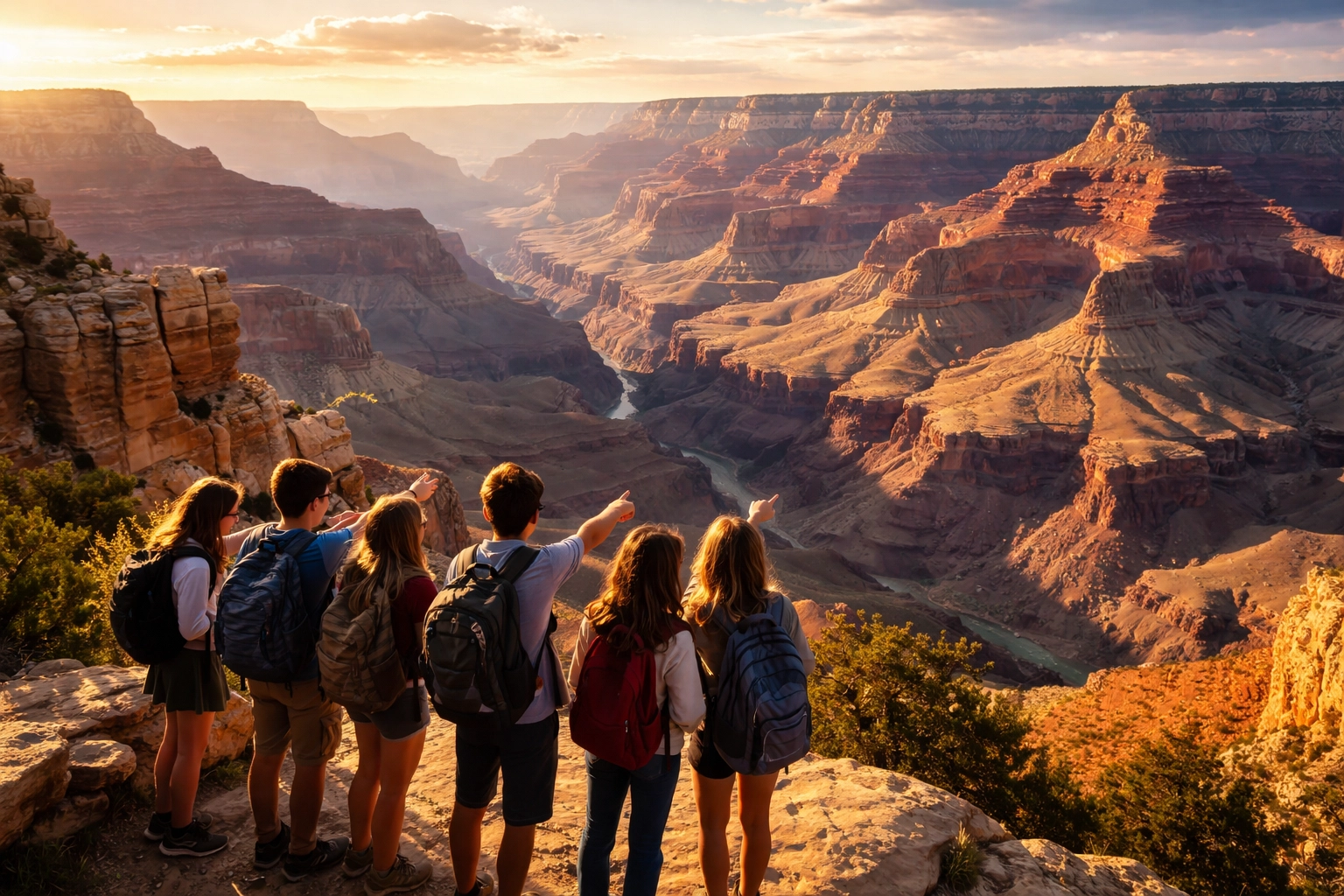
Few places on the planet expose Earth's history as dramatically as the Grand Canyon. The layered rock formations visible from rim to river represent nearly two billion years of geological time: a timeline students can literally see, touch, and study.
Key geological learning opportunities include:
Stratigraphy studies: Students can observe and identify distinct rock layers, from the ancient Vishnu Basement Rocks at the canyon's base to the Kaibab Limestone at the rim.
Erosion and weathering analysis: The Colorado River's carving power demonstrates erosion processes in real-time.
Fossil identification: Multiple layers contain marine fossils, providing evidence of ancient seas that once covered the region.
Plate tectonics context: Discussions of how uplift and erosion shaped the landscape bring abstract concepts to life.
For earth science curricula, the Grand Canyon transforms theoretical knowledge into tangible experience. Students who hike the trails or observe from designated viewpoints gain a visceral understanding of geological processes that no textbook can replicate.
Beyond the South Rim: Expanding Your Geological Curriculum
While the South Rim serves as the primary destination for most student groups, effective trip organizers recognize the value of incorporating additional sites into the itinerary.
Consider including these locations:
Sedona: The red rock formations here offer contrasting geological features and discussions about iron oxide content in sandstone.
Sunset Crater: This volcanic cinder cone provides an excellent opportunity to study volcanic geology and compare formation processes.
Desert View Watchtower: Students gain panoramic perspectives while learning about the cultural history of the region.
By diversifying your geological stops, you create a richer educational experience that addresses multiple earth science standards and keeps students engaged throughout the journey.
Service Learning: Making a Lasting Impact
The Grand Canyon region offers more than just academic learning: it provides authentic opportunities for students to contribute meaningfully to local communities. Service learning transforms passive tourism into active citizenship, and the Grand Canyon area has established programs designed specifically for student groups.
Service learning opportunities include:
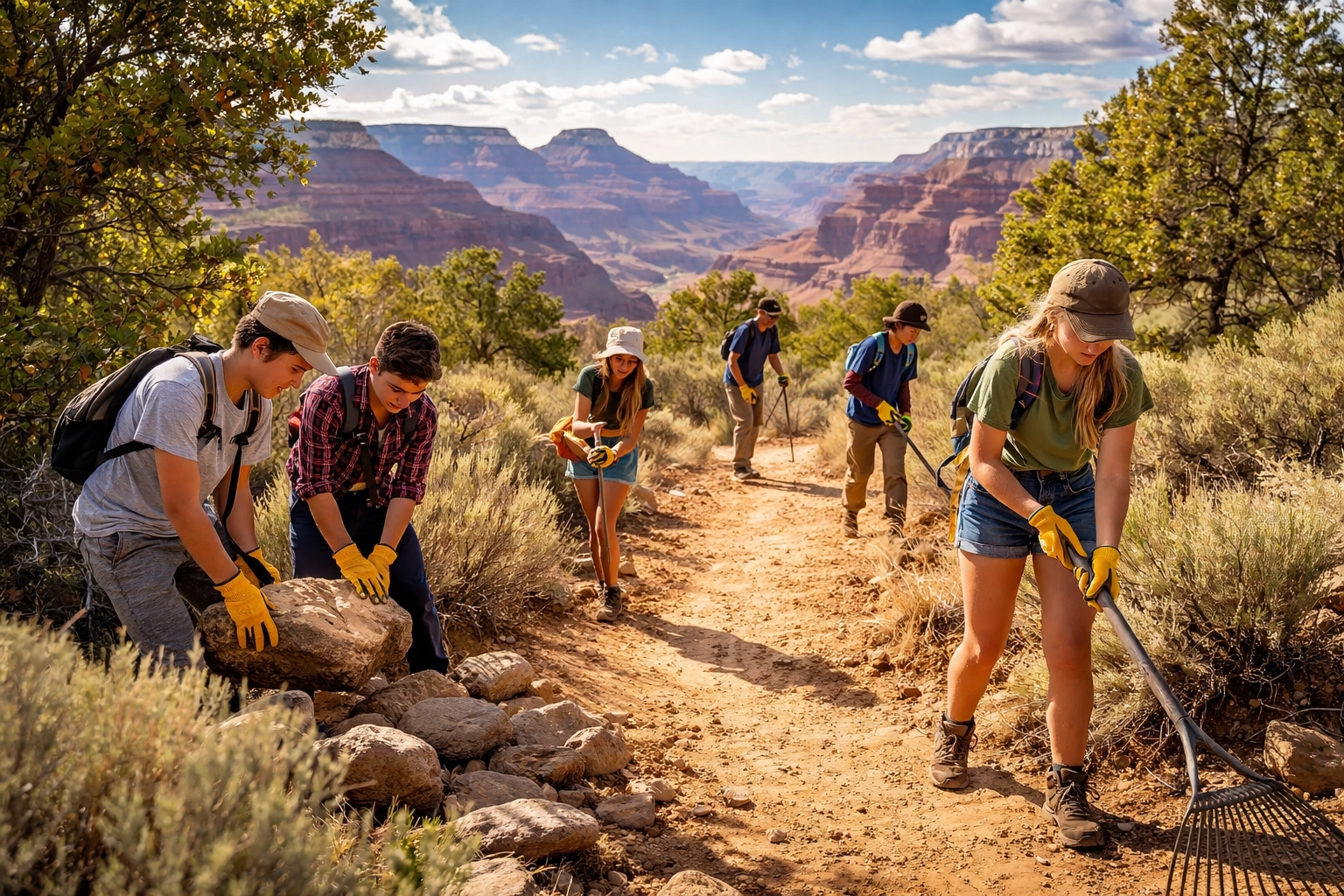
Conservation projects: Trail maintenance, invasive species removal, and habitat restoration work.
Food security initiatives: Collaboration with local NGOs to support community food programs.
Educational outreach: Assisting with visitor education programs and environmental awareness campaigns.
Sustainability projects: Working on initiatives that address tourism's environmental impact and promote economic sustainability for local communities.
These service components help students explore the relationship between tourism and economic sustainability while contributing to work that supports food security and educational needs in the region.
Why Service Learning Matters for Your Students
Integrating service learning into your Grand Canyon trip accomplishes several important educational objectives:
Develops civic responsibility: Students understand their role in community stewardship.
Builds empathy: Direct engagement with local needs creates lasting perspective shifts.
Enhances retention: Active participation reinforces academic content.
Strengthens college applications: Documented service hours demonstrate character and commitment.
Creates shared purpose: Working together toward common goals builds group cohesion.
Ensure that your service components are age-appropriate, well-supervised, and clearly connected to your educational objectives. Preparation before the trip: including discussions about the communities you'll serve: maximizes the impact of these experiences.
Cultural Immersion: Connecting with Native American Heritage
The Grand Canyon region is home to multiple Native American tribes, and responsible student group travel includes opportunities for cultural education and respectful engagement.
Cultural learning experiences may include:
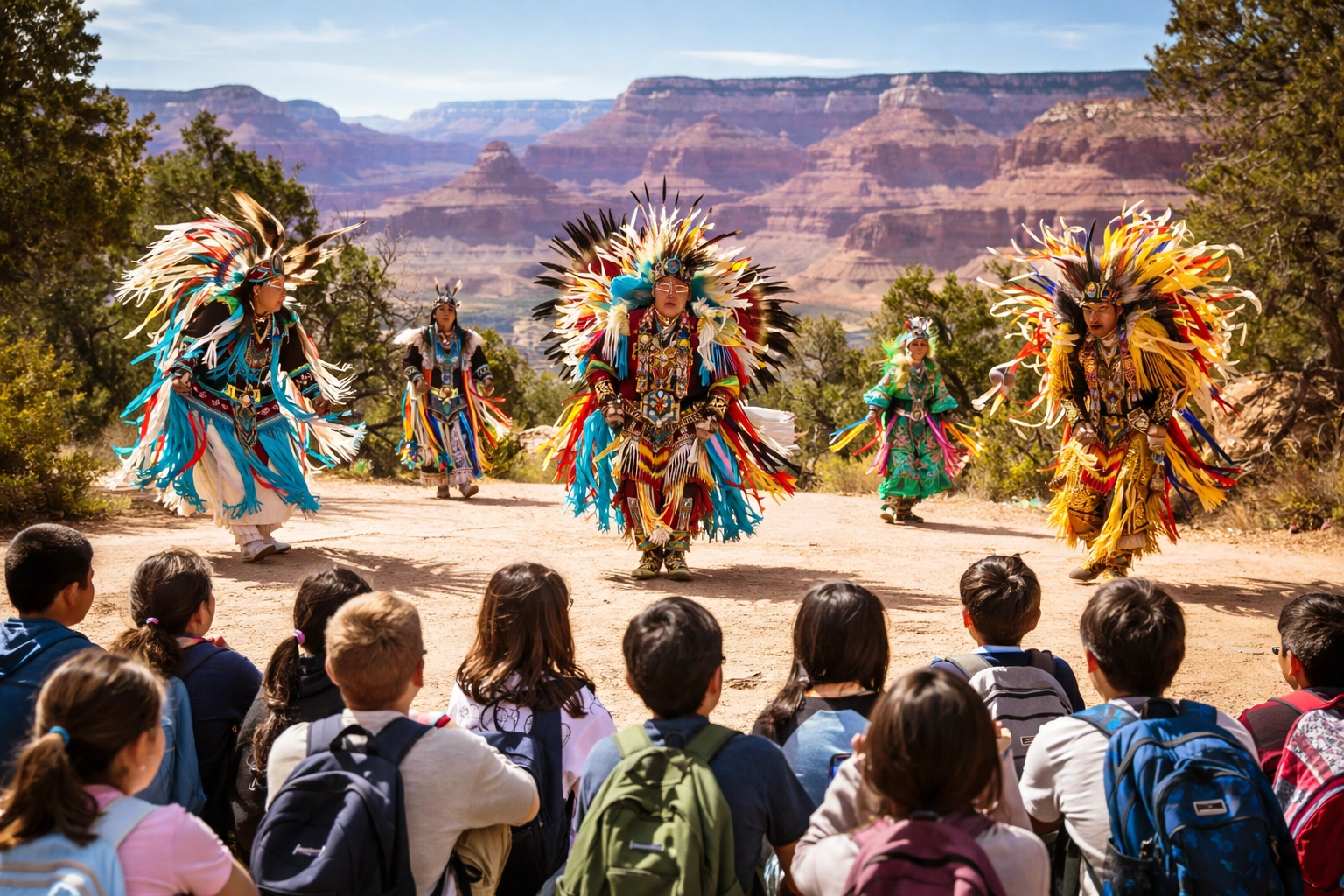
Hualapai American Indian Reservation visits: Walking tours of tribal dwellings and observation of live Native American performances.
Historical context discussions: Understanding the canyon's significance to indigenous peoples long before it became a national park.
Art and craftsmanship appreciation: Learning about traditional techniques and their cultural meanings.
When planning cultural components, prioritize authenticity and respect. Prepare students in advance with discussions about cultural sensitivity, appropriate behavior, and the importance of listening and learning rather than treating cultural experiences as entertainment.
Logistics and Planning: What Organizers Need to Know
Effective trip planning requires attention to practical details. The Grand Canyon's established infrastructure makes group travel manageable, but advance preparation remains essential.
Transportation and Accommodation:
The Grand Canyon Railway offers specialized group rates, including up to 35% discounts for students in Coach Class. Teachers and chaperones often ride free, making this an economical option for school groups. For groups of 20 or more passengers, discounted rates extend to accommodations and meals.
Budget Considerations:
Group discounts typically begin at $305 per person for quad occupancy through various tour operators.
Flexible itineraries allow organizers to customize experiences based on budget constraints.
Early booking secures better rates and preferred dates.
Safety Protocols:
Conduct thorough pre-trip briefings covering trail safety, weather awareness, and emergency procedures.
Establish clear communication systems including designated meeting points and check-in schedules.
Verify medical information for all participants and ensure appropriate supplies are available.
Confirm chaperone ratios meet or exceed recommended guidelines.
Review park regulations and ensure all participants understand expectations.
Building Your Ideal Grand Canyon Curriculum
The most successful student trips integrate geology, service, and cultural learning into a cohesive experience. Consider the following framework when designing your itinerary:
Day One: Arrival and orientation. Establish expectations, review safety protocols, and introduce geological concepts students will encounter.
Day Two: Geological exploration. Guided hikes with intentional stops for rock layer identification, fossil hunting, and erosion observation.
Day Three: Service learning component. Partner with local organizations for meaningful contribution to conservation or community programs.
Day Four: Cultural immersion. Respectful engagement with Native American heritage and history.
Day Five: Synthesis and departure. Reflection activities connecting all components of the experience.
This structure ensures balanced coverage of educational objectives while maintaining appropriate pacing for student energy levels.
Preparing Your Students for Success
Before departure, invest time in comprehensive preparation:
Pre-trip curriculum: Introduce geological concepts, regional history, and cultural context.
Physical preparation guidance: Ensure students understand the physical demands of hiking at elevation.
Packing checklists: Provide detailed lists appropriate for desert climate and outdoor activities.
Behavioral expectations: Clearly communicate standards for conduct during all trip components.
Parent communication: Share detailed itineraries and emergency contact information with families.
Thorough preparation maximizes learning opportunities while minimizing potential problems during the trip.
Partner with Experienced Organizers
Planning a multi-faceted educational trip requires expertise in logistics, curriculum alignment, and student safety. Working with experienced educational travel providers ensures your Grand Canyon expedition meets its full potential.
Appleseed Expeditions specializes in crafting comprehensive Grand Canyon experiences that combine geological education, service learning, and cultural immersion. Our team handles the logistical complexities so you can focus on your students' learning outcomes.
Your Next Steps
The Grand Canyon offers student group travel organizers an exceptional opportunity to deliver transformative educational experiences. By combining rigorous geological study with meaningful service learning and respectful cultural engagement, you create trips that students remember: and learn from: for years to come.
Begin your planning process early, prioritize safety and preparation, and partner with organizations that share your commitment to educational excellence. The Grand Canyon awaits, ready to serve as the ultimate outdoor classroom for your students.

Comments