


Marine Science Marvels: Why Your Next Student Trip to Belize Should Include the Barrier Reef

Preparing students for careers in environmental science, marine biology, and conservation requires more than textbook learning: it demands direct engagement with living ecosystems where theoretical concepts transform into tangible research experiences. A school trip to Belize offers exactly this opportunity, providing access to the Mesoamerican Barrier Reef, the world's second-largest barrier reef system and a UNESCO World Heritage site that functions as an unparalleled outdoor classroom for marine science education.
The Mesoamerican Barrier Reef: A Living Laboratory
The Mesoamerican Barrier Reef stretches over 600 miles along the coasts of Mexico, Belize, Guatemala, and Honduras, but Belize offers the most accessible and well-developed educational infrastructure for student groups. This massive reef system supports over 500 species of fish, 65 species of stony corals, and countless invertebrates, making every snorkeling session a lesson in biodiversity and ecological complexity.
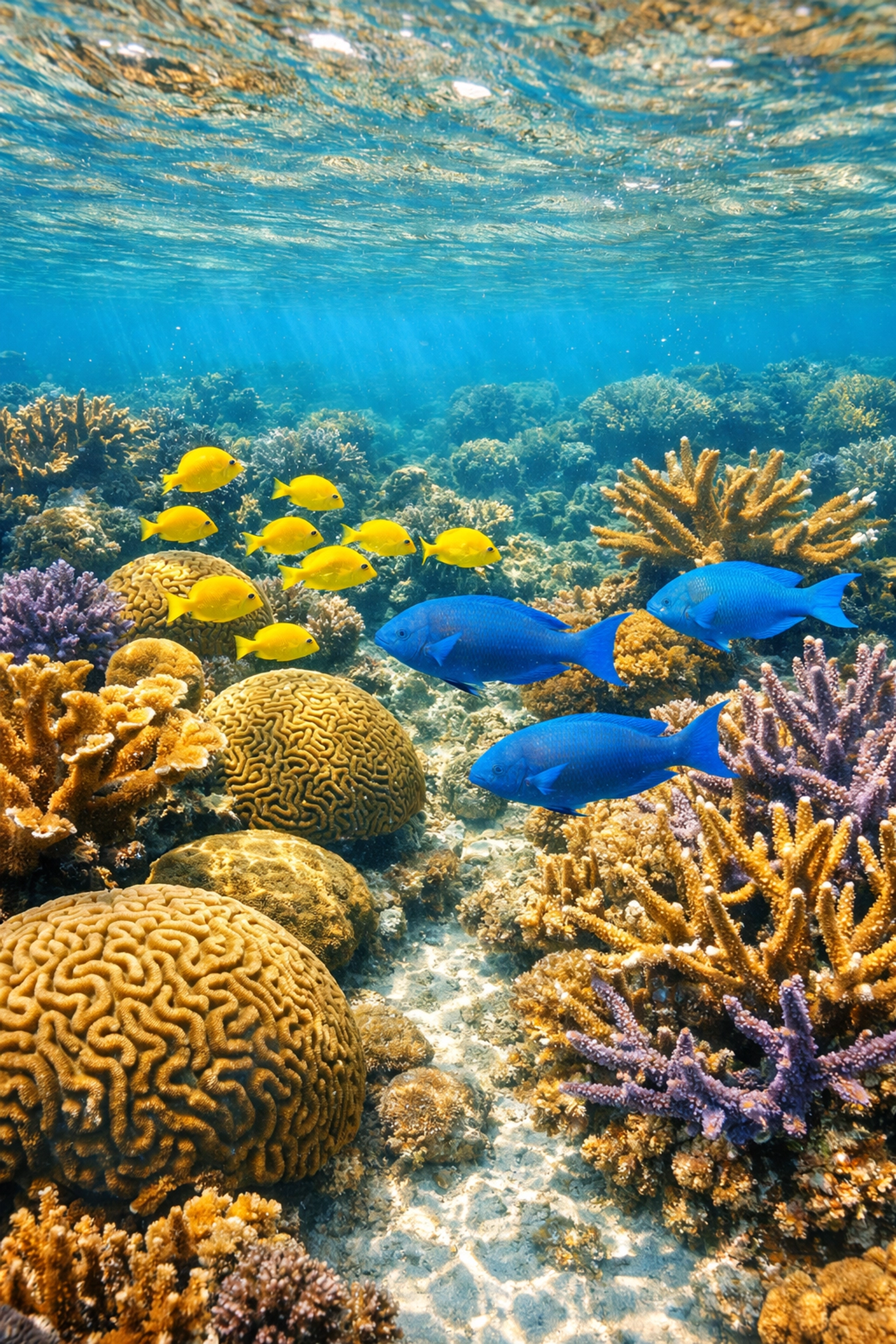
Unlike artificial aquarium environments or video presentations, an educational trip to Belize allows students to observe marine ecosystems functioning in real time. Students witness predator-prey relationships as they unfold, observe symbiotic partnerships between cleaner fish and larger species, and document how different coral species compete for space and sunlight. These direct observations cement ecological concepts that often remain abstract in traditional classroom settings.
The reef's integration with adjacent ecosystems creates exceptional learning opportunities for understanding environmental connectivity. Mangrove forests function as critical nursery habitats for juvenile reef fish, while coastal systems connect ecologically to inland rainforests through watersheds that deliver nutrients to offshore environments. This interconnectedness enables students to study complete environmental cycles and understand how human activities on land: deforestation, agricultural runoff, coastal development: directly impact marine health hundreds of meters offshore.
The Great Blue Hole: Geology Meets Marine Science
No student trip to Belize would be complete without exploring the Great Blue Hole, a massive underwater sinkhole measuring over 300 meters across and 125 meters deep. This geological formation offers students a unique window into Earth's climate history and the processes that shape our planet's surface.
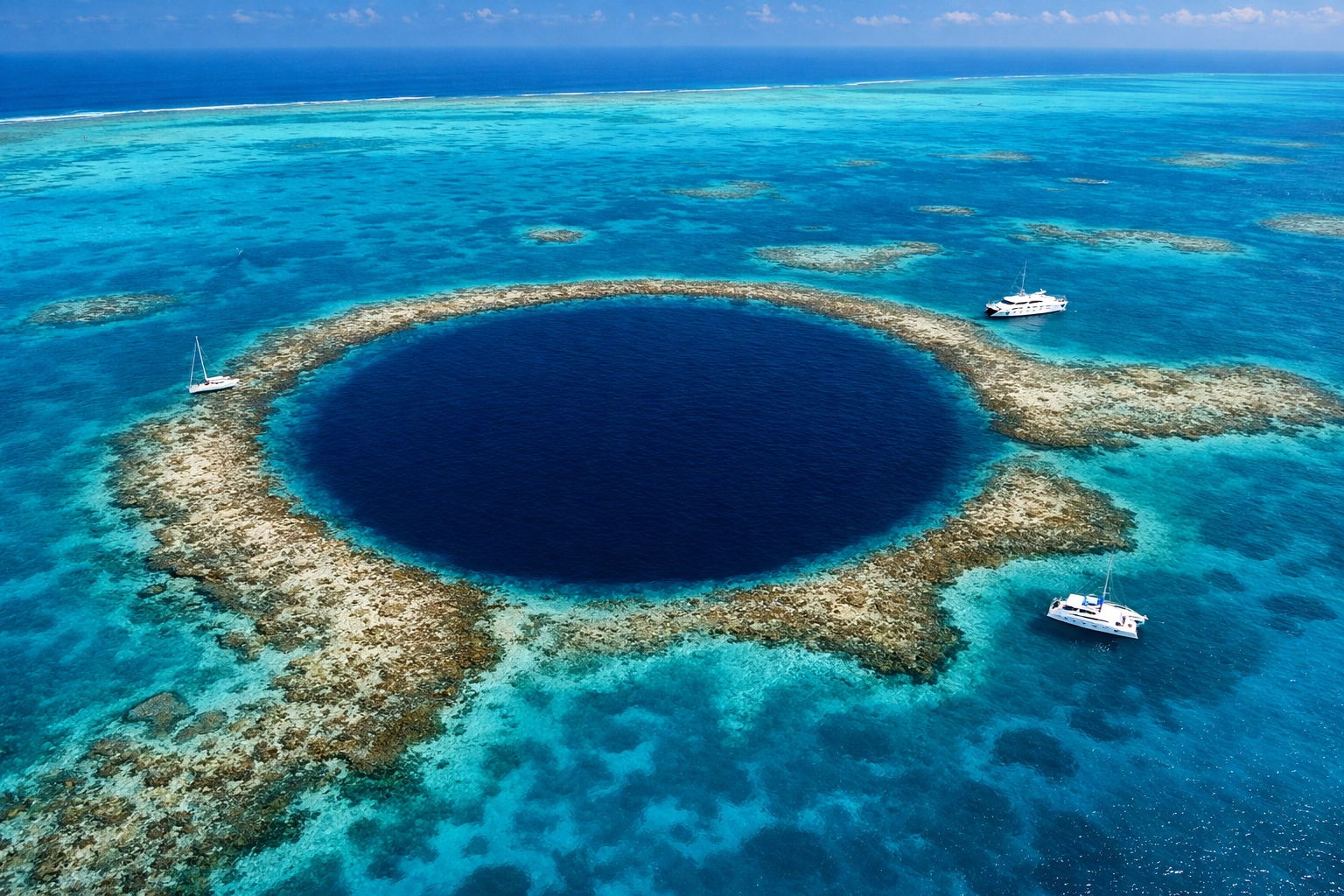
The Great Blue Hole formed during several episodes when sea levels were considerably lower, allowing freshwater to dissolve the limestone bedrock and create extensive cave systems. As glaciers melted and sea levels rose at the end of the last ice age, these cave systems flooded, eventually collapsing to create the circular formation visible today. Students can observe the distinct layers within the hole's walls, each representing different geological periods and providing evidence of past climate conditions.
From a marine science perspective, the Great Blue Hole presents a fascinating study in how organisms adapt to extreme environmental gradients. The oxygen-poor conditions in deeper sections create unique habitats where only specialized species survive, while the upper sections teem with Caribbean reef sharks, midnight parrotfish, and other species typical of Belizean waters. Encourage students to compare the biodiversity at different depths and develop hypotheses about why certain species thrive in specific zones.
Professional-Grade Research Methodologies
Programs designed for student groups in Belize teach professional-grade research techniques that mirror authentic scientific practice. Students master standardized coral health assessment methods, learning to identify coral species, establish monitoring transects using GPS coordinates, and document bleaching events and disease symptoms. These skills directly align with methods employed by marine biologists conducting long-term reef monitoring worldwide.
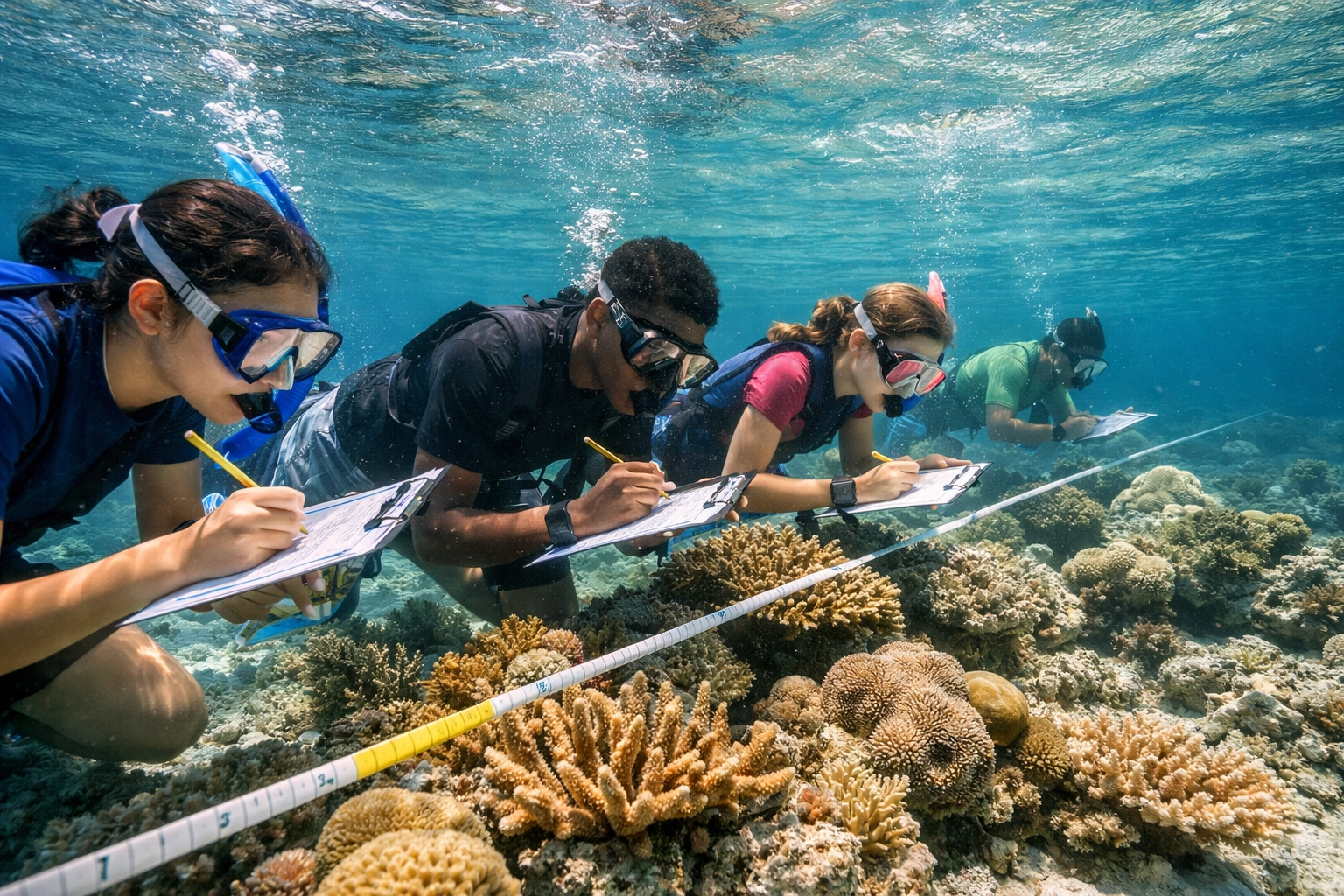
Begin by ensuring students understand proper survey protocols before entering the water. Teach them to conduct biodiversity surveys using point-count techniques, where researchers identify and count indicator species like parrotfish, grouper, snapper, and angelfish within defined survey areas. These indicator species reflect ecosystem health because their populations respond predictably to environmental changes, making them valuable monitoring tools.
Students also learn water quality testing procedures, collecting samples to measure salinity, pH, temperature, dissolved oxygen, and nutrient levels. Discuss how these parameters interact to influence coral health and reef resilience. Create opportunities for students to analyze their collected data each evening, graphing results, identifying patterns, and drawing conclusions about reef conditions: essential skills for any future scientist.
Marine Research Infrastructure and Program Design
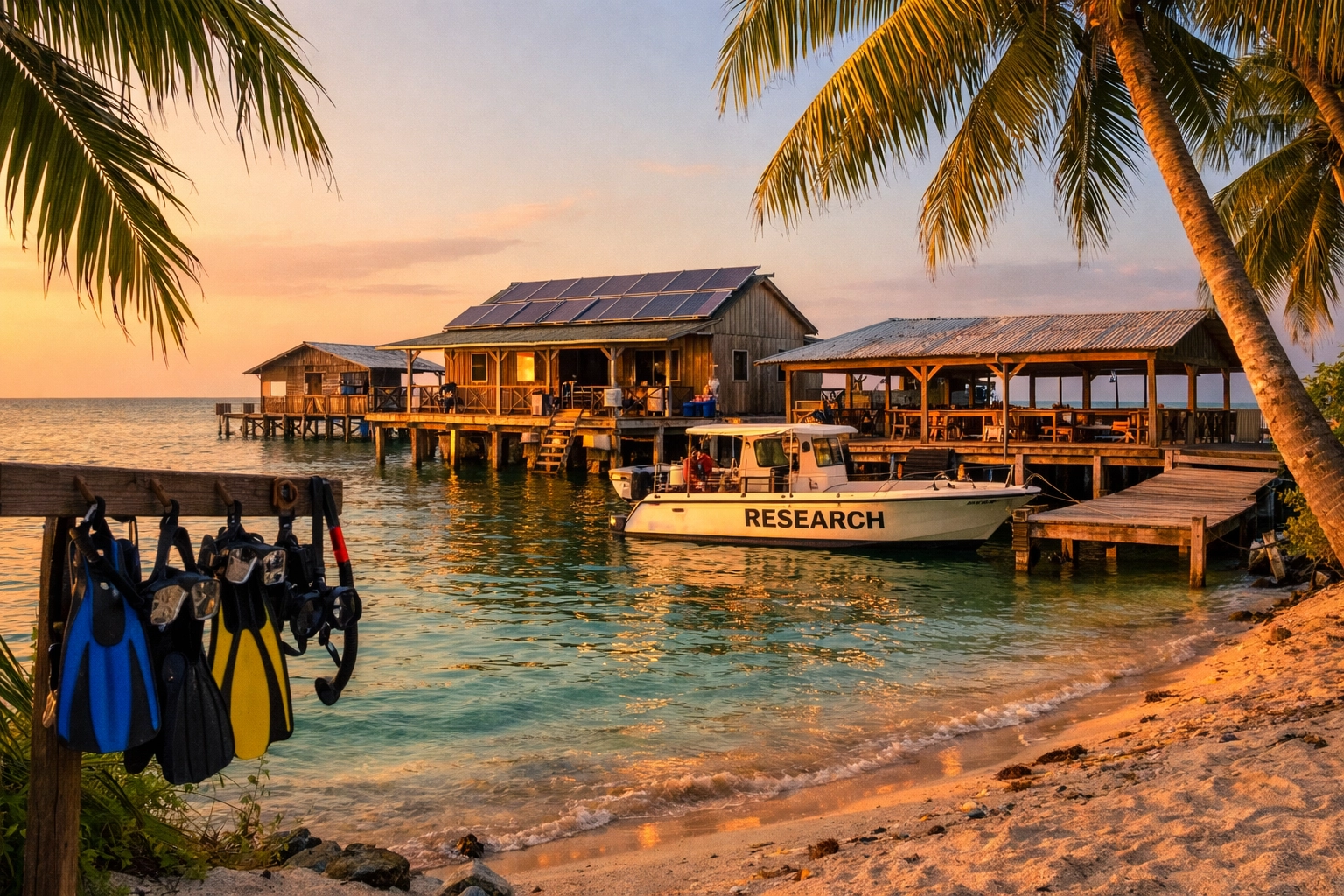
Belize maintains established marine research facilities specifically designed for educational programs, including dedicated research centers and island stations staffed by experienced marine biologists and certified dive guides. These facilities provide the structured environment necessary for safe, effective student learning while maintaining the flexibility to adapt programs to specific educational objectives.
Programs typically range from intensive 10-day courses to multi-week expeditions, with schedules allocating several hours daily to snorkeling and field exploration, plus evening sessions dedicated to data analysis, species identification workshops, and conservation discussions. Facilities like Glover's Reef Research Station allow advanced student groups to design and conduct their own research projects under expert guidance, transforming passive learners into active scientists.
Ensure that your selected program provides appropriate safety equipment, maintains low student-to-instructor ratios (ideally 6:1 or better for water activities), and employs guides with both marine science expertise and experience working with student groups. Verify that facilities have established emergency protocols, communication systems, and evacuation procedures before committing to a program.
Conservation Work and Environmental Stewardship
An educational trip to Belize should integrate meaningful conservation work that goes beyond observation. Partner with local conservation organizations to provide students with authentic service-learning opportunities where their efforts contribute to ongoing reef protection initiatives.
Students can participate in coral restoration projects, helping to cultivate coral fragments in underwater nurseries and transplanting healthy colonies to damaged reef sections. These hands-on activities teach students about active conservation strategies while providing tangible evidence that individual actions create measurable environmental improvements. Emphasize the importance of following established protocols precisely, as improper handling can damage sensitive coral polyps.
Marine debris removal represents another valuable conservation activity. Organize beach cleanups and underwater debris surveys where students collect and catalog trash, then analyze the data to identify pollution sources and patterns. Discuss how this information informs policy decisions and community education initiatives, helping students understand the connection between scientific research and environmental advocacy.
Cultural Context: Mayan Maritime Heritage
Understanding Belize's marine ecosystems requires exploring the deep historical relationship between humans and these waters. The ancient Maya were sophisticated maritime peoples who developed extensive trade networks, sustainable fishing practices, and detailed knowledge of marine resources. Archaeological sites along Belize's coast reveal that Maya communities harvested conch, spiny lobster, sea turtles, and reef fish for over 3,000 years.
Incorporate visits to coastal Maya sites where students can examine ancient shell middens, fishing tools, and trade goods that arrived via maritime routes. Discuss how traditional Maya fishing practices balanced resource extraction with sustainability: knowledge that remains relevant to modern conservation challenges. Encourage students to interview local fishermen who maintain traditional practices, learning how indigenous knowledge complements scientific approaches to marine resource management.
This cultural dimension helps students understand conservation within broader economic and social contexts. Recognize that effective marine protection requires collaboration with communities whose livelihoods depend on reef resources, making cultural sensitivity and respectful dialogue essential conservation skills.
Planning Your Student Trip to Belize
Begin planning your school trip to Belize at least 12 months in advance to secure permits, coordinate with research facilities, and prepare students adequately. Create a detailed itinerary that balances structured research activities with opportunities for student-directed exploration and cultural immersion.
Advise students to complete preliminary coursework covering Caribbean marine ecology, coral biology, and basic research methods before departure. This preparation maximizes learning opportunities once students arrive, allowing them to move quickly from basic identification to complex ecological analysis. Share comprehensive packing lists that include sun protection, reef-safe sunscreen (critical for protecting coral health), underwater notebooks, and appropriate clothing for both marine and cultural activities.
Discuss safety protocols thoroughly with students and parents, emphasizing the importance of following guide instructions, maintaining buddy systems during water activities, and recognizing their own physical limitations. Ensure all participants understand local environmental regulations, including protected species, no-take zones, and proper wildlife interaction guidelines.
Transforming Students Into Marine Scientists
A properly designed student trip to Belize accomplishes far more than exposing students to beautiful underwater scenery: it transforms passive consumers of scientific information into active researchers who understand how marine science functions in practice. Students return home with documented research data, refined analytical skills, and firsthand knowledge of conservation challenges that textbooks cannot provide.
The combination of accessible world-class marine ecosystems, established educational infrastructure, and meaningful conservation opportunities makes Belize an ideal destination for marine science programs serving middle school, high school, and undergraduate students. By prioritizing hands-on research, cultural understanding, and environmental stewardship, educators create transformative experiences that inspire the next generation of marine scientists and conservation leaders.

Comments