


Service Learning Opportunities for High School Students: Coral Restoration in the Cayman Islands
- Caleb Mullenix
- Feb 10
- 6 min read

The Imperative of Marine Conservation Education
Preparing high school students to become environmental stewards requires more than textbook knowledge: it demands immersive, hands-on experiences that connect classroom learning to real-world conservation challenges. Service learning opportunities for high school students focused on coral restoration in the Cayman Islands provide precisely this transformative educational experience. These programs unite marine biology curriculum with meaningful community service, fostering both scientific understanding and personal growth in ways traditional classroom instruction cannot replicate.
Coral reefs face unprecedented threats from climate change, ocean acidification, and human impact. By engaging students directly in restoration efforts, educators create powerful learning experiences that develop scientific skills, environmental awareness, and civic responsibility simultaneously. The Cayman Islands, with its rich marine biodiversity and established conservation infrastructure, offers an exceptional setting for these critical educational experiences.
Understanding Service Learning in Coral Restoration
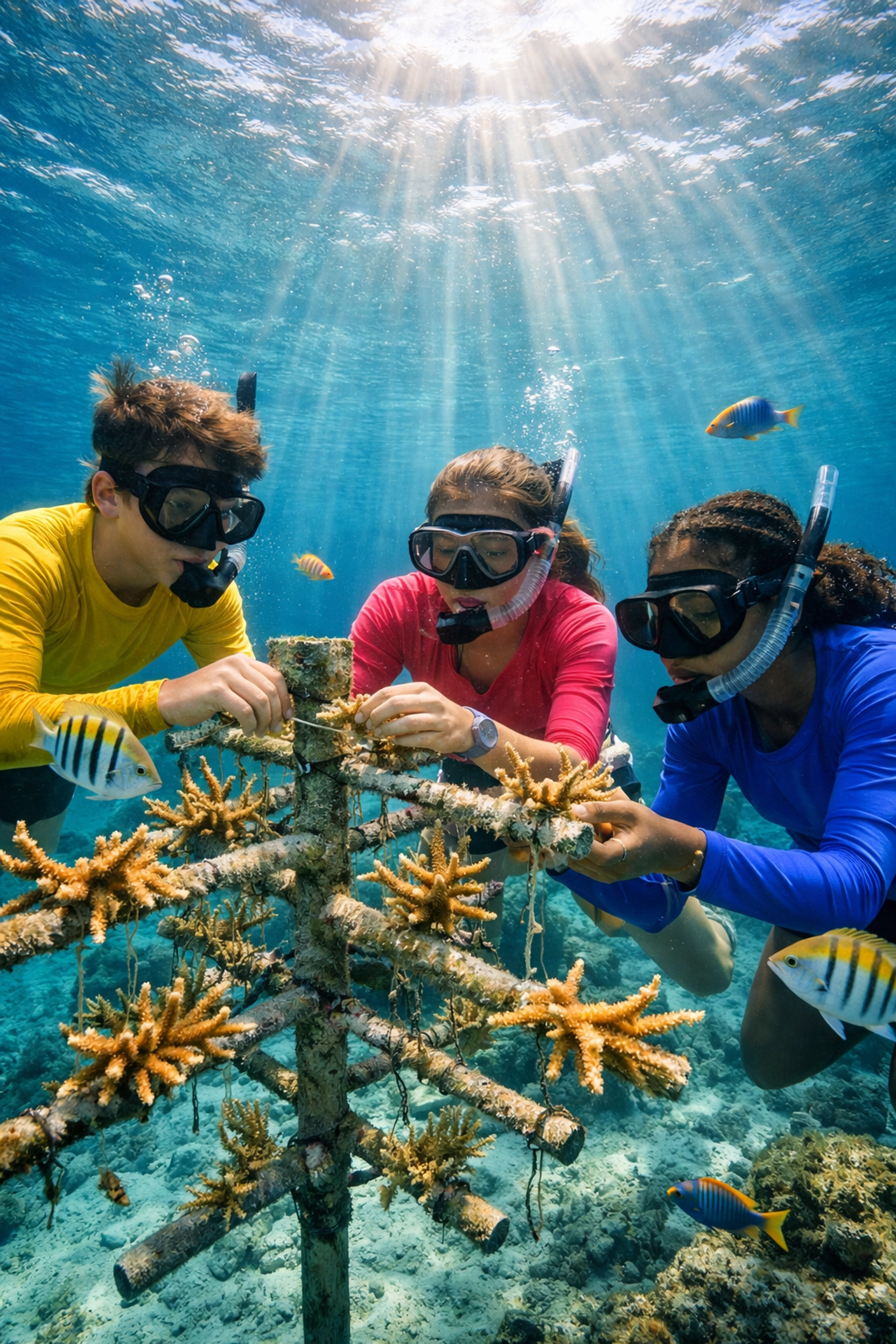
Service learning distinguishes itself from traditional community service through its intentional integration of academic content with meaningful service activities. In the context of coral restoration, students apply scientific concepts: marine biology, ecology, chemistry, and environmental science: while contributing directly to ecosystem recovery efforts.
Define clear learning objectives before departure. Establish what students should understand about coral reef ecosystems, restoration techniques, and conservation challenges. Ensure that service activities directly support these educational goals while providing tangible benefits to the marine environment.
Core Components of Effective Service Learning Programs:
Academic preparation: Students study coral biology, reef ecology, and restoration methodology before engaging in fieldwork
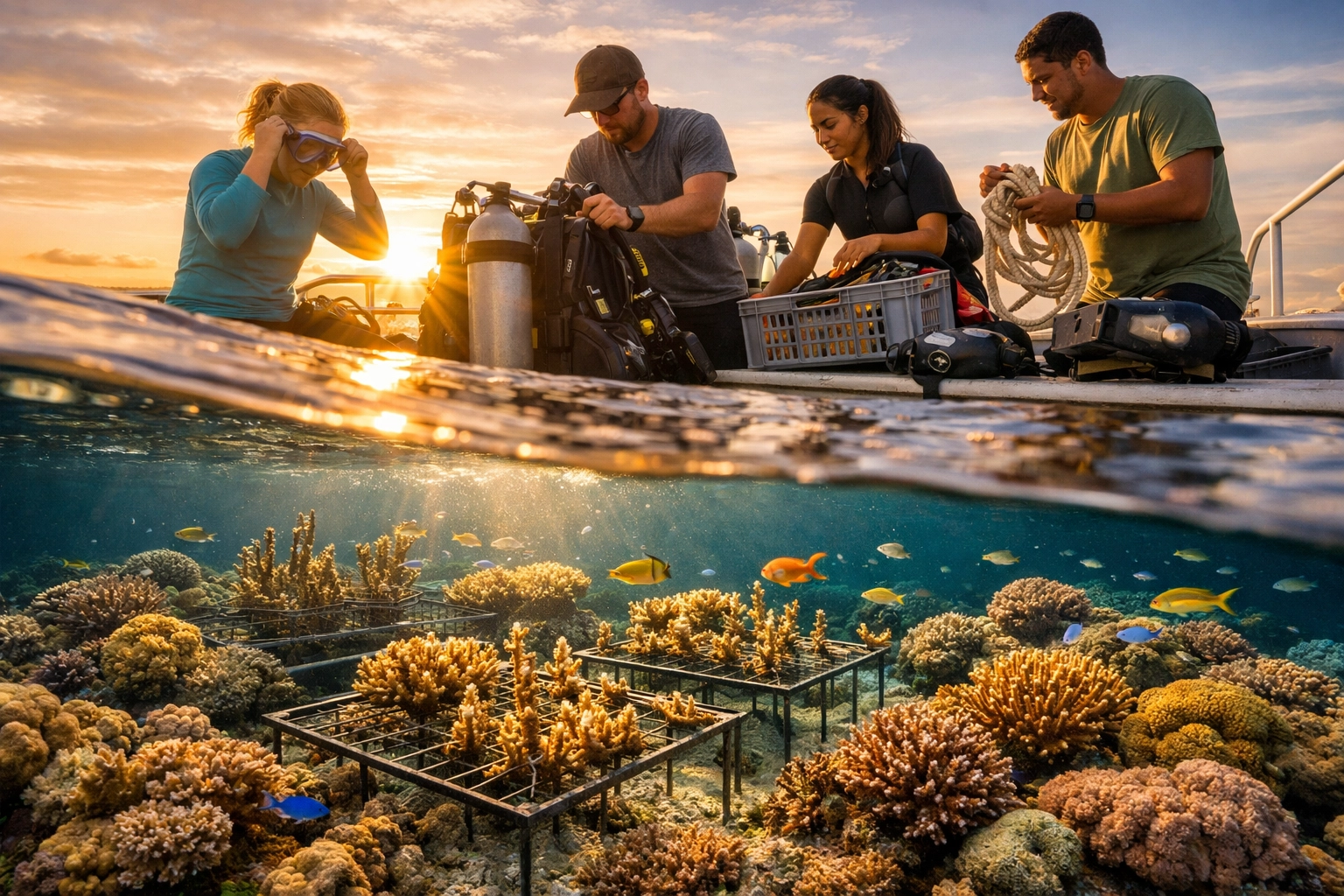
Direct service: Hands-on participation in coral nursery maintenance, transplantation, or monitoring activities
Structured reflection: Guided discussions and written reflections connecting service experiences to academic learning
Community partnership: Collaboration with local conservation organizations and marine scientists
Assessment: Evaluation of both learning outcomes and service impact
Why the Cayman Islands Provides Exceptional Opportunities
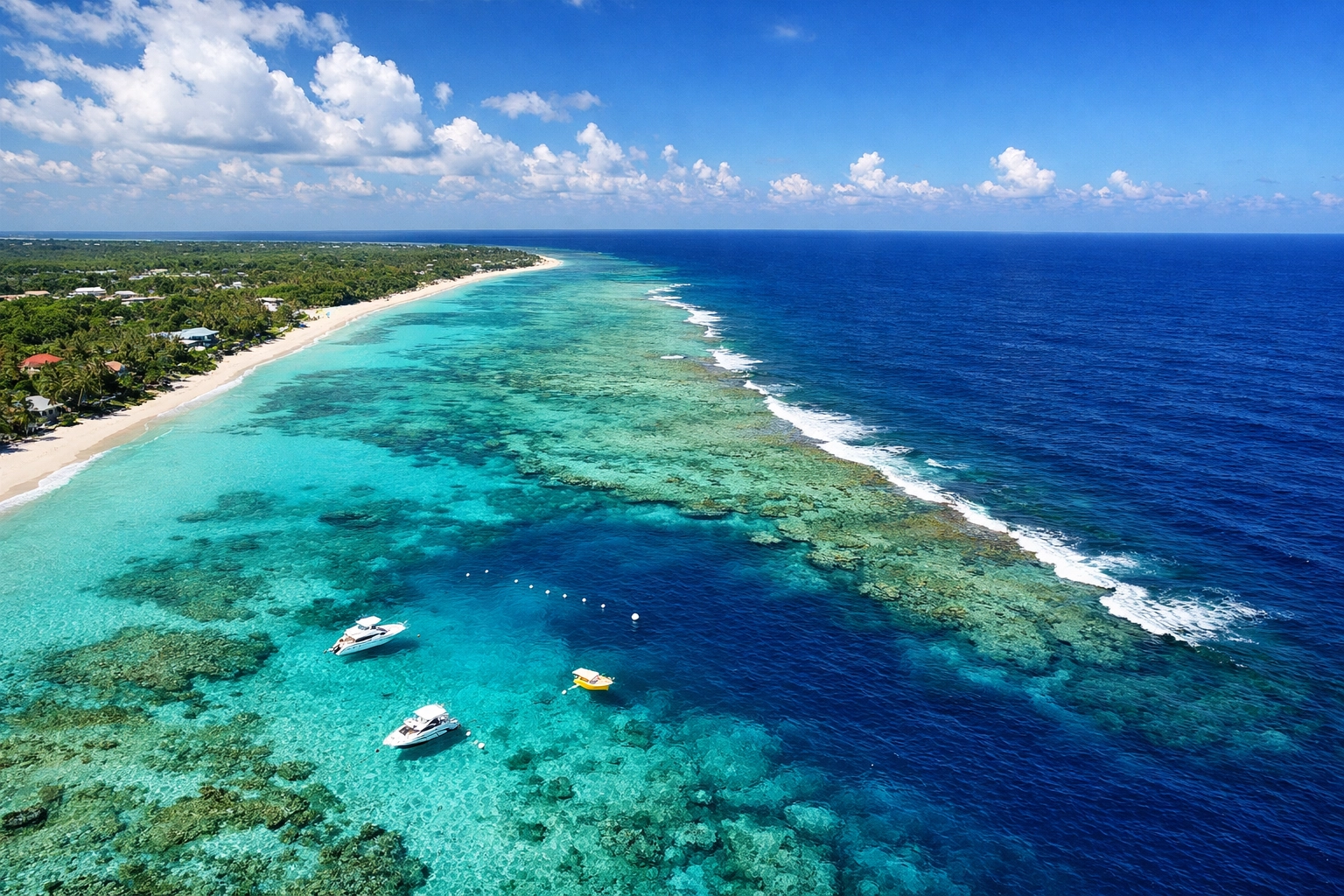
The Cayman Islands offers several distinct advantages for high school service learning programs focused on coral restoration. The islands' commitment to marine conservation, combined with accessible reef systems and established educational partnerships, creates an ideal environment for student engagement.
Select the Cayman Islands for these specific benefits:
Established Conservation Programs: Multiple organizations operate coral restoration initiatives that welcome student volunteers, including coral nurseries and reef monitoring projects
Protected Marine Areas: Designated marine parks provide safe, controlled environments for student activities while ensuring conservation impact
Professional Guidance: Local marine biologists and conservation specialists offer expert supervision and instruction
Accessible Reef Systems: Shallow-water reefs suitable for student participation require minimal diving experience
Educational Infrastructure: Schools and organizations in the Cayman Islands maintain active community service programs, facilitating partnerships
Hands-On Coral Restoration Projects for Students
Engage students in these specific restoration activities that balance educational value with meaningful conservation impact. Ensure all activities include proper training, supervision, and safety protocols.
Coral Nursery Management
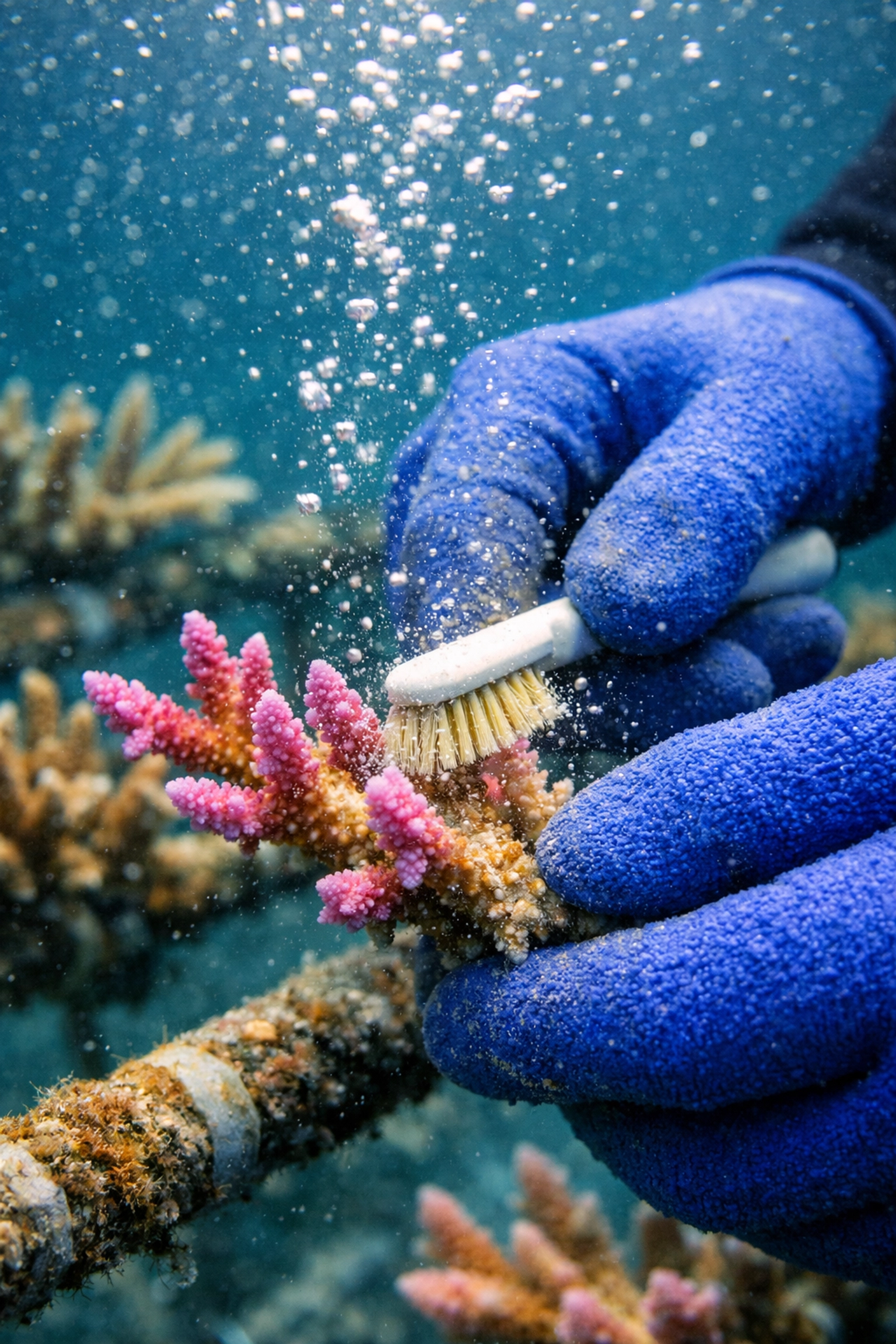
Students participate in maintaining underwater coral nurseries where coral fragments grow before transplantation. Activities include:
Cleaning coral fragments to remove algae and competitors
Measuring and documenting coral growth rates
Recording water quality parameters (temperature, pH, salinity)
Identifying coral species and health indicators
Organizing and maintaining nursery structures
This work develops observational skills, introduces scientific monitoring protocols, and demonstrates the patience required for conservation success.
Coral Transplantation
Under professional supervision, students assist in transplanting nursery-grown corals to degraded reef sites. This process involves:
Selecting appropriate transplant locations based on substrate and environmental conditions
Securing coral fragments using specialized techniques
Creating photographic records for long-term monitoring
Understanding reef restoration design and planning
Learning proper handling techniques to minimize stress to coral organisms
Emphasize the significance of each transplanted fragment: students directly contribute to reef recovery through their careful work.
Reef Monitoring and Data Collection
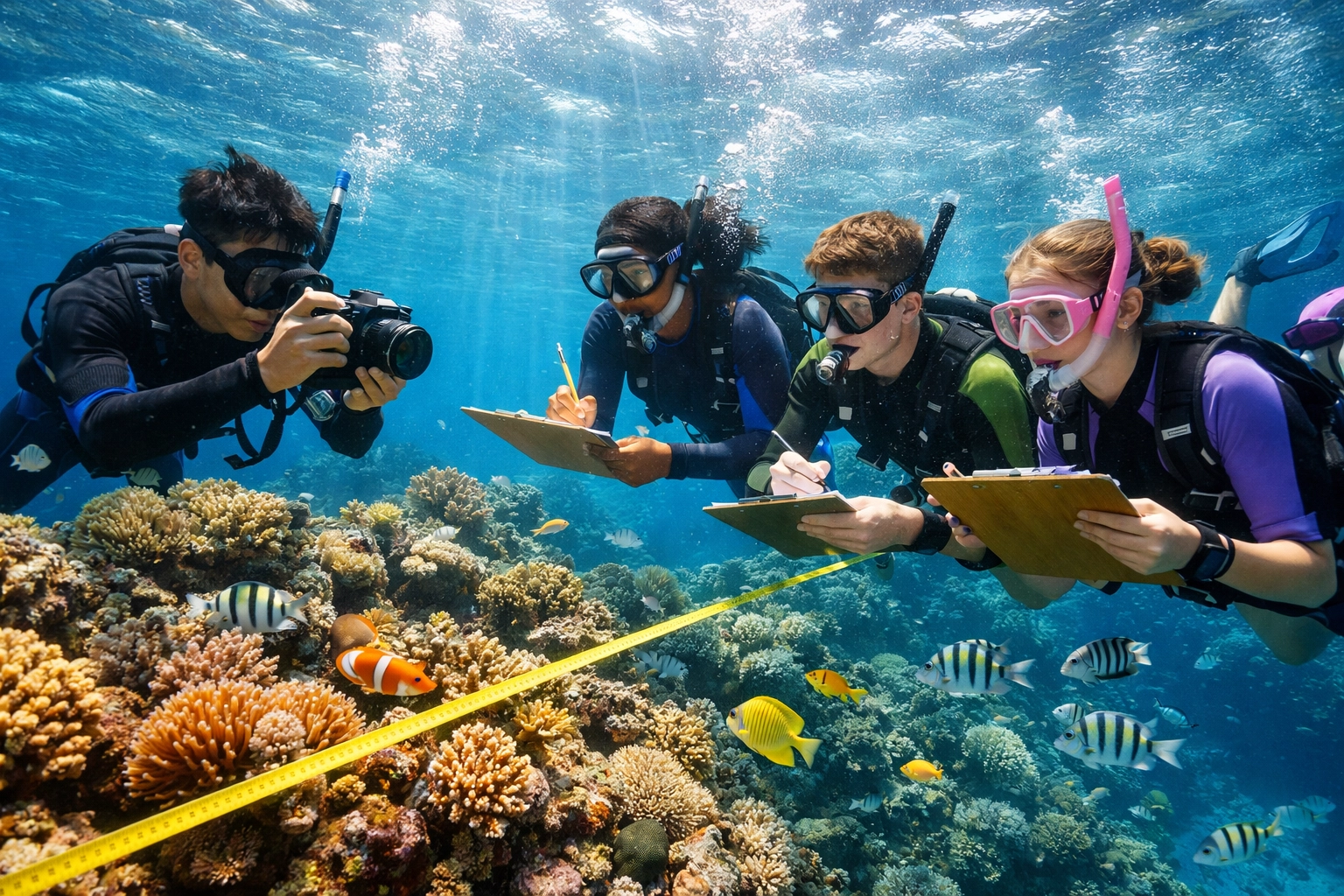
Scientific monitoring provides crucial data for assessing restoration success. Student responsibilities include:
Conducting underwater surveys using transect methodology
Identifying and counting reef fish species
Assessing coral health and survival rates
Recording evidence of coral bleaching or disease
Contributing data to long-term research databases
Stress the importance of accurate, systematic data collection. Scientists rely on this information to adapt restoration strategies and measure program effectiveness.
Water Quality Testing
Students collect and analyze water samples to understand environmental factors affecting coral health:
Testing for nutrients, pH, and dissolved oxygen
Measuring turbidity and visibility
Understanding the relationship between water quality and coral survival
Learning laboratory techniques and data analysis
Connecting local pollution sources to reef ecosystem impacts
Personal Growth Outcomes for Student Participants
Service learning opportunities for high school students in coral restoration catalyze significant personal development beyond academic achievement. Document these growth areas through structured reflection activities and assessment.
Environmental Stewardship
Students develop profound connections to marine ecosystems through direct conservation work. This hands-on engagement transforms abstract environmental concerns into personal responsibility. Encourage students to articulate how their perspectives on conservation have evolved and how they plan to continue environmental advocacy upon returning home.
Scientific Skills and Confidence
Participating in authentic scientific research builds competence in observation, measurement, data collection, and analysis. Students gain confidence in their ability to contribute meaningfully to scientific endeavors. Many participants report increased interest in marine science careers following these experiences.
Teamwork and Communication
Coral restoration requires coordinated effort among team members. Students practice clear communication, learn to rely on peers, and develop leadership skills. Assign rotating roles: team leader, data recorder, equipment manager: to ensure all students experience different responsibilities.
Problem-Solving and Adaptability
Field conditions rarely proceed exactly as planned. Students must adapt to weather changes, equipment issues, and unexpected challenges. This flexibility prepares them for future academic and professional situations requiring creative problem-solving.
Global Citizenship
Understanding that coral reefs support approximately 25% of all marine species and protect coastlines worldwide, students recognize their role in addressing global environmental challenges. This broader perspective cultivates empathy and international awareness.
Planning Considerations for Educators
Ensuring the success of service learning expeditions requires meticulous preparation and coordination. Begin planning at least 12-18 months before departure to secure partnerships, permits, and funding.
Establish Partnership with Conservation Organizations
Contact organizations operating coral restoration programs in the Cayman Islands well in advance. Discuss your educational objectives, group size, student skill levels, and desired activities. Confirm the organization's capacity to supervise student volunteers and provide necessary training.
Prepare Students Academically
Implement a comprehensive pre-trip curriculum covering:
Coral reef ecology and biology
Threats to reef ecosystems (climate change, pollution, overfishing)
Coral restoration techniques and science
Marine safety protocols
Cultural sensitivity and environmental ethics
Students arrive prepared to maximize learning and service impact when they possess foundational knowledge before departure.
Address Safety and Risk Management
Prioritize student safety through thorough planning and protocols:
Verify all activities comply with school district policies and insurance requirements
Ensure adult supervision ratios meet or exceed school requirements (typically 1:5 or 1:6 for water activities)
Confirm all students possess necessary swimming skills and physical fitness for activities
Obtain comprehensive medical information and emergency contact details
Review and practice emergency procedures, including marine emergency scenarios
Verify medical care accessibility in the Cayman Islands
Require appropriate insurance coverage for all participants
Distribute detailed safety expectations to students and parents well before departure. Conduct parent information meetings to address questions and concerns.
Secure Necessary Certifications and Training
Determine whether activities require specific certifications. Some programs accept participants with snorkeling experience, while others may require basic scuba certification. Arrange for necessary training well in advance of the trip.
Plan Structured Reflection Activities
Integrate reflection throughout the experience: not just at the conclusion. Daily reflection sessions help students process experiences, connect activities to learning objectives, and identify personal growth. Provide specific prompts:
What surprised you most about today's restoration work?
How does what you observed today connect to concepts from class?
What challenges did you encounter, and how did you address them?
How has this experience changed your thinking about marine conservation?
Implementing Environmental Responsibility
Model and reinforce environmental stewardship throughout the expedition. Students should understand that conservation extends beyond restoration activities to daily choices and behaviors.
Emphasize these practices:
Use reef-safe sunscreen to protect coral ecosystems from harmful chemicals
Minimize plastic waste and participate in beach cleanups
Respect marine life: observe without touching or disturbing organisms
Support local conservation-focused businesses and initiatives
Practice sustainable tourism behaviors
Share conservation messages with peers and community upon return
Maximizing Long-Term Impact
The conclusion of the trip should mark the beginning of sustained engagement, not the end. Guide students in developing action plans for continued environmental stewardship.
Encourage students to:
Present their experiences and findings to school communities
Develop awareness campaigns about coral reef conservation
Organize local environmental service projects
Maintain connections with partner organizations
Consider careers in marine science, conservation, or environmental policy
Advocate for policy changes supporting ocean health
Create opportunities for students to mentor future program participants, extending the impact of their experiences to subsequent student groups.
The Transformative Power of Service Learning
Service learning opportunities for high school students focused on coral restoration in the Cayman Islands represent educational experiences of exceptional value. These programs develop scientific literacy, environmental stewardship, and personal character while contributing meaningfully to ecosystem recovery. The combination of rigorous academic content, authentic scientific work, and community service creates transformative learning that students carry throughout their lives.
As educators, our responsibility extends beyond teaching content: we must inspire the next generation of environmental leaders and scientific problem-solvers. Coral restoration service learning provides the immersive, impactful experiences necessary to fulfill this vital educational mission.
Appleseed Expeditions specializes in designing and facilitating service learning expeditions that unite academic rigor with meaningful conservation impact. Our programs in the Cayman Islands connect students with leading marine conservation organizations while ensuring comprehensive supervision, safety protocols, and educational excellence. Contact Appleseed Expeditions to begin planning a transformative coral restoration experience that will inspire your students and contribute to protecting our ocean ecosystems for future generations.
Comments