


The Gift of Service: How the Grand Canyon’s People Shape Student Paths

Developing a profound sense of purpose is a cornerstone of student growth, yet it is rarely achieved within the four walls of a traditional classroom. For students to truly understand their place in the world and the impact they can have, they must step into environments that challenge their perspectives and demand their contribution. The Grand Canyon region, home to the sovereign nations of the Navajo (Diné) and Hopi, offers a unique landscape where service-learning transcends volunteerism and becomes a transformative journey toward self-discovery.
At Appleseed Expeditions, we believe that serving others in a storied and sacred landscape is the most effective way to help students find their "why." By engaging in tangible projects alongside Indigenous communities, students transition from being passive observers of history to active participants in a living culture. This process of giving back fosters a leadership mindset rooted in humility, responsibility, and purpose.

The Intersection of Landscape and Legacy
The Grand Canyon is often viewed through the lens of geology and vastness, but for the Navajo and Hopi people, it is a place of deep ancestral connection and ongoing stewardship. When students enter these spaces with the intent to serve, they are not merely working on a project; they are honoring a legacy.
Preparation for this journey involves more than just packing gear; it requires a mental shift toward cultural humility. Educators must emphasize that service is a reciprocal relationship. While students provide labor and resources, the community provides wisdom, perspective, and a redefined understanding of community. This exchange is where the development of purpose begins.
Tangible Service: Projects that Build Community
Service-learning in the Grand Canyon area is structured around the immediate needs of the local communities. These projects are designed to be sustainable, impactful, and educational. By working with their hands, students see the immediate results of their labor, which reinforces the value of hard work and collective effort.
1. Sustainable Agriculture and Community Gardens
Food sovereignty is a critical focus for many Indigenous communities. Students may assist in the development or maintenance of community gardens, which serve as vital sources of fresh produce in remote areas.
Actionable Tasks: Planting traditional crops, installing irrigation systems, and building raised beds.
Purpose Alignment: Students learn the importance of sustainability and the interconnectedness of land and health.
2. School and Infrastructure Repairs
Educational facilities and community centers often require maintenance that local resources may not fully cover.
Actionable Tasks: Painting classrooms, repairing fences, or improving recreational areas for local youth.
Purpose Alignment: Improving a learning environment for others helps students appreciate their own educational opportunities and recognize the power of improving lives through physical service.
3. Environmental Stewardship
The arid climate of the Southwest presents unique challenges for land management. Students may engage in erosion control or trail maintenance that protects both the environment and sacred sites.
Actionable Tasks: Building check dams, clearing invasive species, and restoring natural pathways.
Purpose Alignment: This work fosters a sense of global responsibility and environmental ethics.

The Anatomy of Self-Discovery through Service
Why does serving the Navajo and Hopi nations lead to student purpose? The answer lies in the shift from "me" to "we." In a culture that often prioritizes individual achievement, the communal focus of the Navajo and Hopi offers a powerful counter-narrative.
Empathy Development: Working side-by-side with community members allows students to hear stories of resilience and heritage firsthand. This human connection builds empathy, a core component of purposeful leadership.
Clarity Through Labor: There is a meditative quality to physical service. As students paint a wall or weed a garden under the vast Arizona sky, the distractions of modern life fade, allowing for quiet reflection on their own values and goals.
Recognizing Agency: Many students feel overwhelmed by global issues. By completing a specific project, they realize that they possess the agency to effect change. This realization is the spark that ignites a lifelong commitment to service.
Educators looking to integrate these high-impact experiences into their curriculum can explore Alternative Breaks to see how service is woven into every itinerary.
Instructional Guide for Educators: Preparing for the Field
To ensure the safety of students and the success of the service project, educators must follow a rigorous preparation process. Preparation is the primary tool for mitigating risk and maximizing educational outcomes.
Step 1: Establish Clear Objectives
Before departure, define what "success" looks like. Is it the completion of the physical project, or the depth of the reflections shared in the evening? Establish these goals with your students early.
Step 2: Cultural Orientation
Provide students with historical context regarding the Navajo and Hopi people. Discuss the importance of respect, the significance of the land, and the proper etiquette when visiting sovereign nations. This prevents unintentional disrespect and enriches the learning experience.
Step 3: Safety and Vigilance
The Southwest environment can be unforgiving. Educators must implement formal procedures for hydration, sun protection, and physical safety during labor.
Hydration Protocols: Mandatory water breaks every 30 minutes.
Tool Safety: Direct instruction on the proper use of shovels, hammers, and other equipment.
Emergency Plans: Ensure a detailed emergency plan is in place and that all chaperones are briefed on the nearest medical facilities.

The Role of Reflection in Developing Purpose
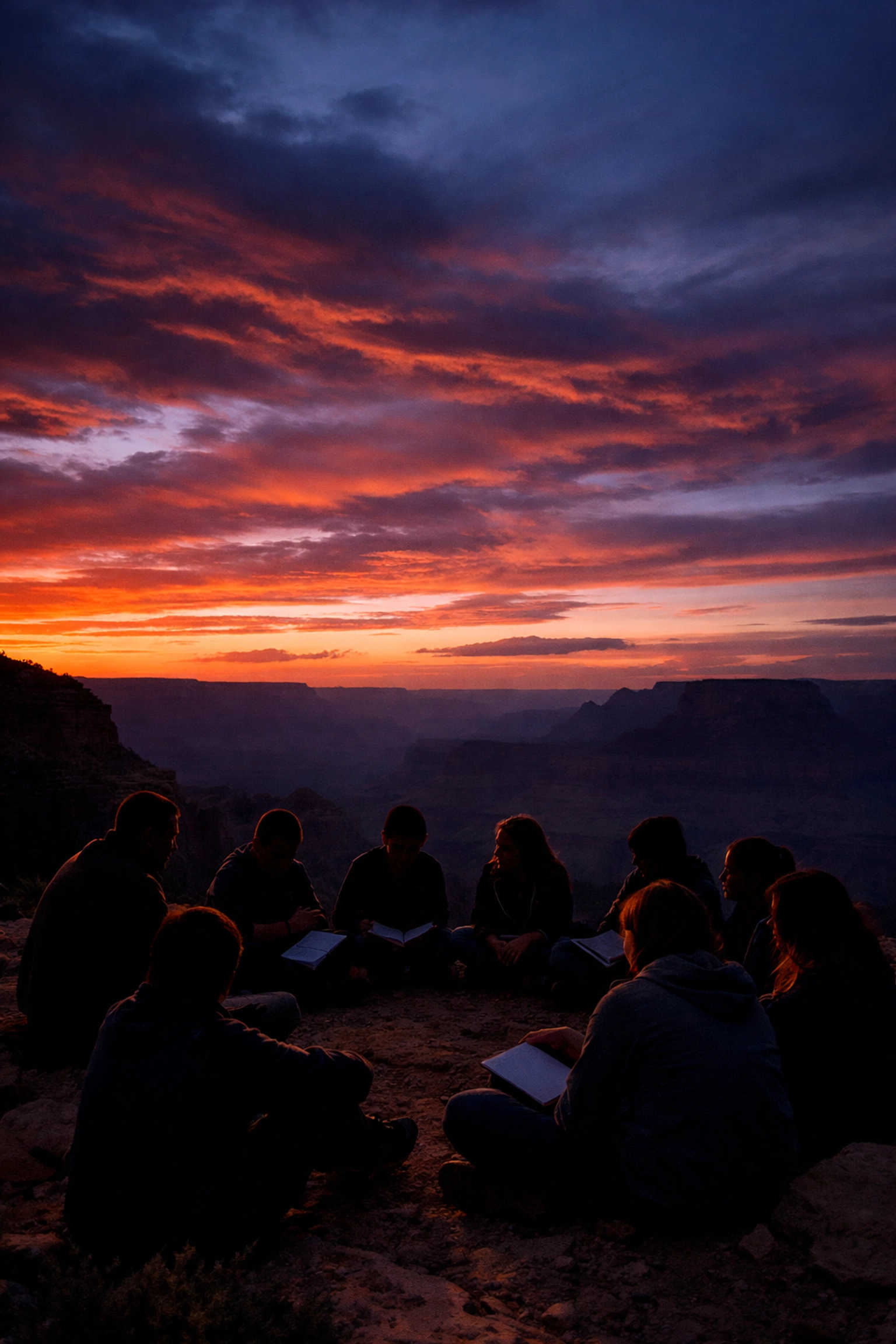
Service without reflection is merely work. To transform an activity into a life-changing experience, students must process what they have seen and done. Structured reflection sessions are essential for helping students connect their service to their personal "why."
Daily Debriefs: Facilitate group discussions every evening. Use prompts such as: "What did you learn about yourself today through your work?" or "How did your interactions today change your view of community?"
Journaling: Provide quiet time for students to write. This allows more introverted students to process their thoughts deeply.
Connecting to STEM: For science-focused groups, encourage students to reflect on how engineering or ecology can be used as a tool for service. Our School STEM Trips provide an excellent framework for this intersection.
Long-Term Impact: From the Canyon to the Classroom
The true test of a service-learning trip is what happens when the students return home. The purpose discovered in the Grand Canyon must be cultivated in their daily lives.
Students who have served the Navajo and Hopi often return with a renewed sense of gratitude and a clearer vision for their future careers. They may find themselves drawn to environmental law, education, healthcare, or social work: fields where they can continue the work of building and supporting communities.
Conclusion: Reaffirming the Mission
Preparing your students for a journey of service in the Grand Canyon involves careful planning, but the rewards are immeasurable. By prioritizing respect, safety, and thorough preparation, you create a space where students can safely step outside their comfort zones and into their potential.
The act of giving back to the people of the Grand Canyon is not just a "trip": it is an investment in the character and future of your students. It is through the sweat of labor and the silence of the canyon that the noise of the world is filtered out, leaving behind a clear, resonant sense of purpose.
Ensuring the safety and growth of students is our paramount objective at Appleseed Expeditions. We invite you to partner with us in creating these life-defining opportunities, ensuring that every student who visits the Grand Canyon leaves with a deeper understanding of the world and a stronger commitment to serving it.

Comments