


The Teacher's Checklist for Successful San Diego School Trips

Ensuring the safety, supervision, and instructional value of every school trip to San Diego is of paramount importance. San Diego is an exceptional destination for educational travel because it supports rigorous field learning in coastal ecology, oceanography, conservation, and human impact: especially for Marine science trips to San Diego. However, the same coastal features that make learning unforgettable (tides, rocky intertidal zones, sun exposure, large public sites) also require careful planning, clear procedures, and vigilant risk management.
Use this step-by-step teacher checklist to plan San Diego school trips that are safe, standards-aligned, and logistically reliable.
Quick-Start Planning Snapshot (print this section)
Use this as your one-page overview before you build details.
Define learning objectives (what students must learn, practice, and produce).
Pick your marine science anchor site (aquarium/lab + outdoor shoreline fieldwork).
Lock in the date around tides (especially for tidepools).
Complete approvals and risk paperwork (district + medical + emergency).
Recruit and train chaperones (roles, supervision, communication).
Finalize transportation and site reservations (buses, entry times, lunches).
Issue student kit list + behavior contract (coastal safety and respect).
Run day-of operations with redundancy (headcounts, meet points, contingency).
Debrief and assess (student products + teacher trip log).
1) Instructional Goals Checklist (start 8–16 weeks out)
A strong educational travel to San Diego plan begins with explicit learning outcomes. Begin here to avoid an itinerary that is “fun” but not academically defensible.
Define your learning targets
Identify 3–5 measurable outcomes (e.g., “Explain intertidal zonation,” “Collect and analyze field observations,” “Describe human impacts on coastal ecosystems”).
Align outcomes to your standards (NGSS / state science standards / program outcomes).
Decide on student deliverables (choose at least one)
Field journal with labeled sketches and evidence-based claims
Species observation log + reflection
Short CER (Claim–Evidence–Reasoning) write-up on an ecosystem issue
Group presentation on habitat, adaptation, and conservation
Select the right trip format
Option A: One anchor institution + structured program (high control, predictable learning)
Option B: Mixed day (tidepools + aquarium/wetlands) for maximum field variety
Option C: Multi-day for deeper inquiry and more controlled pacing (best for older students)
2) Site Selection Checklist (book 6–12 weeks out)
For Marine science trips to San Diego, prioritize a combination of (1) formal education programming and (2) a supervised outdoor field component.
Recommended marine science learning anchors (real planning links)
Birch Aquarium at Scripps (UC San Diego) : school and youth group options include Discovery Labs, Self-Guided Visits, and other resources; pre-registration is required for self-guided school visits. Link: https://aquarium.ucsd.edu/learn/school-youth-group-programs
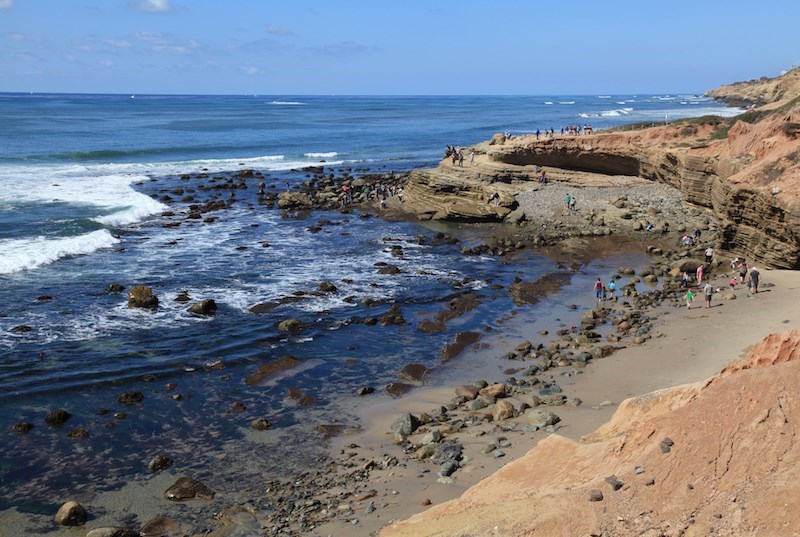
Cabrillo National Monument Tidepools (NPS) : excellent rocky intertidal learning, best in fall/winter; includes detailed safety and protection guidance. Link: https://www.nps.gov/cabr/learn/nature/tidepools.htm
Living Coast Discovery Center (educator programs) : Living Lab programs include hands-on lessons and exhibit time; provides structured schedules and lunch space. Link: https://www.thelivingcoast.org/educators/san-diego/field-trips-tours/field-trips-9-12/
Choose your “two-part” marine science day (highly recommended)
Part 1 (outdoor): tidepools or bay/wetlands observation
Part 2 (structured): aquarium/discovery center program to reinforce concepts and vocabulary
Confirm in writing with each venue
Group size limits and chaperone expectations
Check-in location and arrival time requirements
Lunch storage space availability
Accessibility accommodations and any required orientations
3) Date + Tide Planning Checklist (non-negotiable for tidepools)
Tidepool learning is timing-dependent. Ensure your schedule matches safe, visible intertidal conditions.
For tidepool visits, do all of the following
Select dates when low tide occurs during daylight and venue hours (Cabrillo notes fall/winter as ideal).
Use NOAA tide predictions as your reference source and document the low tide time in your trip plan. NOAA tide predictions (Station 9410170, San Diego): https://tidesandcurrents.noaa.gov/noaatidepredictions.html?id=9410170
Build your fieldwork window around the guidance: arrive before low tide and plan to be off the most hazardous rocks well before departure.
Plan for known complications (build contingency)
Expect road/parking congestion at popular coastal sites.
Assume cell phone service may be unreliable at tidepools (Cabrillo explicitly warns that service may not be available).
Prepare a “Plan B” learning block (aquarium exhibits, sheltered discussion, data analysis) if tide or surf conditions change.
4) Safety + Risk Management Checklist (2–8 weeks out)
A risk-averse mindset protects students, chaperones, and your school. Write procedures down and rehearse them.
Complete administrative requirements
Secure principal/district approvals and confirm required forms.
Collect medical and emergency information; identify high-risk allergies, asthma, seizure plans, and medication procedures.
Confirm supervision ratios and minimum chaperone requirements.
Create your coastal-specific hazard controls
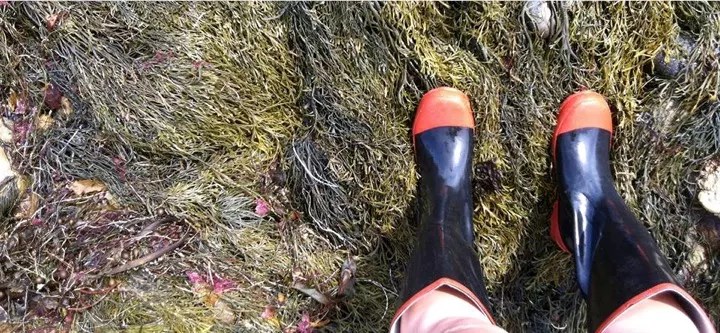
Slips/falls on wet rock and algae
Sudden wave surge near rocky edges
Sun exposure and dehydration
Student separation in crowded public spaces
Implement controls
Require closed-toe shoes with grip (no flip-flops for tidepools).
Set physical boundaries and a buddy system.
Assign at least one adult to be “safety-only” during shoreline time (no instruction duty).
Use repeated headcounts: depart bus → arrive → transition → depart site → return.
Emergency readiness
Carry a printed emergency contact packet (do not rely on phones).
Identify the nearest first-aid station/ranger contact point at each site.
Establish a clear incident chain-of-command (teacher lead → admin contact → emergency services).
5) Chaperone Recruiting + Training Checklist (2–6 weeks out)
Effective chaperones are a supervision system, not “extra adults.”
Recruit intentionally
Confirm who is cleared per school policy.
Ensure chaperones can physically manage terrain if visiting tidepools or trails.
Train with precision (send a one-page chaperone brief)
Your supervision ratios and boundaries
Headcount procedure and meeting locations
Student behavior expectations and enforcement
What to do if a student is separated (immediate actions, who calls whom)
Assign groups
Pre-assign student groups with a roster.
Provide each chaperone: schedule, map/address, student list, and emergency procedures.
6) Transportation + Timing Checklist (2–4 weeks out)
Transportation issues can compromise both safety and instruction time. Confirm early and reconfirm close to departure.
Transportation confirmations
Bus/charter confirmation in writing (times, locations, driver instructions).
Build buffer time for coastal traffic and parking restrictions.
Plan restroom stops (especially for younger groups).
Itinerary structure
Use time blocks with explicit transitions (arrival, orientation, learning block, lunch, learning block, debrief).
Include a final “compressible” activity that can be shortened without harming instruction (reflection writing, small-group synthesis).
7) Student & Parent Communication Checklist (send 3–4 weeks out)
Clear communication reduces day-of surprises and improves student conduct.
Parent packet must include
Purpose of the trip and learning outcomes (state that it is educational travel)
Full itinerary with times, addresses, and emergency contact process
Cost, payment deadlines, and refund policy (as applicable)
Student behavior expectations and consequences
Clothing/footwear requirements and required items
Student expectations briefing (repeat twice)
Coastal safety: maintain boundaries; never turn your back to waves; walk: do not run: on rocks
Wildlife respect: observe, do not collect; leave rocks and organisms undisturbed (aligns with NPS resource rules)
Group responsibility: stay with your chaperone group at all times
8) Marine Science Field Gear Checklist (for student packs + teacher kit)
This is a practical, repeatable list for San Diego school trips with marine science components.
Student required kit
Closed-toe shoes with traction (required for tidepools)
Layers (coastal weather shifts quickly)
Hat + sunscreen (apply before departure; reapply on site)
Refillable water bottle (arrive full)
Bagged lunch and snacks (unless otherwise provided)
Pencil/clipboard or notebook for field journaling
Teacher/chaperone kit
Printed roster + medical/emergency forms (secured and confidential)
Basic first-aid kit (plus any required student medications per policy)
Extra sunscreen and water (contingency)
Trash bags and gloves if you plan a micro clean-up (optional, supervised)
Printed maps/addresses and a written meet-up plan
9) Day-Of Operations Checklist (run it like a procedure)
Operational discipline is what makes a field day safe and calm.
Before departure
Verify attendance and collect required medications per policy.
Review the “three rules”: stay with group, follow boundaries, respect wildlife.
Confirm chaperone group assignments and distribute rosters.
Do a final weather + tide check.
At each site
Identify the main meeting point and an alternate meeting point.
Conduct a headcount and re-state boundaries.
Keep transitions tight: students move only with their adult leader.
End with a 5-minute debrief: “What did you observe? What evidence supports it?”
If something changes
Switch immediately to your preplanned contingency block.
Communicate changes to chaperones first, then students.
Document any incident, near-miss, or site issue for your post-trip log.
10) Post-Trip Learning + Evaluation Checklist (within 1–10 school days)
A successful educational travel school trip to San Diego ends with assessment and reflection.
Student follow-through
Collect field journals and score with a simple rubric (accuracy, evidence, reflection).
Assign a short CER response: How does the intertidal zone show adaptation to stress?
Run a debrief discussion on human impact and stewardship.
Teacher improvement log
What worked (timing, site, chaperone system, student engagement)
What needs revision (ratios, lunch plan, boundaries, bus timing)
What to change next time (season/tide timing, program selection)
Sample “Marine Science Day” Templates (copy/paste)
Use these as safe, teacher-friendly outlines for Marine science trips to San Diego.
Template A: Tidepools + Aquarium (high-impact)
AM: Cabrillo tidepools: guided observation + field journaling Resource planning: https://www.nps.gov/cabr/learn/nature/tidepools.htm
Lunch: designated area (confirm in advance)
PM: Birch Aquarium: self-guided or educator-led program Program planning: https://aquarium.ucsd.edu/learn/school-youth-group-programs
Template B: Wetlands + Living Lab (structured, standards-based)
AM: Living Coast Living Lab program + exhibits Planning: https://www.thelivingcoast.org/educators/san-diego/field-trips-tours/field-trips-9-12/
Lunch: reserved lunch space (confirm upon booking)
PM: Trail exploration + structured reflection and data discussion
Plan with Appleseed Expeditions
If your goal is a safe, academically grounded school trip to San Diego, ensure your planning includes expert itinerary design, clear supervision systems, and field-tested contingency planning. Appleseed Expeditions organizes educational travel that inspires students to serve and learn through hands-on experiences.
Explore our approach to Marine Science programs: https://www.appleseedexpeditions.com/marine-science
Request a quote and begin planning: https://www.appleseedexpeditions.com (use the “Get a quote” button)
Internal resources you may also find helpful
Appleseed Expeditions Blog (planning and program guidance): https://www.appleseedexpeditions.com/blog
Ensuring safety, preparation, communication, and supervision is the standard for high-quality San Diego school trips. Plan around the tides, assign supervision with precision, insist on appropriate footwear and boundaries, and follow through with assessment; so your educational travel to San Diego delivers lasting learning, not last-minute stress.

Comments