


Unlocking Potential: The Grand Canyon Geology Student Program

When you stand on the rim of the Grand Canyon, you aren't just looking at a hole in the ground; you’re looking at nearly two billion years of Earth's history stacked layer upon layer. For a student, this isn’t just a sightseeing tour. It is a profound, immersive classroom where the abstract concepts of the textbook become the tangible realities of the trail.
At Appleseed Expeditions, we believe that "real science equals real impact." When students engage with a Grand Canyon geology student program, they aren’t just memorizing the difference between sedimentary and metamorphic rock. They are developing a sense of purpose, honing leadership skills, and receiving the "gift of conservation": a mindset that will serve them and the planet for generations to come.
The Power of Real Science: Beyond the Classroom
The traditional classroom has its limits. You can show a slide of the Great Unconformity, but until a student places one hand on 500-million-year-old sandstone and the other on 1.7-billion-year-old schist, the scale of time remains an abstract number.
Our approach to the Grand Canyon geology student program is built on the foundation of active inquiry. We don't just lecture; we investigate. By participating in real-world geological mapping, fossil identification, and erosion analysis, students realize that science is a tool for understanding our place in the universe. This realization creates an immediate impact on their academic drive and their personal confidence.
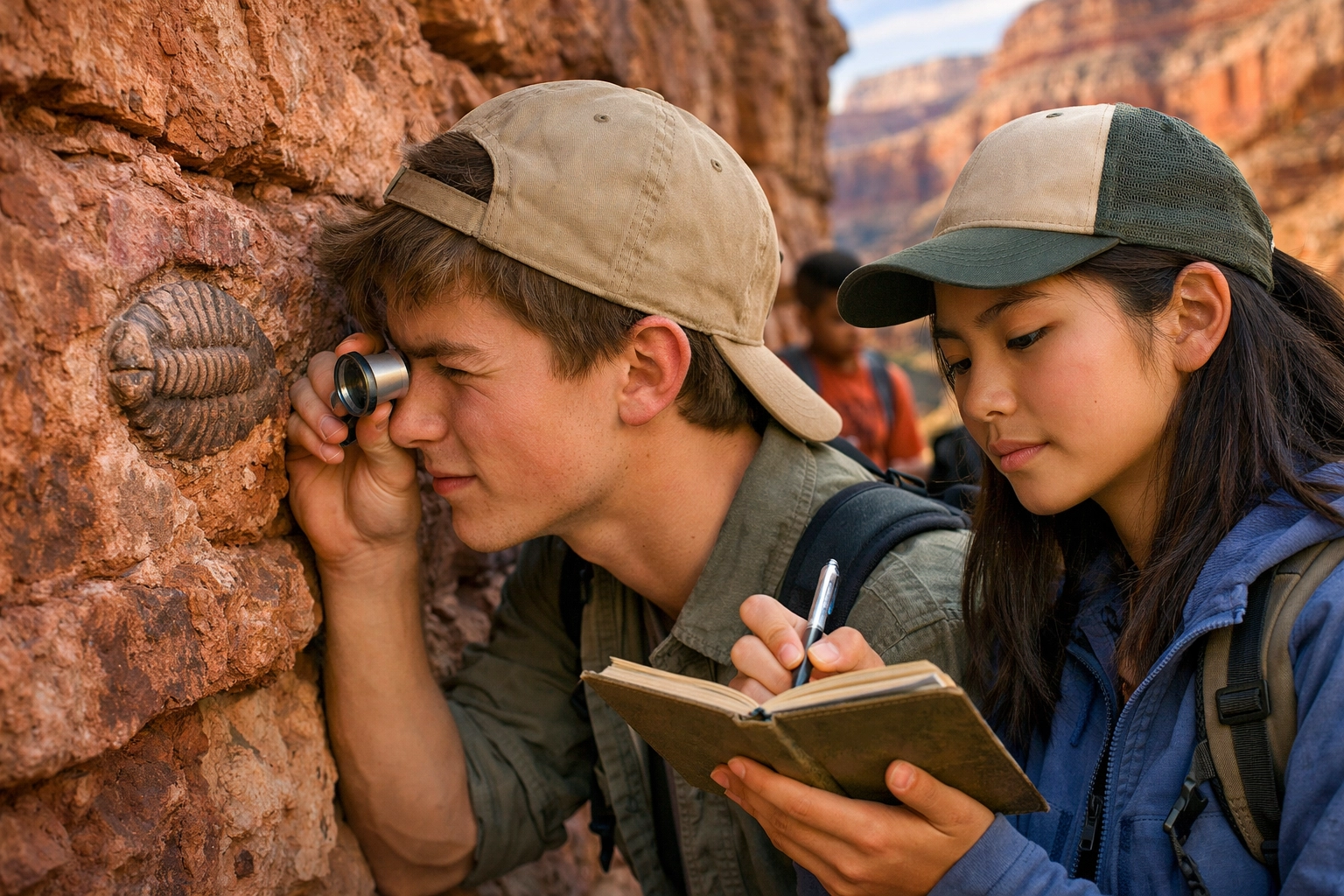
Key Geological Concepts Explored:
Deposition and Stratigraphy: Understanding how ancient seas, deserts, and swamps left behind the layers of the Kaibab Limestone and Coconino Sandstone.
Tectonics and Uplift: Analyzing the forces that pushed the Colorado Plateau upward while the river carved downward.
Hydrology and Erosion: Studying the relentless power of the Colorado River and how water remains the primary architect of the American West.
Developing Purpose Through the Great Unknown
Purpose is often found at the edge of one’s comfort zone. For many students, a trip to the Grand Canyon is their first time truly disconnected from digital distractions and fully connected to the natural world.
In this environment, "purpose" takes on a new meaning. Students begin to see themselves as part of a larger story: a geological story that spans eons and a human story that requires stewardship. By engaging in service-learning components and rigorous field studies, students move from being passive observers to active participants in their own education. They discover that their hard work: whether it’s a steep hike out of the canyon or a complex geological survey: contributes to a collective understanding and protection of this World Heritage site.
Leadership in the Field
Leadership isn't just about being the loudest voice in the room; it’s about responsibility, preparation, and resilience. The Grand Canyon is a demanding environment, and it serves as a natural laboratory for leadership development.
During a Grand Canyon geology student program, students are often tasked with "Leading the Pack." This involves:
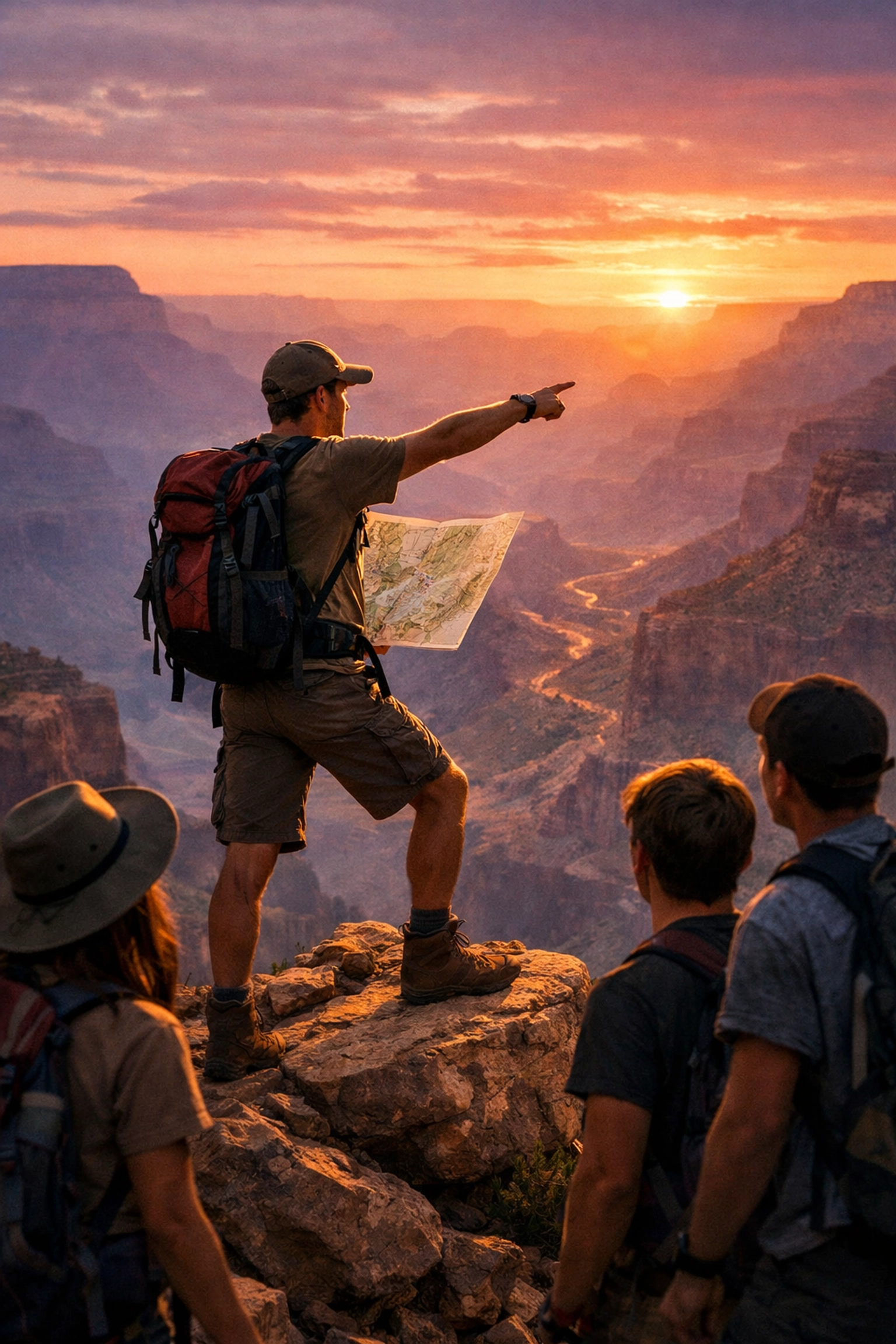
Navigational Responsibility: Learning to read topographic maps and guide their peers through diverse terrain.
Resource Management: Understanding the vital importance of water, food, and energy conservation in a desert climate.
Peer Support: Encouraging those who find the physical challenge daunting, fostering a culture of "no student left behind."
These leadership skills are transferable. The student who learns to manage a group's hydration and morale during a ten-mile hike is the same student who will lead a project in the boardroom or a research team in a university lab.
The Gift of Conservation
We often talk about conservation as a duty, but at Appleseed Expeditions, we prefer to view it as a gift. When students truly understand the geological and ecological rarity of the Grand Canyon, they feel a natural urge to protect it. This is the "seed" we aim to plant: the realization that we are the current guardians of a billion-year-old legacy.
The Grand Canyon geology student program emphasizes that conservation is not a static concept. It is an active, ongoing effort. By studying the impact of tourism, climate change, and water usage on the Colorado River, students learn that their choices today directly affect the survival of this landscape for future generations. We want them to return home not just with photos, but with a lifelong commitment to environmental stewardship.
Planning Your Expedition: A Step-by-Step Guide for Educators
Organizing a trip of this magnitude requires meticulous planning and a risk-averse mindset. As an educator, your primary goal is to ensure that the "real science" happens within a framework of absolute safety and structure.
1. Establish Clear Educational Objectives
Before booking, define what you want your students to achieve. Are you focusing on the rock cycle? Evolutionary biology through fossils? Or perhaps the intersection of indigenous history and geology? Having a clear goal ensures that every hike and every lecture serves a purpose.
2. Prioritize Physical and Mental Preparation
The Grand Canyon is not a walk in the park. Advise students and parents months in advance about the physical requirements.
Conditioning: Encourage students to begin a walking or hiking regimen.
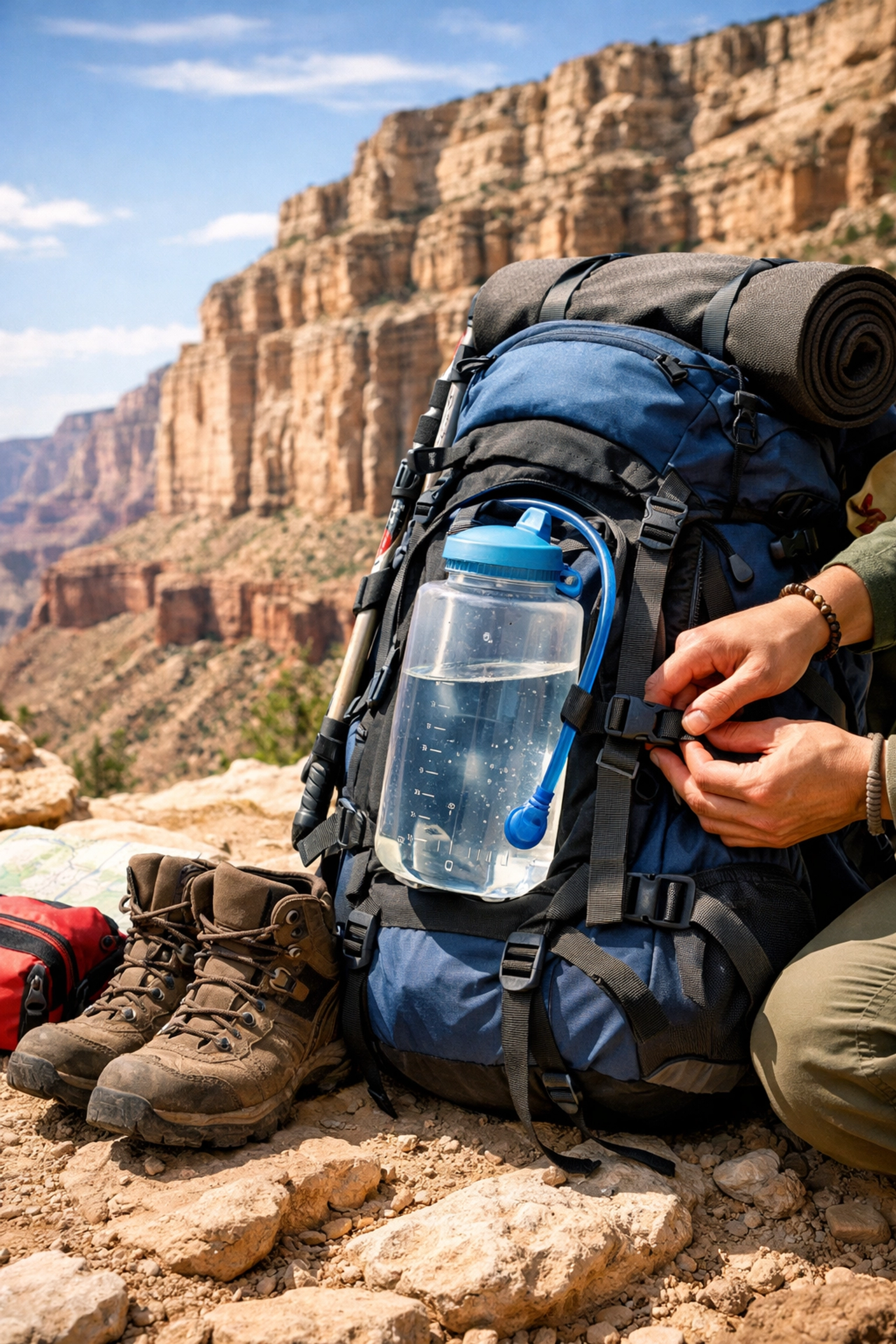
Hydration Education: Teach the "half-gallon rule" for desert hiking long before you arrive in Arizona.
Gear Checks: Ensure every student has broken-in hiking boots and high-quality sun protection.
3. Implement a Strict Safety Protocol
Safety is of paramount importance. At Appleseed, we emphasize a "proactive thinking" model.
Emergency Procedures: Ensure every chaperone and student knows the protocol for heat exhaustion or minor injuries.
Communication: Maintain a clear line of communication between trip leaders, school administration, and parents.
Vigilance: Constantly monitor weather conditions and trail closures. The desert can change in an instant.
Planting Seeds for Future Generations
The impact of a Grand Canyon geology student program doesn't end when the bus pulls back into the school parking lot. The real science, the leadership lessons, and the sense of purpose continue to grow. We have seen students change their career paths toward geology, environmental law, and education specifically because of their time in the canyon.
By exposing young people to the majesty of the Earth's history, we are planting seeds of curiosity and responsibility. We are training the next generation of scientists who will solve our water crises, the next generation of leaders who will advocate for our National Parks, and the next generation of citizens who understand that our planet is a gift worth protecting.
If you are ready to move beyond the textbook and give your students a life-changing educational experience, we invite you to explore our Grand Canyon programs. Whether it’s studying the ancient vishnu basement rocks or participating in service learning with local communities, the potential for growth is as deep as the canyon itself.
Reaffirming Our Mission
Ensuring the safety and enrichment of your students is our highest priority. Preparing for a Grand Canyon expedition involves careful planning, but the rewards: seeing a student’s eyes light up as they grasp a complex geological concept or watch them step into a leadership role: are immeasurable.
Let's work together to inspire the next generation. Through real science, real impact, and a dedicated focus on conservation, we can help our students unlock their full potential.
For more information on our diverse range of science-based expeditions, check out our other programs:
Explore marine biology and coastal conservation at the Emerald Coast.
Dive into rainforest ecology and volcanic studies on our Oregon school trips.
Experience the intersection of STEM and history on our Space Camp expeditions.
The world is a vast classroom( let's go explore it.)

Comments