


Boiling Point: Exploring Earth Science on a Class Trip to Yellowstone
- Caleb Mullenix
- Feb 20
- 6 min read

Understanding fundamental earth science principles becomes remarkably tangible when students witness geothermal phenomena firsthand. A class trip to Yellowstone offers unparalleled opportunities to explore core concepts such as pressure, temperature, elevation effects, and geothermal systems: transforming abstract classroom lessons into observable, measurable realities. Ensuring that students grasp these critical scientific principles while experiencing them in nature's laboratory is of paramount importance for comprehensive STEM education.
The Elevation Effect: A Living Laboratory for Atmospheric Pressure
Begin by preparing your students to understand a fundamental scientific principle that governs every geothermal feature they will observe during student travel to Yellowstone: the relationship between elevation and boiling point. At Yellowstone's average elevation of 7,600 feet, water boils at 199°F rather than the standard 212°F observed at sea level. This 13-degree difference provides an exceptional teaching opportunity.
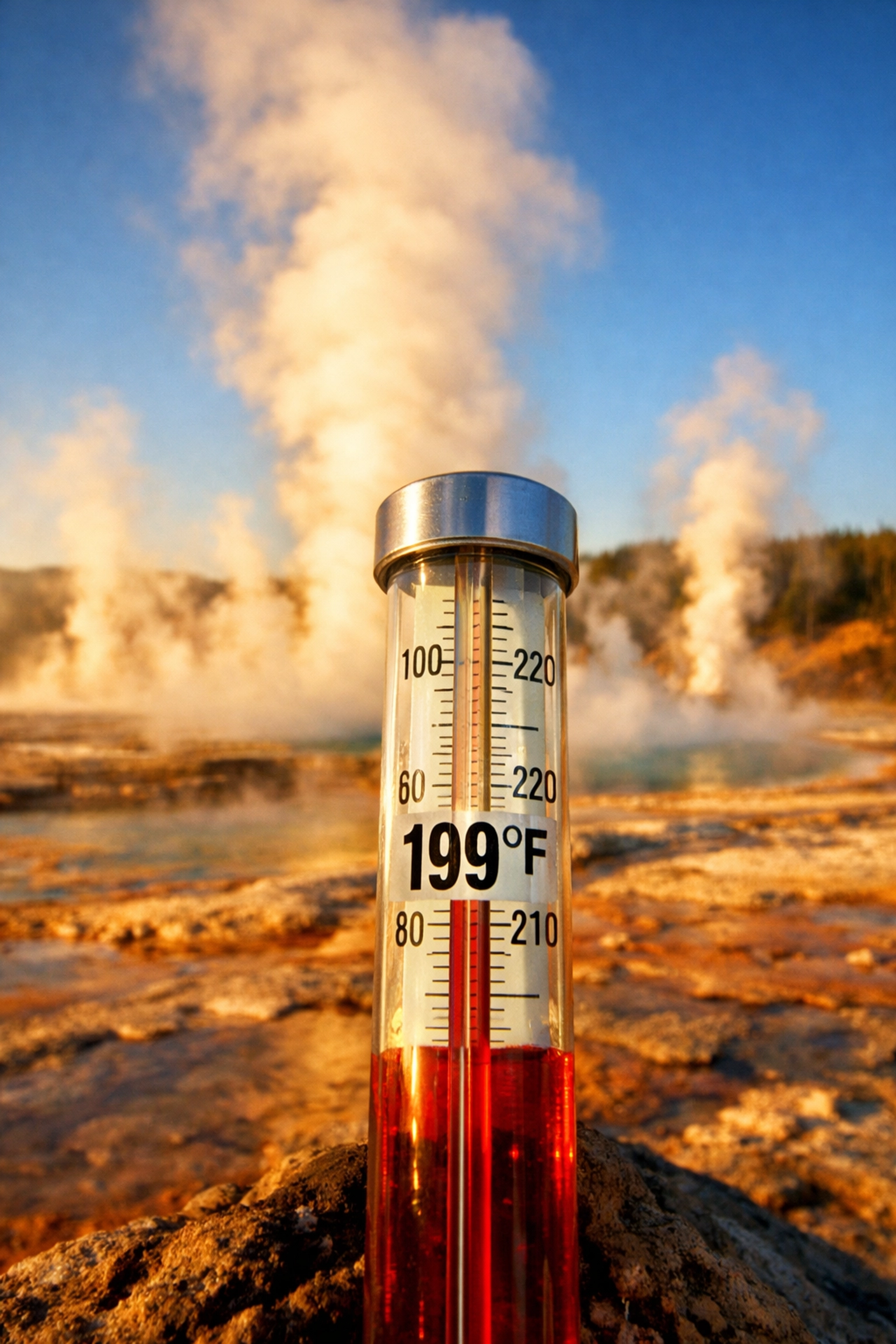
Explain to students before departure that boiling occurs when a liquid's vapor pressure equals the surrounding atmospheric pressure. At higher elevations, atmospheric pressure decreases because there is less air pressing down from above. Consequently, water molecules require less thermal energy to escape as steam. Encourage students to consider this principle actively as they observe hot springs, fumaroles, and geysers throughout the park.
Pre-Trip Preparation Activities
Prepare students for this concept through the following instructional steps:
Conduct preliminary pressure experiments in the classroom using vacuum chambers or pressure cookers to demonstrate how pressure affects boiling point
Create data collection sheets for students to record temperatures, elevations, and observations at various thermal features
Review atmospheric pressure concepts including barometric pressure readings and altitude effects
Discuss safety protocols for observing thermal features from designated boardwalks and viewing areas
Establish learning objectives specifically tied to earth science standards and curriculum requirements
Underground Pressure Systems: Understanding Geyser Mechanics
Ensure that students comprehend the critical distinction between surface boiling points and underground conditions. Despite the lower surface boiling point at Yellowstone's elevation, geysers demonstrate spectacular eruptive force because of confined pressure systems deep beneath the earth's surface.
Advise students that water deep within Yellowstone's geothermal plumbing can be superheated to temperatures exceeding 400°F: sometimes reaching as high as 459°F: yet remains in liquid form. This phenomenon occurs because the weight of overlying rock and water creates immense pressure that prevents boiling. Emphasize the importance of understanding this pressure gradient, as it explains the fundamental mechanics driving geyser eruptions.
The Eruption Cycle: A Step-by-Step Process
Instruct students to observe and document the following sequential phases during geyser activity:
Superheating Phase: Groundwater infiltrates down through fractures and contacts hot rock heated by the underlying magma chamber
Pressure Accumulation: Superheated water rises through narrow constrictions in the geyser's plumbing system
Steam Bubble Formation: As pressure decreases near the surface, steam bubbles begin forming and expanding
Critical Threshold: Pressure builds until it overcomes the weight of the water column above
Violent Eruption: Water and steam erupt explosively, expelling water faster than the system can refill
Recharge Period: The system gradually refills with groundwater, beginning the cycle anew
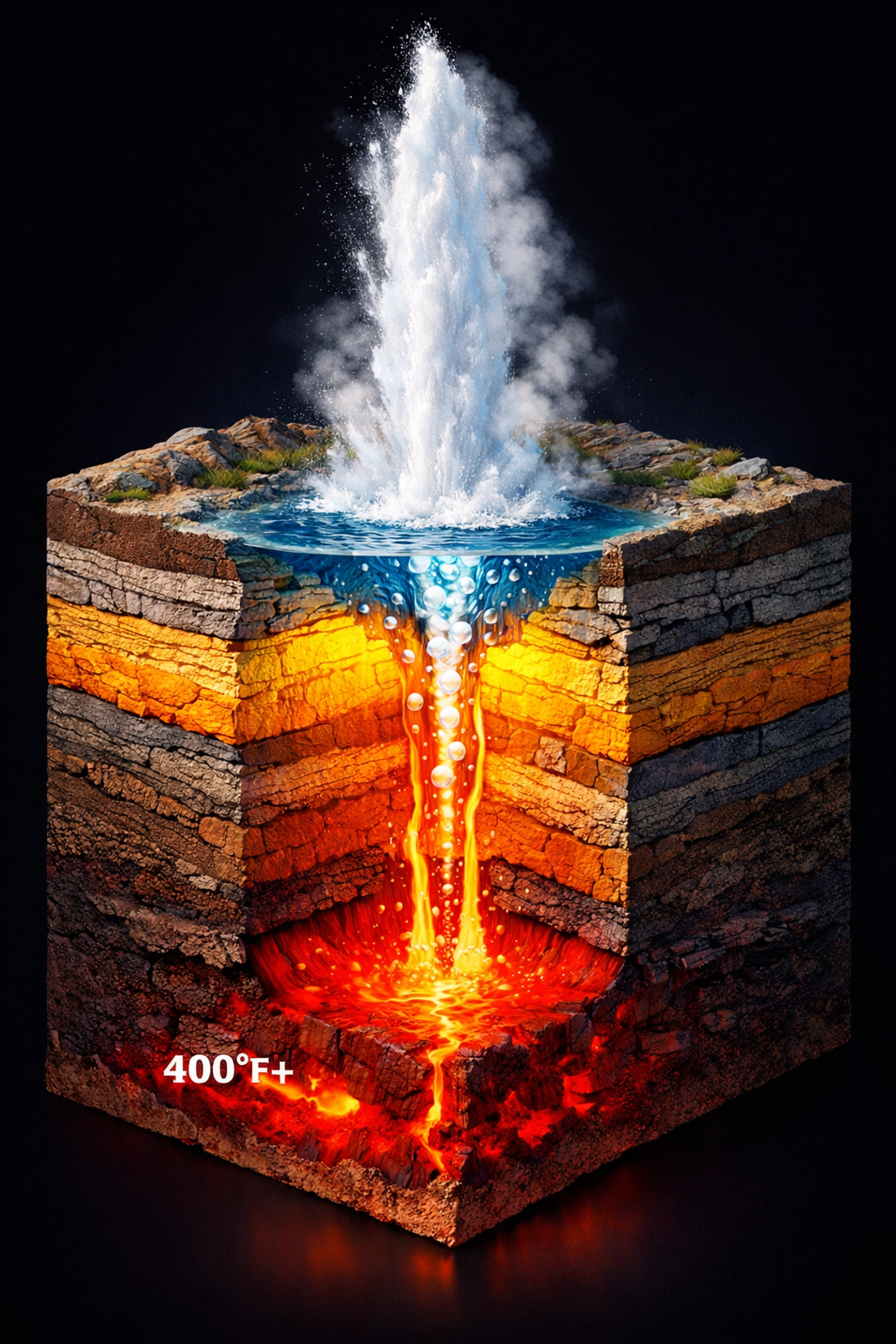
Share detailed observation guidelines with students before visiting active geyser basins. Discuss emergency procedures and appropriate distances to maintain from all geothermal features, as unpredictable eruptions and extreme temperatures present serious safety considerations.
Norris Geyser Basin: Yellowstone's Thermal Extremes
Direct particular attention to the Norris Geyser Basin during your educational trips to Yellowstone, as this location exemplifies geothermal principles at their most extreme. Norris ranks as Yellowstone's hottest thermal area, with temperatures in most features exceeding the local boiling point of 199°F.
Emphasize the extraordinary scientific discovery made at Norris: a research drill hole extending just 1,087 feet below the surface recorded 459°F: the highest temperature ever measured in any Yellowstone geothermal area. This measurement provides tangible evidence of the immense heat reservoir underlying the park and demonstrates the direct connection between volcanic activity and surface thermal features.
Chemical and Mineral Education Opportunities
Create opportunities for students to observe and document the relationship between chemistry, temperature, and visual characteristics at Norris. Encourage students to note the following color-mineral relationships:
Milky blue waters: Indicate high silica content suspended in solution
Reddish-orange deposits: Result from iron oxides and arsenic compounds
Emerald green hues: Derive from sulfur deposits combined with light refraction effects
White and gray formations: Demonstrate silica sinter deposition over time
Yellow accumulations: Indicate elemental sulfur precipitation
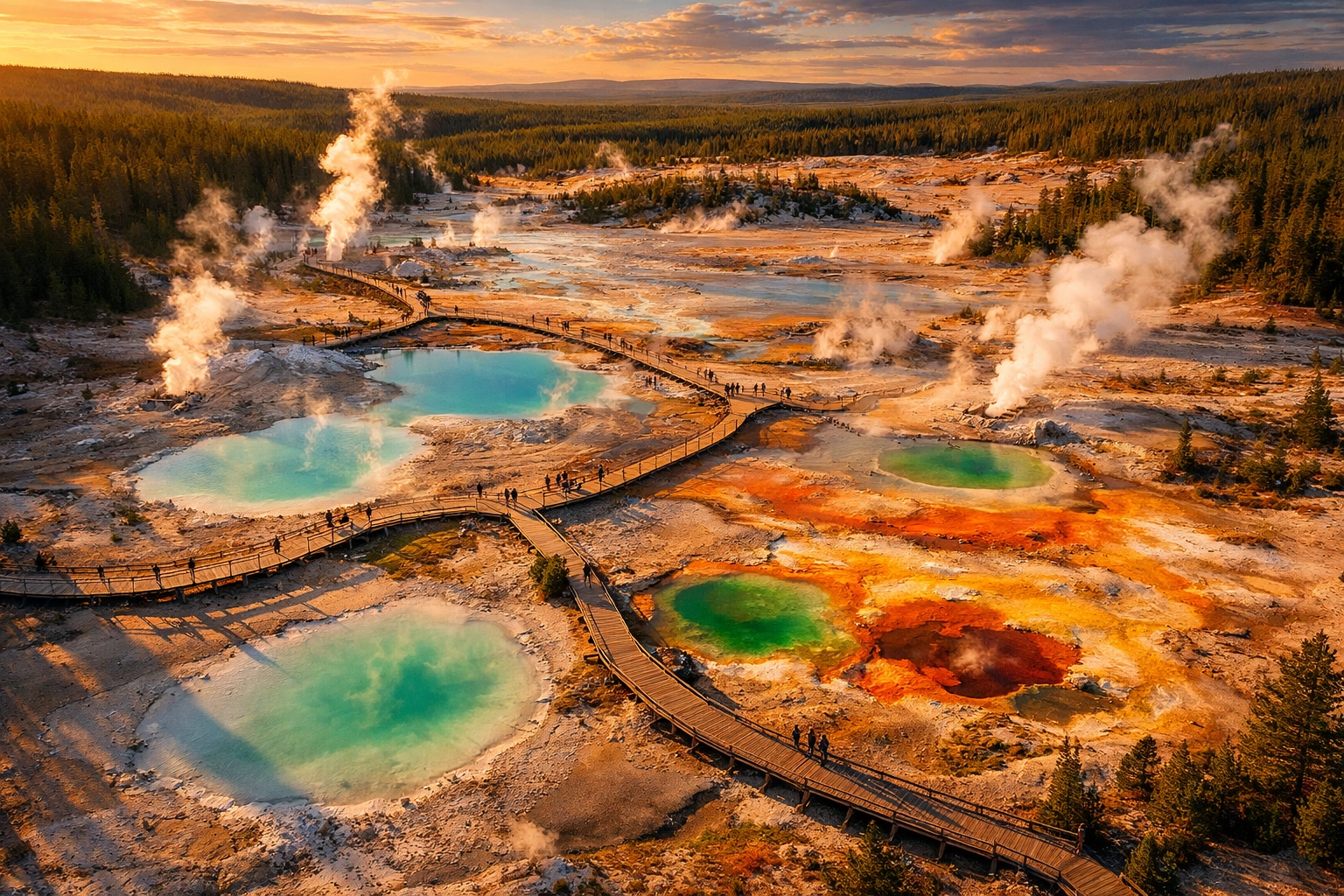
Advise students to photograph these features systematically, creating a visual catalog that connects color observations to underlying chemical processes. Discuss the importance of never touching, collecting, or disturbing any thermal features, as doing so is both dangerous and illegal within the national park.
Integrating Multi-Disciplinary Learning
Maximize learning opportunities by connecting earth science observations to related disciplines during your class trip to Yellowstone. Encourage students to consider geological timescales, ecological adaptations to extreme environments, and the intersection of geology and biology.
Cross-Curricular Connections
Structure your educational trip to incorporate the following interdisciplinary elements:
Geology and Earth History: Examine volcanic calderas, lava flows, and evidence of past eruptions to understand Yellowstone's formation over 640,000 years
Microbiology: Observe thermophilic organisms thriving in extreme temperature conditions, demonstrating life's remarkable adaptability
Chemistry: Analyze pH levels, mineral compositions, and chemical reactions occurring in thermal features
Physics: Calculate energy transfer, thermal convection, and pressure differentials throughout geothermal systems
Mathematics: Record quantitative data on eruption intervals, temperatures, flow rates, and thermal gradients
Safety Protocols and Supervision Requirements
Ensuring the safety of students during student travel to Yellowstone is of paramount importance, particularly when observing geothermal features. Thermal areas present multiple hazards including unstable ground, acidic water, extreme temperatures, and toxic gases.
Establish and enforce the following non-negotiable safety guidelines:
Maintain constant visual supervision of all students at all times within thermal areas
Require students to remain on designated boardwalks without exception
Establish buddy systems pairing students for mutual accountability
Prohibit running, pushing, or horseplay near thermal features
Carry comprehensive first aid supplies including burn treatment materials
Brief students on emergency signals and evacuation procedures before entering each thermal area
Monitor weather conditions continuously, as wind can carry steam and toxic gases
Ensure adequate hydration at high elevation to prevent altitude-related issues
Share a detailed itinerary with parents, school administrators, and emergency contacts including specific locations, timing, and contact information for each day of the trip.
Assessment and Documentation Strategies
Create structured assessment opportunities that demonstrate student learning outcomes from the educational experience. Design data collection instruments that align with your curriculum standards and learning objectives.
Recommended Assessment Tools
Implement the following documentation methods during your class trip to Yellowstone:
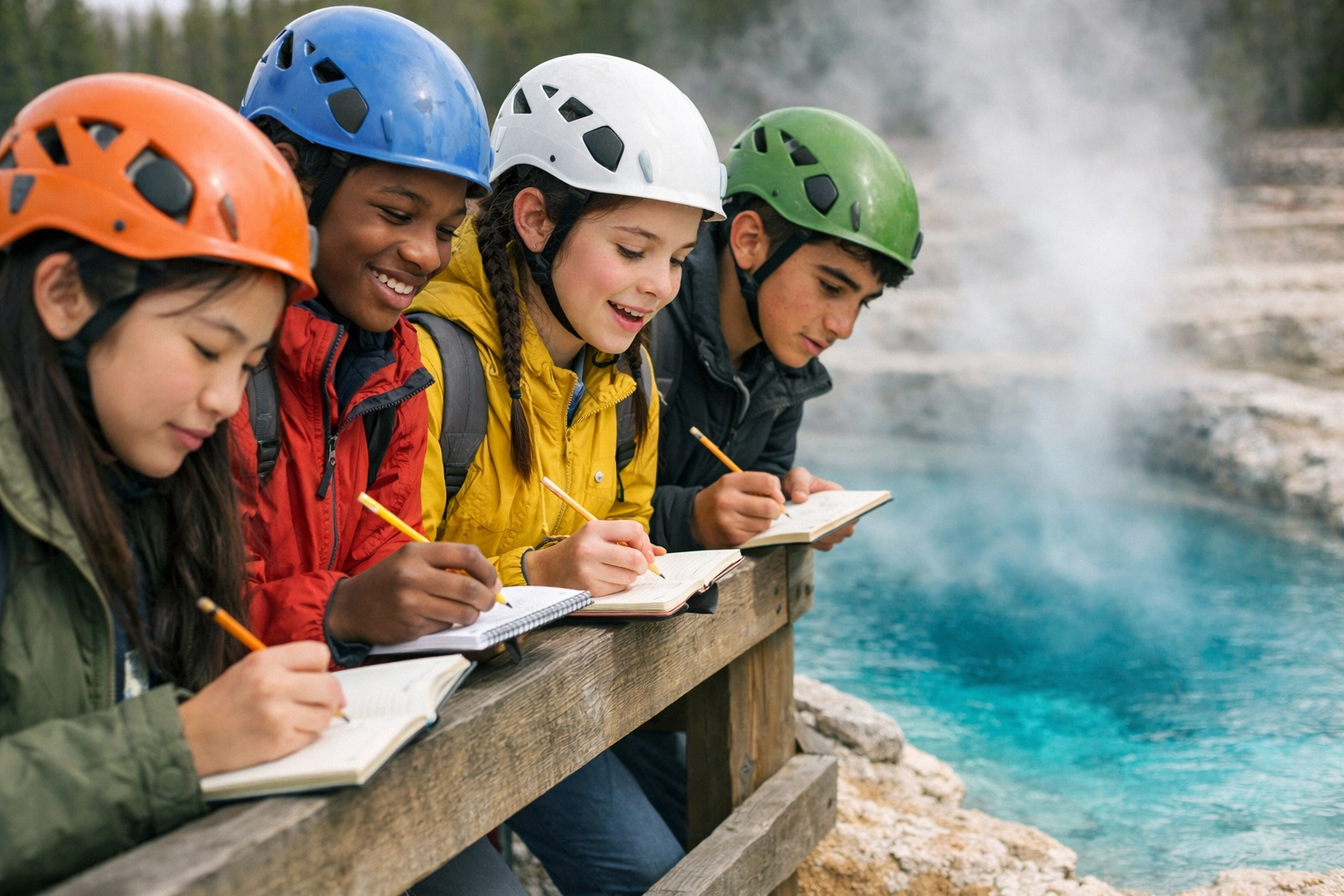
Field journals: Require daily entries documenting observations, measurements, and scientific questions
Photographic evidence: Have students create annotated photo collections linking images to specific concepts
Temperature logs: Record ambient and feature temperatures at multiple locations throughout the park
Sketch diagrams: Encourage students to draw cross-sections of geyser systems and geothermal plumbing
Hypothesis testing: Design experiments testing predictions about eruption timing or temperature variations
Group presentations: Assign different thermal features to student teams for detailed study and presentation
Partnering with Educational Travel Specialists
Planning a comprehensive and educationally rigorous class trip to Yellowstone requires extensive preparation, logistical coordination, and safety management. Partnering with experienced educational travel organizations can be immensely helpful in ensuring that your trip maximizes learning opportunities while maintaining the highest safety standards.
Appleseed Expeditions specializes in designing student travel to Yellowstone with curriculum-aligned earth science programming, expert naturalist guides, and comprehensive safety protocols. Their educational trips focus specifically on hands-on geothermal science exploration, providing structured learning experiences that transform abstract concepts into tangible understanding.
Post-Trip Integration and Continued Learning
Extend the educational value of your Yellowstone experience by creating structured follow-up activities that reinforce concepts and assess comprehension. Begin post-trip instruction by having students organize and analyze the data they collected during the expedition.
Encourage students to create scientific presentations, research papers, or multimedia projects that demonstrate their understanding of geothermal processes, pressure systems, and volcanic geology. Discuss how the principles observed at Yellowstone apply to other geothermal regions worldwide, including Iceland, New Zealand, and Italy.
A class trip to Yellowstone represents far more than a memorable excursion: it provides transformative educational opportunities that bring earth science concepts to life through direct observation and measurement. By preparing students thoroughly, maintaining rigorous safety standards, and creating structured learning experiences, educators can ensure that this extraordinary natural laboratory delivers lasting scientific understanding and inspires continued exploration of earth science principles.
Comments