


Cloud Forests and Volcanos: A Hands-On Earth Science Expedition in Costa Rica

Providing students with a comprehensive understanding of Earth science requires moving beyond the classroom and into the field. Theoretical knowledge of plate tectonics, geothermal energy, and biodiversity is essential, but witnessing these forces in a living laboratory creates a lasting educational impact. Costa Rica serves as one of the world’s most accessible and vibrant classrooms for these subjects. By focusing an expedition on the Arenal Volcano and the Monteverde Cloud Forest, educators can offer a multi-disciplinary curriculum that spans geology, meteorology, and ecology.
Planning such an expedition involves meticulous preparation and a commitment to safety, ensuring that students are not only inspired but also well-supervised as they explore these dynamic environments.
The Geological Significance of Arenal Volcano
Arenal Volcano stands as a premier site for geological study. Reaching an elevation of 1,633 meters (5,357 feet), it was historically one of the ten most active volcanoes in the world. Its current state of "resting" provides a unique opportunity for students to observe the immediate and long-term effects of volcanic activity without the risks associated with active eruptions.
The defining moment in Arenal’s modern history occurred on July 29, 1968, when a massive eruption fundamentally altered the landscape and created the distinctive symmetrical cone seen today. For students of Earth science, this site offers a tangible timeline of geological events.
Key Learning Objectives at Arenal:
Plate Tectonics and Subduction: Analyze how the subduction of the Cocos Plate beneath the Caribbean Plate created the Central America Volcanic Arc.
Igneous Rock Identification: Identify various types of volcanic rock, including basalt and andesite, formed during different eruptive phases.
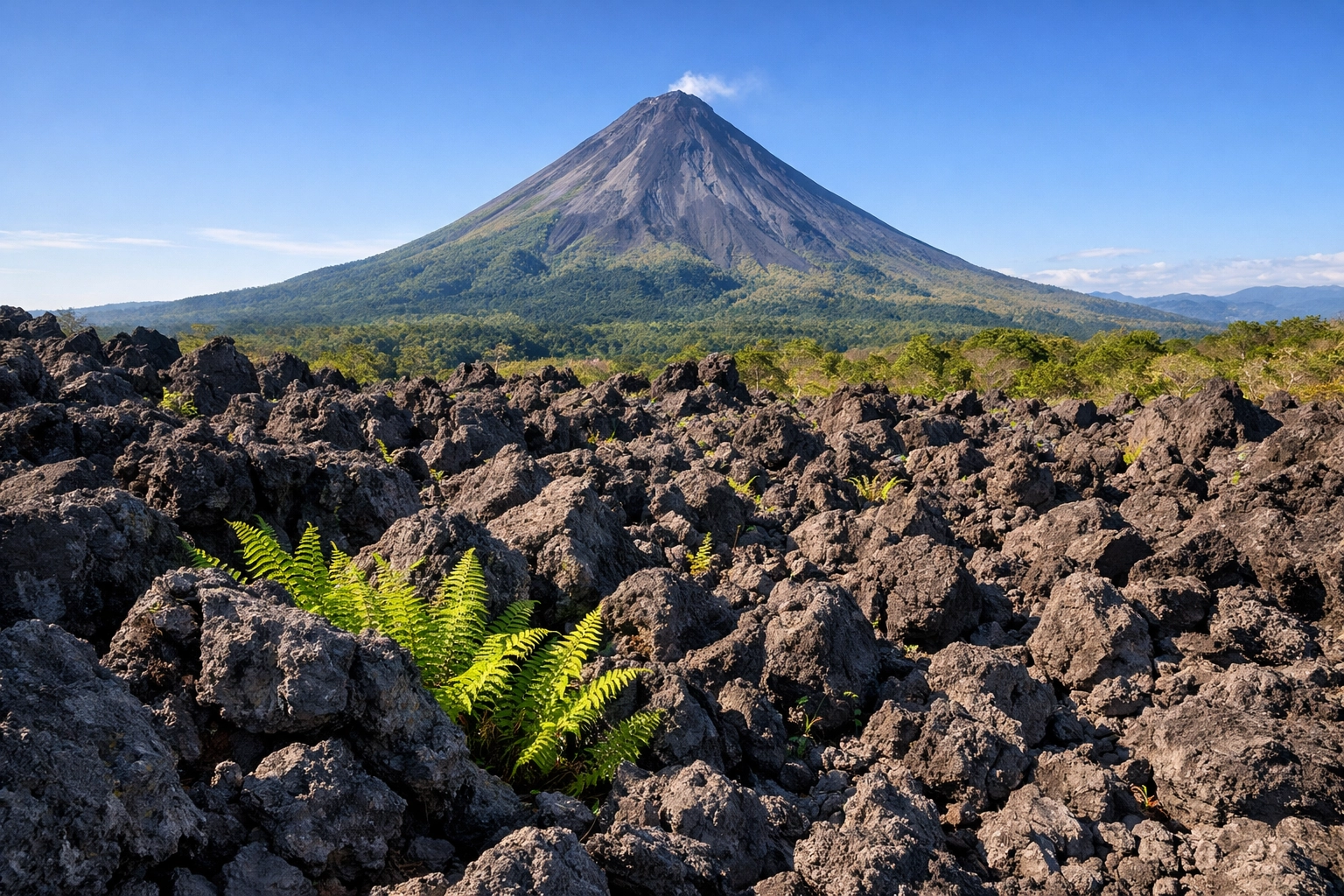
Primary Succession: Observe how life returns to a sterile landscape by examining the pioneer species currently populating the lava flows of 1968.
Geothermal Energy: Discuss the transition from destructive volcanic force to a sustainable energy source used throughout Costa Rica.
Fieldwork on the 1968 Lava Trail
To maximize the learning experience, students should participate in guided hikes along the 1968 Lava Trail. This is not merely a recreational walk; it is a rigorous field study. As students navigate the rugged terrain, they should be encouraged to document the transition from dense secondary forest to the stark, rocky outcrops left by the lava.
Actionable Steps for Educators:
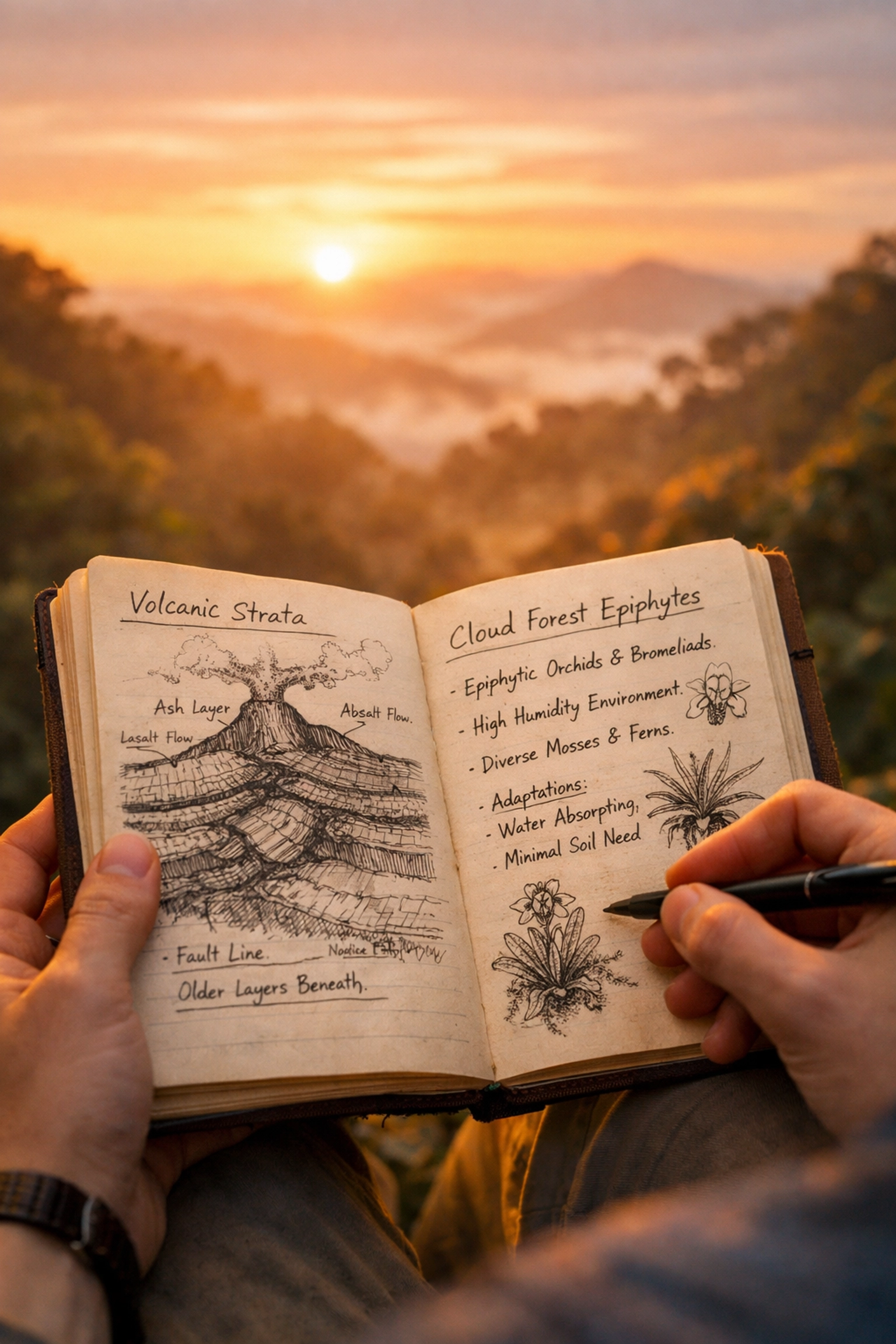
Implement Data Collection: Have students use field journals to sketch the stratification of the volcano and note the variations in soil quality.
Analyze Geomorphology: Discuss how erosion and weathering are already beginning to reshape the 1968 flows.
Visit Geothermal Hot Springs: Use the nearby hot springs as a practical demonstration of how magma chambers beneath the surface heat groundwater, providing a direct link to lessons on thermodynamics and renewable energy.
For groups looking to expand their geological studies further north, exploring earth science and wildlife programs can provide additional context on how volcanic activity shapes entire ecosystems across different latitudes.
The Atmospheric Wonders of Monteverde Cloud Forest
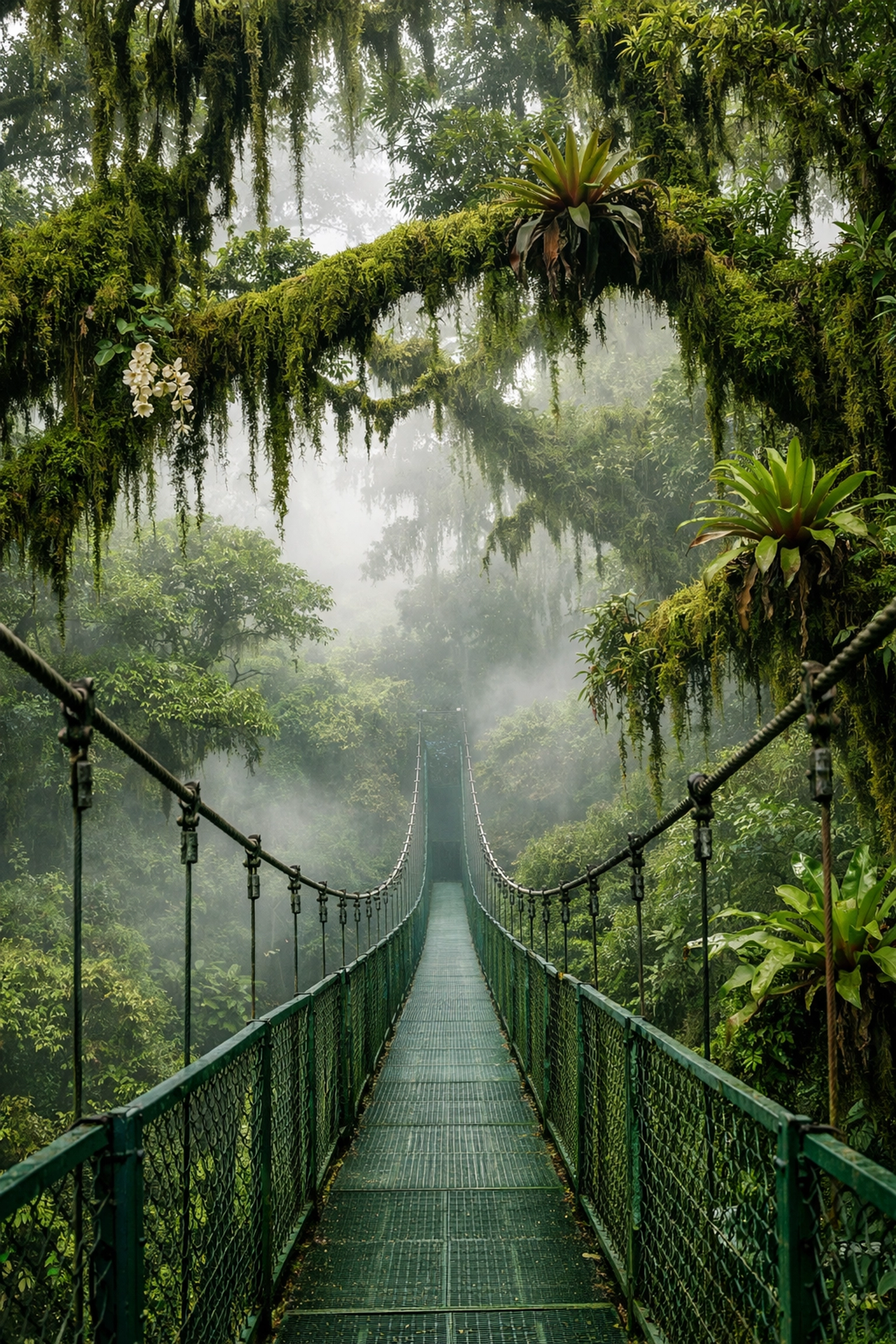
Contrasting the heat and geological intensity of Arenal is the Monteverde Cloud Forest. Located at nearly 5,000 feet in the Tilaran Range, this ecosystem is a rare atmospheric phenomenon. Unlike a typical rainforest, a cloud forest receives much of its moisture from "horizontal precipitation": mist and low-lying clouds that condense directly onto the vegetation.
This environment is critical for teaching students about meteorology and the delicate balance required to maintain specific microclimates. The high humidity and cooler temperatures (which necessitate proper layering and preparation) create a habitat where epiphytes: plants that grow on other plants: thrive, covering every available surface in a "carpet" of green.
Scientific Observations in the Canopy:
Hydrological Cycle: Observe how the cloud forest captures water from the air, which then feeds the watersheds for the surrounding lowlands.
Biodiversity and Endemism: Document species that exist only in this specific altitude and humidity range, emphasizing the risks posed by climate change and rising cloud bases.
Symbiotic Relationships: Study the complex interactions between the trees and the epiphytes (such as orchids, bromeliads, and mosses) that inhabit them.
Field Techniques in the Canopy and Beyond
Studying the cloud forest requires different techniques than those used at the volcano. To observe the full complexity of this ecosystem, students must access the canopy: where the majority of biological activity occurs.
Hanging Bridge Assessments: Utilize hanging bridges to perform vertical transects of the forest. This allows students to see how species composition changes from the forest floor to the upper canopy.
Night Tours for Nocturnal Ecology: Conduct a naturalist-guided night tour. This is essential for understanding the full scope of the forest's biodiversity, as many mammals, amphibians, and insects are active only after dark.
Acoustic Monitoring: Encourage students to sit in silence and record the sounds of the forest, later identifying different bird calls (such as the Resplendent Quetzal) as part of an avian population study.
To see how these canopy studies compare to other forest ecosystems, such as those in the Pacific Northwest, educators may find it useful to research Olympic National Forest ecology, which offers a different perspective on northern temperate rainforests.
Logistics, Safety, and Preparation
An expedition of this magnitude requires a rigorous approach to logistics and risk management. The transition from Arenal to Monteverde is a significant journey, often involving a combination of bus and boat travel across Lake Arenal. This transit itself is an educational opportunity, offering panoramic views of the volcano’s "older brother," Cerro Chato, and the surrounding primary forest.
Safety Protocols for Educators:
Weather Awareness: In both the volcano and the cloud forest, weather can shift rapidly. Ensure all participants have high-quality rain gear and thermal layers.
Hydration and Nutrition: The physical demands of hiking through lava fields and high-altitude forests require students to maintain consistent hydration and caloric intake.
Communication Plans: Establish clear communication protocols for all chaperones and students. In remote areas like Monteverde, ensure guides have satellite communication or radio backups.
Vigilance Regarding Wildlife: While the wildlife is a primary attraction, students must be instructed on the importance of maintaining a safe distance and respecting the habitat to ensure both their safety and the preservation of the animals.
Integrating the Experience into the Curriculum
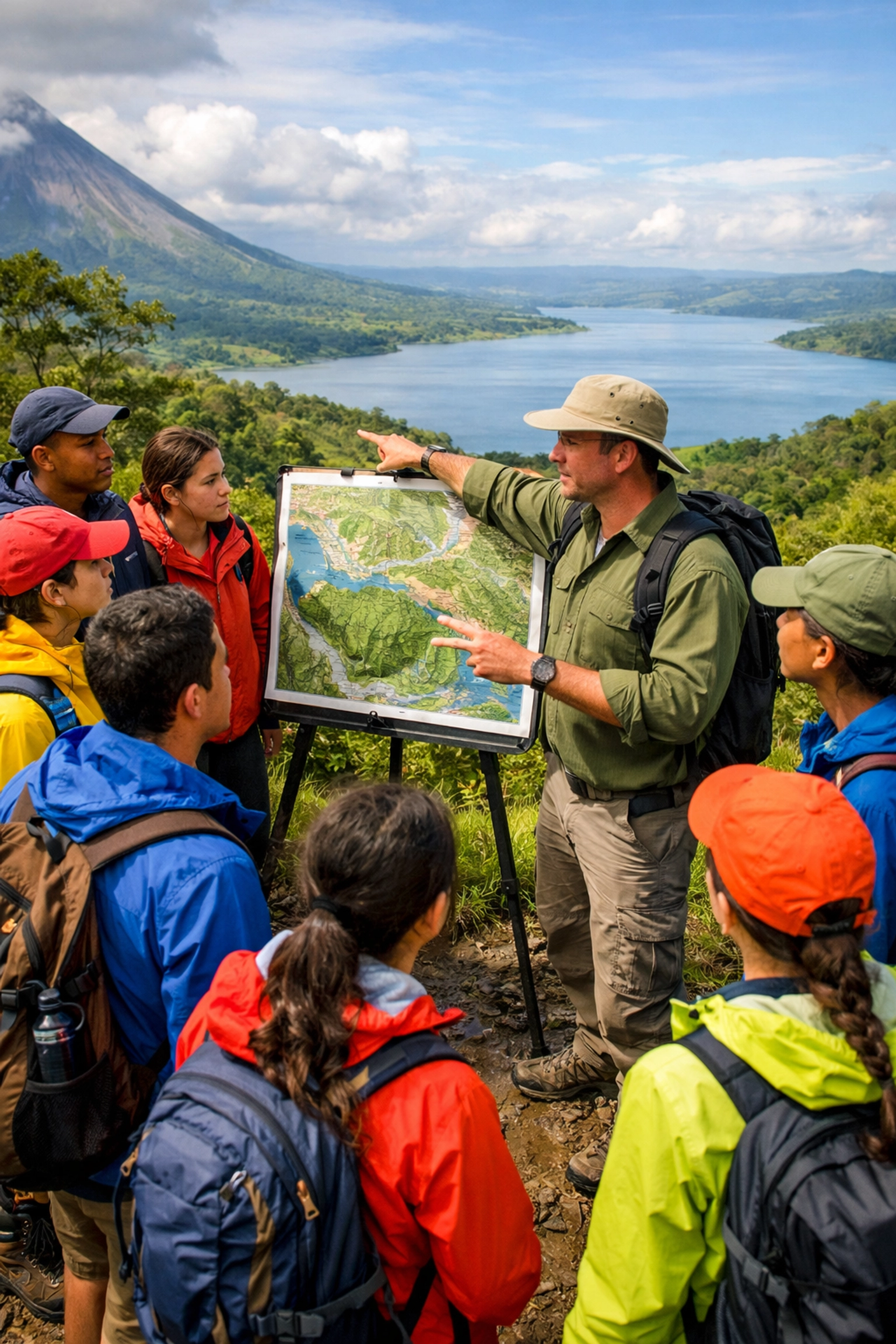
The value of a Costa Rica expedition lies in the synthesis of multiple scientific disciplines. Upon returning, students should be tasked with integrating their field observations into a final project or presentation. This reinforces the "hands-on" aspect of the trip and ensures the educational objectives are met.
Suggested Post-Trip Activities:
Comparative Analysis: Compare the geological features of Arenal with other sites, such as the Grand Canyon, to discuss how different tectonic and erosional forces shape the Earth.
Conservation Proposals: Based on their observations in Monteverde, have students develop a conservation plan to protect cloud forests from the impacts of global temperature rises.
Sustainability Reports: Analyze Costa Rica’s use of geothermal and hydroelectric power as a model for sustainable development in other regions.
The Lasting Impact of Science Expeditions
When students stand on a 50-year-old lava flow or look out over the misty canopy of a cloud forest, the concepts they read about in textbooks become reality. These expeditions do more than teach facts; they foster a sense of responsibility and curiosity about the natural world.
For educators, the goal is to provide a structured, safe, and academically rigorous environment where this transformation can occur. By focusing on the unique Earth science opportunities in Costa Rica: from the tectonic power of Arenal to the atmospheric precision of Monteverde: you are preparing your students to be the next generation of scientists, conservationists, and informed global citizens.
To begin planning your next academic journey, explore our full range of educational expeditions and discover how hands-on learning can redefine your students' understanding of the world.

Great read! The way the blog describes hands-on exploration in natural environments really shows how experiential learning can deepen understanding of earth science. In a similar way, students exploring higher education abroad often evaluate institutions through global indicators like the Immanuel Kant Baltic Federal University ranking, which reflects its academic standing and research development in Russia and internationally.
Great article highlighting the value of hands-on learning experiences. Similarly, students researching universities abroad often check factors like Ain Shams University ranking to understand its global reputation. Ain Shams University is ranked among the top universities in Egypt and appears in global rankings like QS. Platforms such as Education Vibes also help students explore such information when considering international study options.