


Earth Science Wonders: Why a Class Trip to Yellowstone is the Ultimate Field Experience

Planning educational trips that deliver genuine academic value while capturing student imagination can be challenging. However, student travel to Yellowstone offers an unparalleled opportunity to transform abstract earth science concepts into tangible, memorable experiences. As America's first national park and home to the world's most extraordinary collection of geothermal features, Yellowstone serves as a living laboratory where students witness geological processes that typically require decades: or even centuries: to observe elsewhere.
The Geothermal Classroom: Half the World's Features in One Location
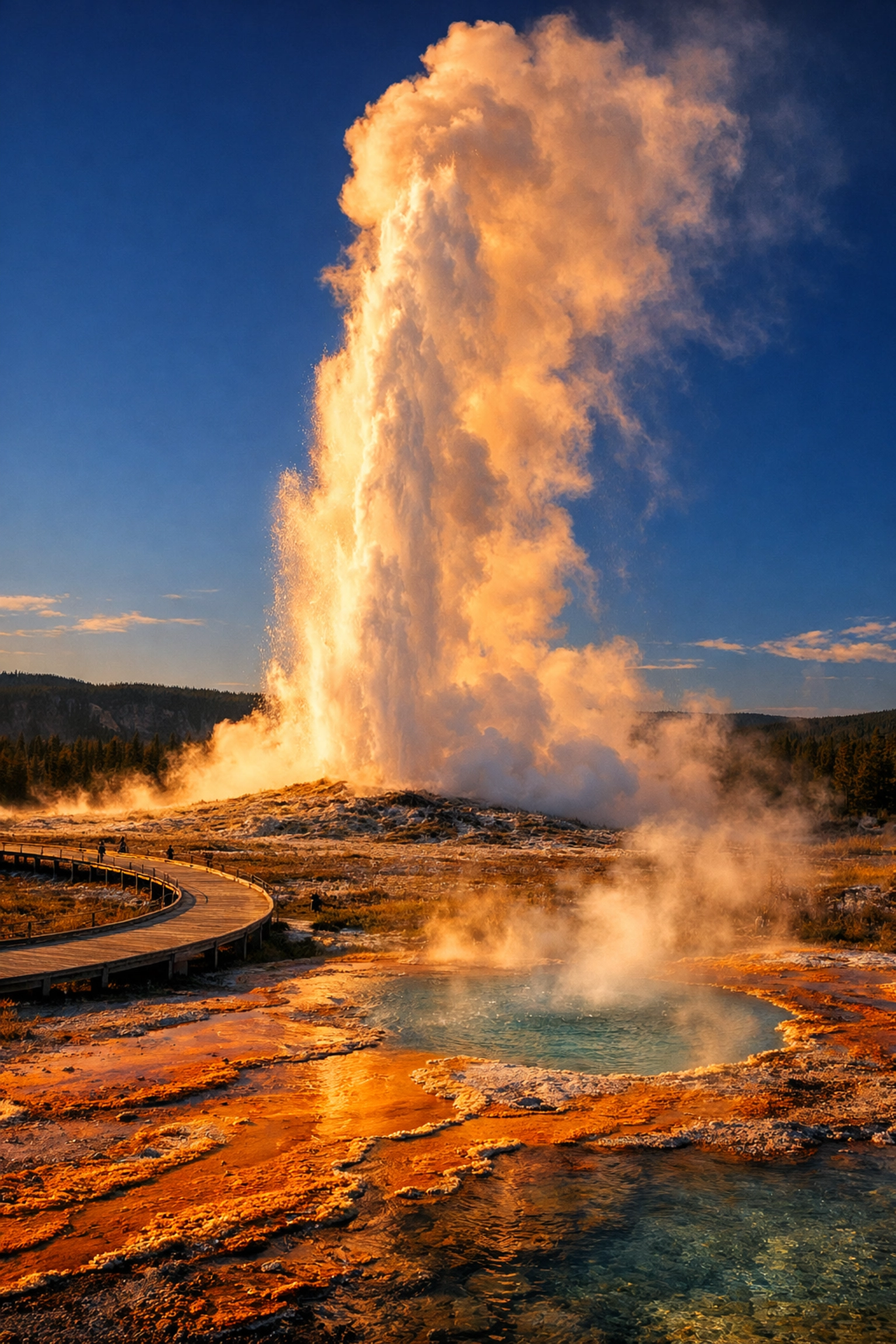
Yellowstone National Park preserves approximately 10,000 hydrothermal features, representing roughly half of all known geothermal features on Earth. This concentration creates an unmatched educational opportunity for a class trip to Yellowstone, allowing students to observe diverse geothermal phenomena within a compact, accessible area.
Observable Geothermal Features for Student Study
When planning educational trips to Yellowstone, educators can structure lessons around four primary types of thermal features:
Geysers: Yellowstone contains over 300 geysers: more than half the world's total. Old Faithful erupts approximately every 90 minutes, providing predictable demonstrations of pressure dynamics, heat transfer, and the subsurface plumbing systems that create these spectacular displays. Students can time eruptions, measure intervals, and apply mathematical concepts to predict future activity.
Hot Springs: These colorful pools demonstrate chemical processes as thermophilic bacteria and algae thrive in extreme temperatures, creating brilliant rings of orange, yellow, green, and brown. Students observe how temperature gradients affect microbial life and witness the visible spectrum of extremophile adaptation.
Mud Pots: Acidic gases rising through limited water create bubbling clay formations that illustrate chemical weathering processes. Students can observe how volcanic gases break down rock into clay minerals while witnessing ongoing geological transformation.
Fumaroles: These steam vents demonstrate how superheated water transitions directly to vapor, providing concrete examples of phase changes and the extreme heat present beneath Yellowstone's surface.
Understanding the Yellowstone Supervolcano System
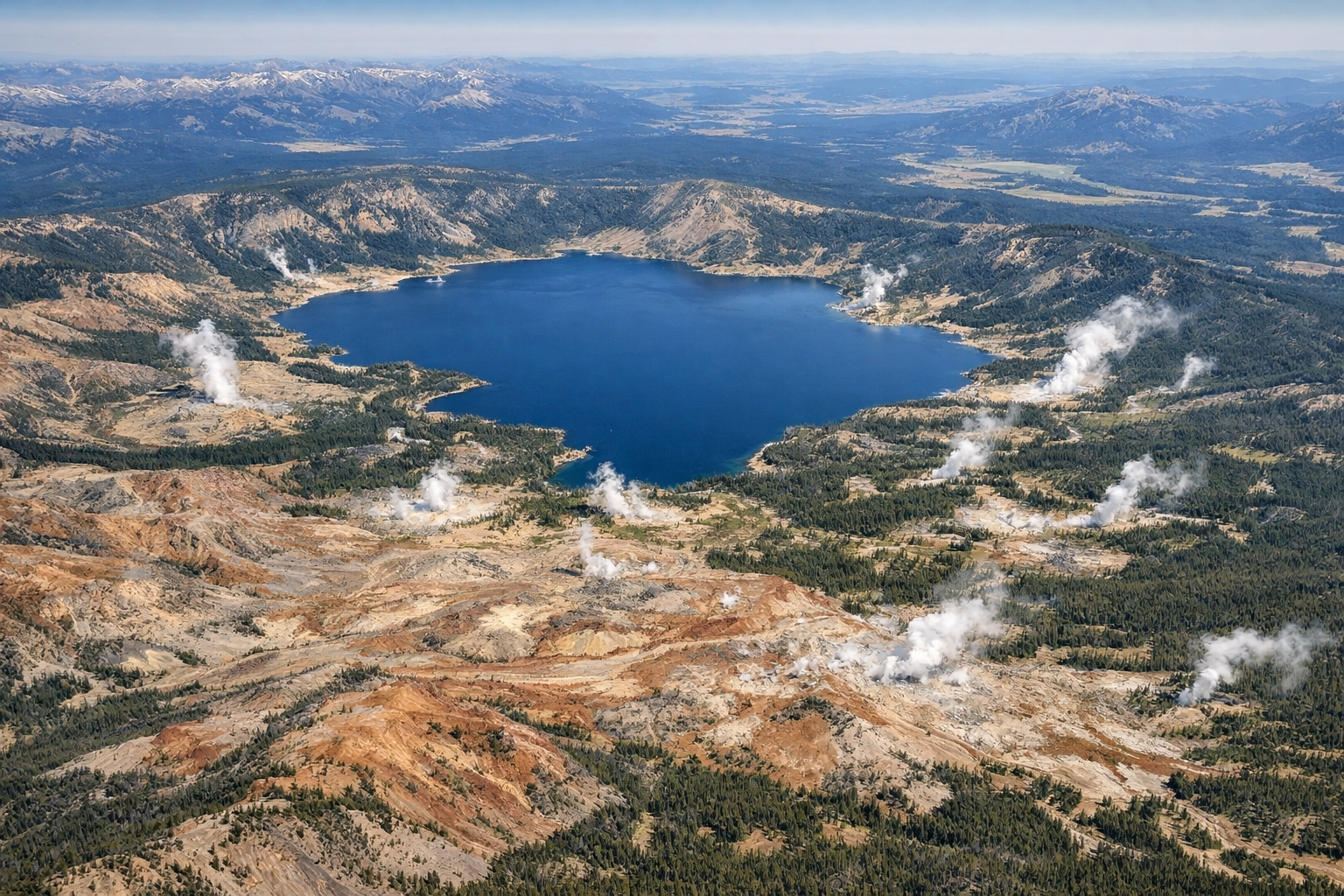
A class trip to Yellowstone provides direct access to one of Earth's largest active volcanic systems. The Yellowstone Caldera, a volcanic depression measuring 30 by 45 miles, formed approximately 640,000 years ago during a catastrophic eruption that expelled more than 240 cubic miles of material.
Key Volcanic Concepts for Student Learning
Magma chambers located just 3–12 miles below the surface create the heat source driving Yellowstone's remarkable geothermal activity. This proximity allows students to understand several critical earth science principles:
Hot Spot Volcanism: Unlike volcanoes formed at plate boundaries, Yellowstone sits atop a mantle plume: a stationary column of superheated rock rising from deep within Earth's mantle. As the North American Plate moves southwest over this hot spot, it creates a volcanic trail stretching across Idaho, demonstrating plate tectonics in action.
Caldera Formation: Students can observe the massive collapsed volcanic crater and understand the sequence of events that create such features: magma chamber expansion, catastrophic eruption, roof collapse, and subsequent resurgent doming.
Heat Convection: The park's hydrothermal features demonstrate how heat transfers from magma to groundwater and eventually to the surface, providing visible evidence of convective processes occurring throughout Earth's interior.
Seismic Activity: Yellowstone experiences between 1,000 and 3,000 earthquakes annually, most too small to feel. These continuous tremors fracture the ground, maintaining pathways for hydrothermal circulation: a dynamic process students can learn about while observing active features.
Accessible Geological Diversity Along the Grand Loop
Educational trips to Yellowstone benefit from exceptional accessibility. The park's Grand Loop Road allows students to observe diverse geological features within a single day, maximizing learning opportunities while minimizing logistical complications.
Essential Geological Stops for Student Groups
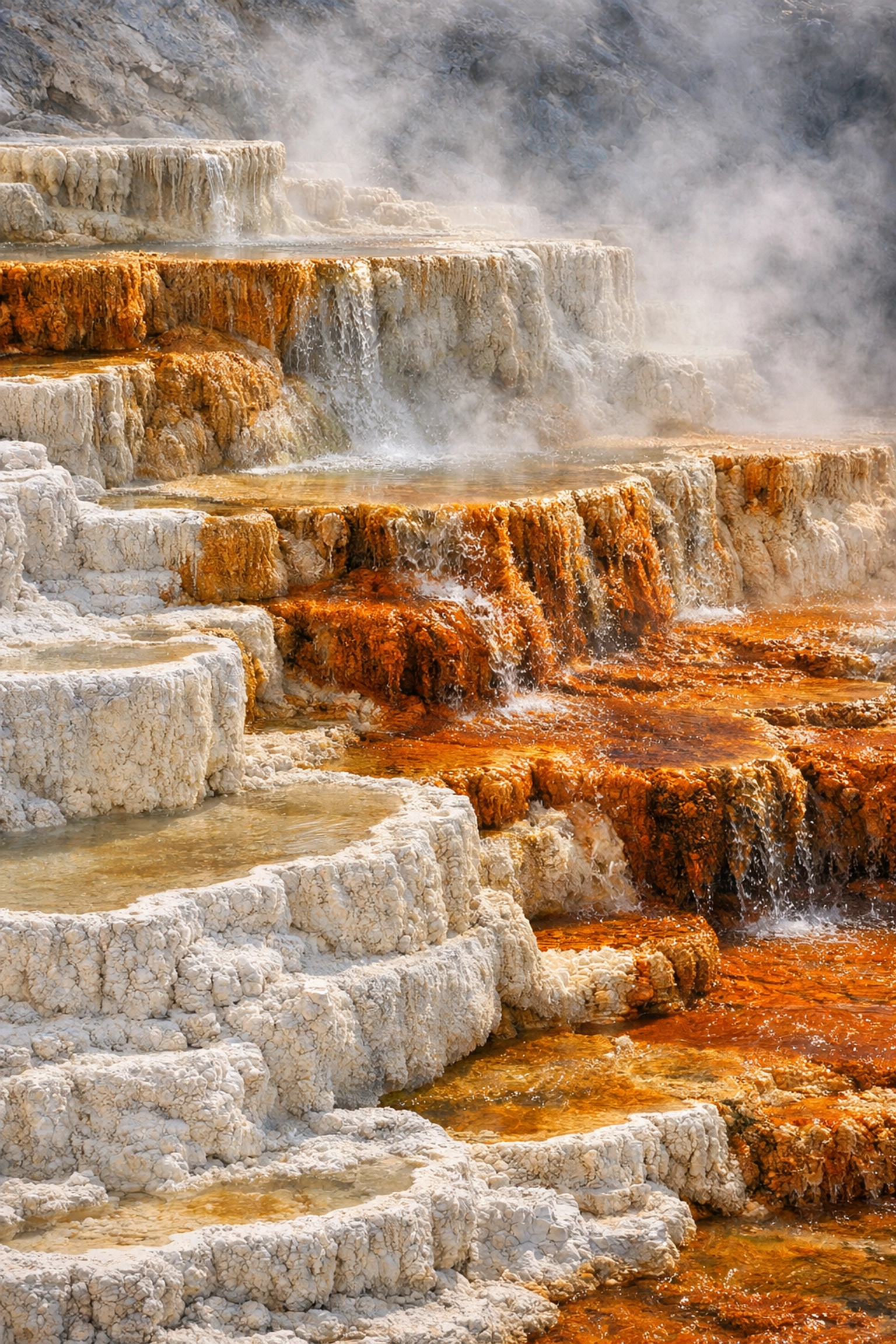
Mammoth Hot Springs: Witness ongoing travertine terrace formation as limestone-rich hot water deposits calcium carbonate at rates visible over days and weeks. Students observe chemical precipitation, mineral deposition, and the relationship between dissolved minerals and temperature.
Obsidian Cliff: Examine volcanic glass formed when lava cooled too rapidly for crystals to form, demonstrating the relationship between cooling rates and rock texture: a fundamental concept in igneous petrology.
Petrified Forests: Study fossilized trees buried by volcanic eruptions millions of years ago, preserved in multiple layers that reveal Yellowstone's volcanic history and demonstrate how catastrophic events create exceptional preservation conditions.
Basalt Columns: Observe hexagonal columnar jointing formed as lava flows cooled and contracted, illustrating thermal stress patterns and geometric principles in nature.
Yellowstone Canyon: Examine the canyon's colorful walls composed of hydrothermally altered rhyolite, demonstrating how geothermal fluids chemically modify rock over time and create distinctive yellow and orange hues that gave the park its name.
Real-World Applications and Cross-Curricular Learning
Student travel to Yellowstone extends beyond geology, integrating multiple scientific disciplines and demonstrating interconnected Earth systems.
Interdisciplinary Learning Opportunities
Chemistry: Observe pH variations in thermal features ranging from highly acidic to alkaline, study mineral precipitation, and examine how dissolved gases affect water chemistry.
Biology: Study extremophile organisms thriving in thermal features, observe how temperature gradients create distinct ecological zones, and understand adaptation to extreme environments.
Physics: Calculate heat transfer rates, observe phase changes, measure pressure dynamics in geyser eruptions, and apply mathematical models to predict geyser activity.
Environmental Science: Examine how geothermal heat influences local climate, study preservation ethics in protected landscapes, and understand resource management in national parks.
Essential Planning Considerations for Educators
Organizing a successful class trip to Yellowstone requires careful preparation to maximize educational value while ensuring student safety and engagement.
Pre-Trip Preparation Recommendations
Begin planning your student travel to Yellowstone at least six months in advance. Create detailed lesson plans connecting park observations to classroom curriculum, ensuring students understand key concepts before departure. Prepare students to think critically and make predictions about features they will observe.
Establish clear safety protocols specific to geothermal areas:
Emphasize the importance of staying on designated boardwalks and trails
Discuss extreme heat dangers near thermal features
Prepare students for variable weather conditions and high elevation
Review wildlife safety procedures, particularly regarding bison and bears
Ensure all participants understand the consequences of leaving established paths
Maximizing Educational Value During Your Visit
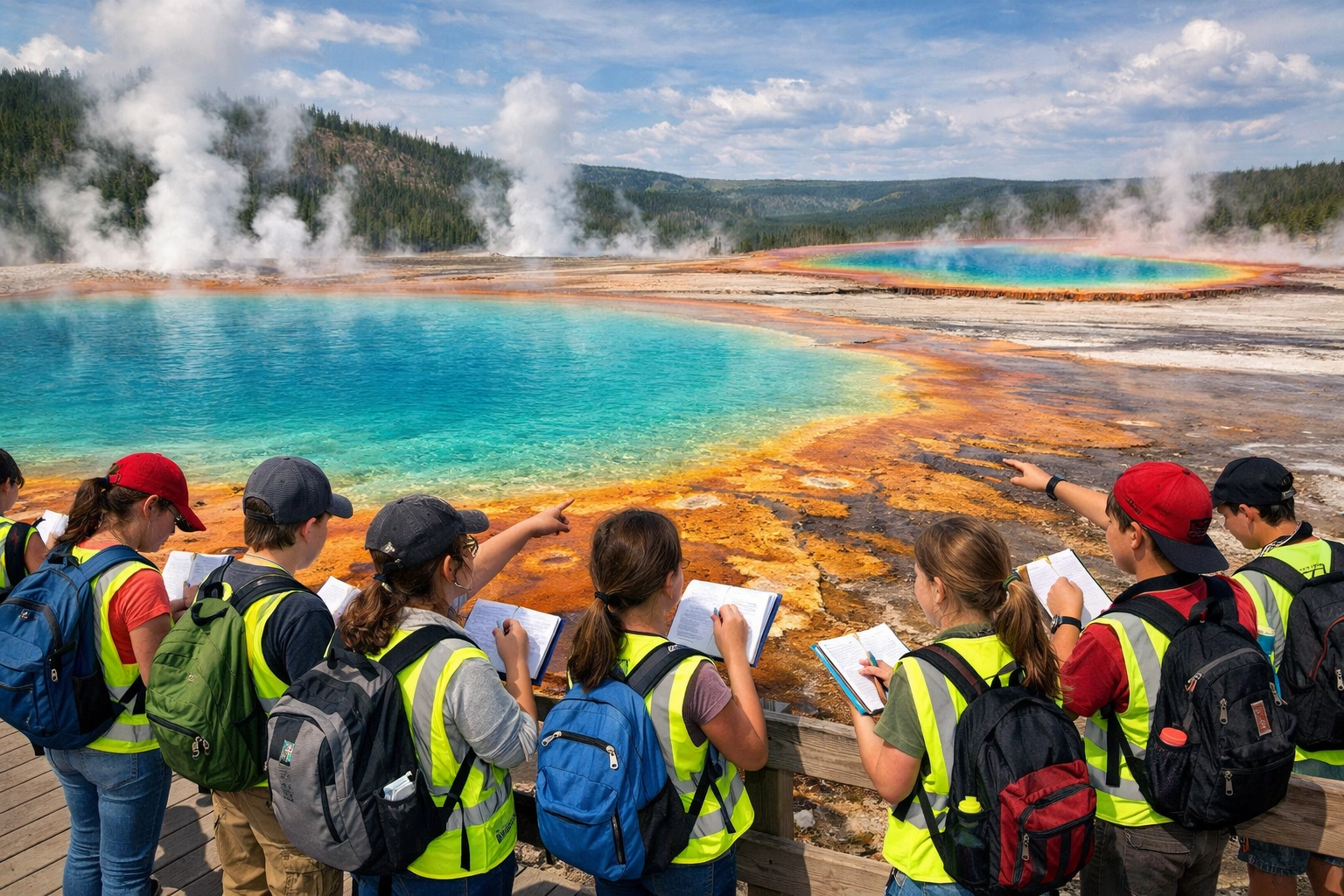
Assign specific observation tasks to student groups, encouraging active documentation through field journals, photographs, and sketches. Provide guided questions that prompt scientific thinking and hypothesis formation. Encourage students to compare predictions made during pre-trip preparation with actual observations.
Schedule ranger-led programs that provide expert insights into geological processes and park research. The Yellowstone Forever Institute offers specialized educational programs designed specifically for student groups, providing structured learning experiences led by professional educators and scientists.
Professional Support for Educational Trips
Organizing student travel to Yellowstone involves complex logistics, safety considerations, and educational planning. Partnering with experienced educational travel organizations ensures your class trip to Yellowstone delivers maximum educational value while meeting all safety and operational requirements.
Appleseed Expeditions specializes in creating immersive earth science experiences at Yellowstone, providing comprehensive support for educators planning educational trips. Their expertise includes itinerary development, safety management, expert-led instruction, and seamless logistics coordination, allowing teachers to focus on student learning rather than operational details. Contact Appleseed Expeditions to explore how their specialized programs can transform your classroom curriculum into unforgettable field experiences.
Conclusion: Transforming Earth Science Education
A class trip to Yellowstone provides students with direct observation of geological processes that make abstract textbook concepts tangible and memorable. The park's concentration of geothermal features, active volcanic system, and geological diversity create an unmatched outdoor classroom where earth science comes alive.
By witnessing geysers erupt, observing ongoing terrace formation, and standing within a massive volcanic caldera, students develop deeper understanding of Earth's dynamic systems. These firsthand experiences foster scientific curiosity, strengthen observational skills, and demonstrate the power of field-based learning.
Ensure your planning process prioritizes safety, preparation, and clear educational objectives. With thorough preparation and professional support, student travel to Yellowstone becomes more than an educational trip: it transforms into a pivotal learning experience that shapes how students understand our planet's geological processes for years to come.

Comments