


Educational Tours for Teachers: Exploring San Diego's Coastal Ecosystems

San Diego's coastal ecosystems represent one of the most diverse and accessible marine learning environments available to educators in North America. With its unique convergence of temperate and subtropical marine habitats, established research institutions, and robust educational infrastructure, San Diego offers educational tours for teachers that deliver unparalleled opportunities to study coastal ecology, marine biology, and conservation science in action.
Understanding the educational value of these coastal ecosystems and how to maximize learning opportunities requires careful planning and strategic engagement with the right resources. This guide provides educators with the essential information needed to design and execute meaningful coastal ecosystem exploration in San Diego.
Why San Diego's Coastal Ecosystems Matter for Education
San Diego's coastline encompasses multiple distinct marine habitats within a relatively compact geographical area. This diversity creates exceptional learning opportunities that few other locations can match.
The region features rocky intertidal zones where students can observe complex food webs and adaptation strategies. Sandy beaches demonstrate dynamic coastal processes and unique specialized ecosystems. Protected bays and lagoons showcase wetland ecology and serve as critical habitat for migratory species. Kelp forests offshore represent one of the planet's most productive marine ecosystems.
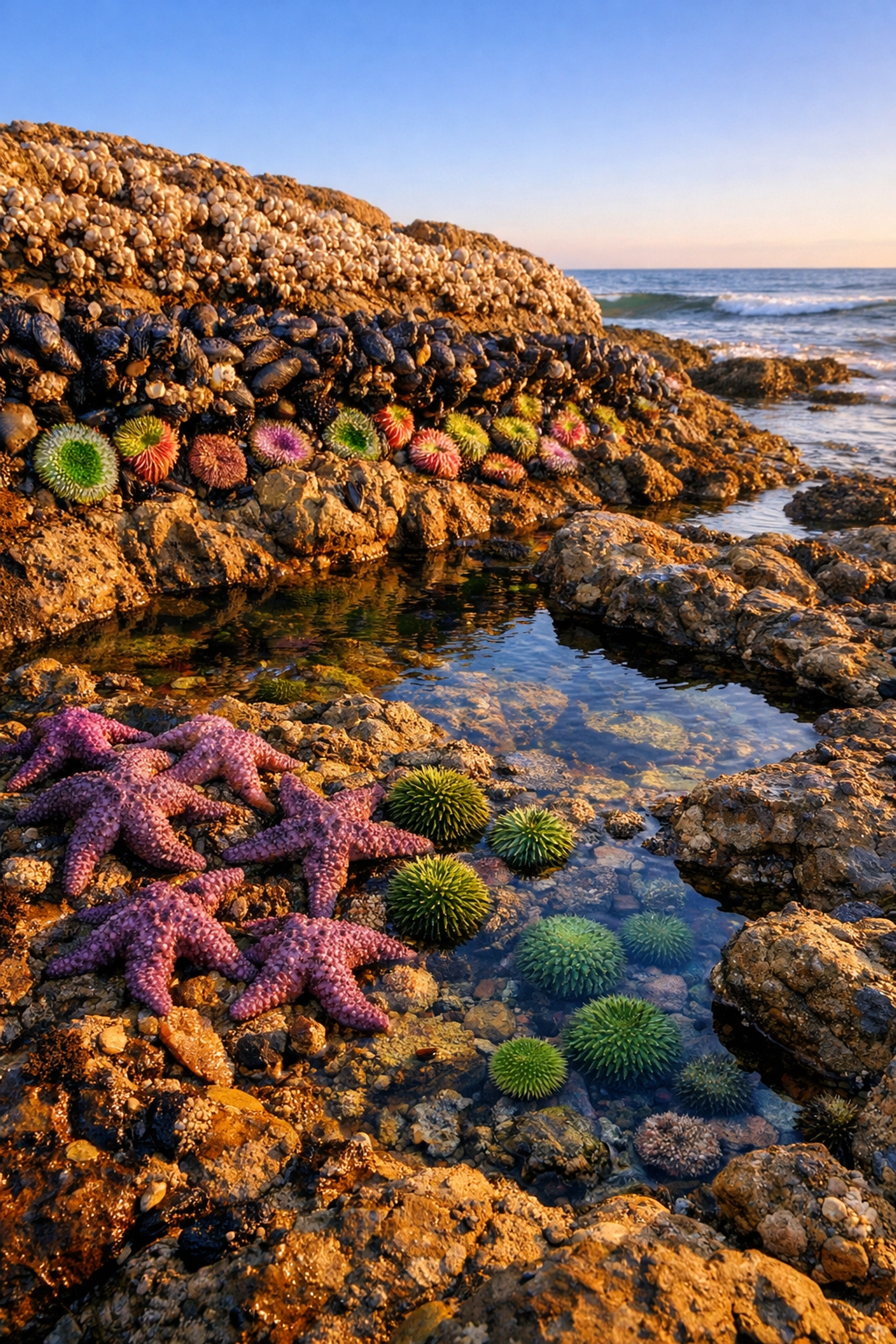
This ecological variety allows educators to address multiple curriculum standards within a single educational tour. Marine biology, earth science, environmental science, and conservation studies all find authentic real-world applications in San Diego's coastal environments.
Furthermore, San Diego hosts Scripps Institution of Oceanography, one of the world's premier marine research centers, providing access to cutting-edge science and expert-led educational programming that transforms coastal exploration from simple observation to genuine scientific inquiry.
Planning Educational Tours for Teachers: Essential Preparation Steps
Effective coastal ecosystem exploration requires thorough advance planning to ensure safety, maximize learning outcomes, and address logistical considerations unique to marine environments.
Pre-Trip Research and Curriculum Alignment
Begin by researching specific coastal sites that align with your curriculum objectives. Identify the ecosystem types, species, and processes most relevant to your learning goals. Create clear learning objectives for each site visit and develop pre-trip lessons that establish foundational knowledge students will need to engage meaningfully with coastal environments.
Study tidal patterns well in advance. Many of San Diego's most valuable learning experiences: particularly tidepooling: depend entirely on low tide timing. Consult tide charts and plan your itinerary around optimal tidal windows.
Research permits and access requirements for your intended sites. Some protected areas require advance reservations or have group size limitations that necessitate early planning.
Safety and Risk Management Protocols
Ensure that all participating educators and chaperones understand coastal safety protocols before departure. Establish clear guidelines for:
Maintaining visual contact with students at all times near water
Recognizing and responding to rip currents and wave hazards
Protecting students from sun exposure and dehydration
Navigating slippery rocks safely during tidepooling activities
Handling marine organisms properly to prevent injury and minimize ecological impact
Responding to marine life encounters including jellyfish and rays
Create detailed emergency action plans that account for the unique challenges of coastal environments. Identify nearest medical facilities, establish communication protocols for areas with limited cell service, and designate specific roles for adult supervisors in emergency scenarios.
Advise students to wear appropriate footwear with good traction for rocky areas and to bring layered clothing to adapt to changing coastal weather conditions.
Key San Diego Coastal Ecosystems for Educational Exploration
San Diego offers multiple distinct coastal ecosystems, each providing unique educational value and requiring different instructional approaches.
Rocky Intertidal Zones
The rocky intertidal zones scattered along San Diego's coastline serve as natural outdoor laboratories where students can observe marine adaptations, zonation patterns, and ecological interactions firsthand.
During low tide, these areas reveal distinct vertical zones characterized by specific assemblages of organisms adapted to varying degrees of exposure. Upper intertidal zones feature organisms like barnacles and limpets that withstand extended air exposure. Mid-intertidal areas host diverse communities including sea anemones, mussels, and various algae species. Lower intertidal zones, exposed only during the lowest tides, contain the greatest biodiversity including sea stars, urchins, and numerous fish species.
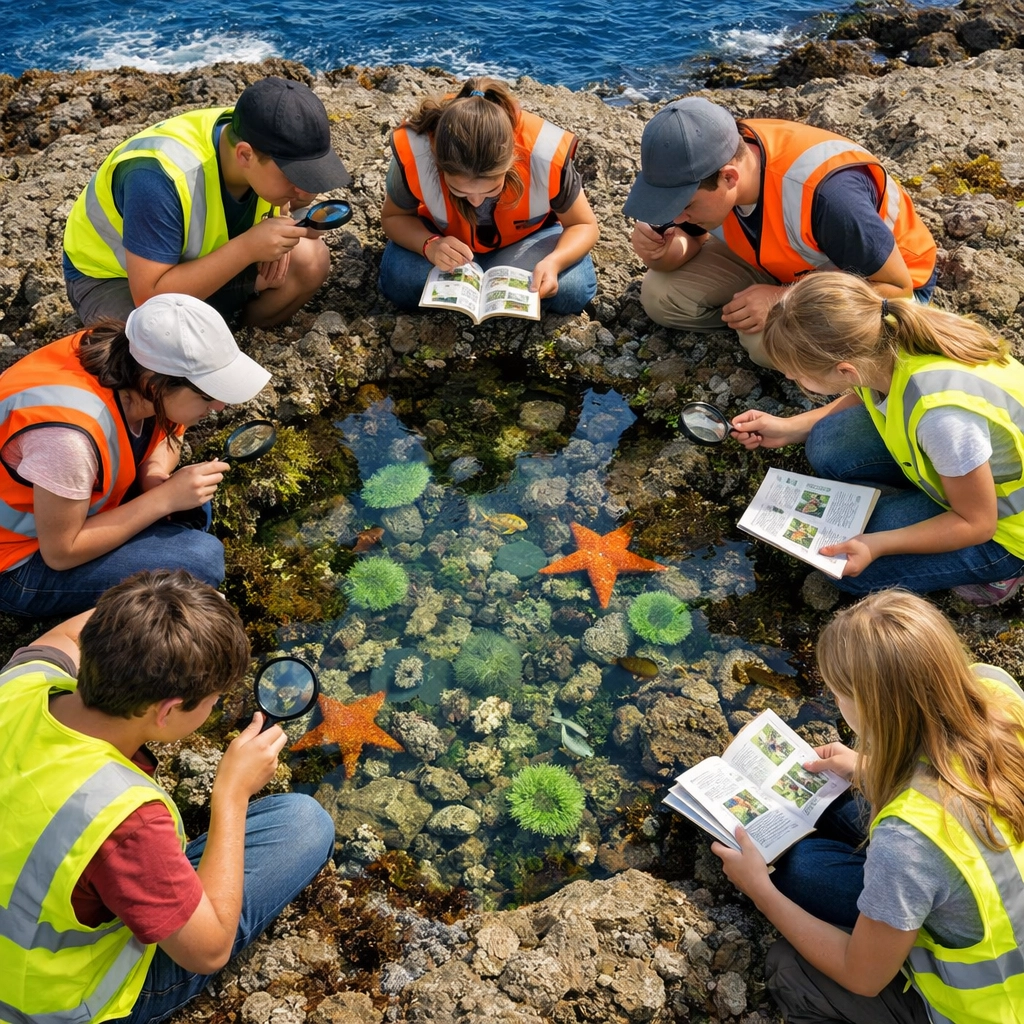
Encourage students to observe without disturbing. Emphasize the importance of replacing rocks carefully if lifted and avoiding stepping on living organisms. Use identification guides to document species and discuss adaptation strategies students observe.
Guided tidepooling tours led by marine naturalists provide expert interpretation that elevates student understanding beyond simple observation, transforming these experiences into genuine scientific inquiry.
Bays and Estuaries
San Diego Bay, Mission Bay, and coastal lagoons like Agua Hedionda represent critical estuarine ecosystems where freshwater and saltwater mix, creating unique conditions that support specialized species and serve as nursery habitat for commercially important fish.
These protected water bodies offer calm conditions ideal for kayaking-based exploration. Students can observe wetland restoration in action, study the relationship between human development and ecosystem health, and document bird species that depend on these habitats during migration.
Water-based exploration provides opportunities to discuss watershed ecology, nutrient cycling, and the ecosystem services that coastal wetlands provide, including storm surge protection, water filtration, and carbon sequestration.
Ensure that all water-based activities include properly fitted personal flotation devices for every participant and that adult-to-student ratios meet recommended safety standards for aquatic activities.
Kelp Forest Ecosystems
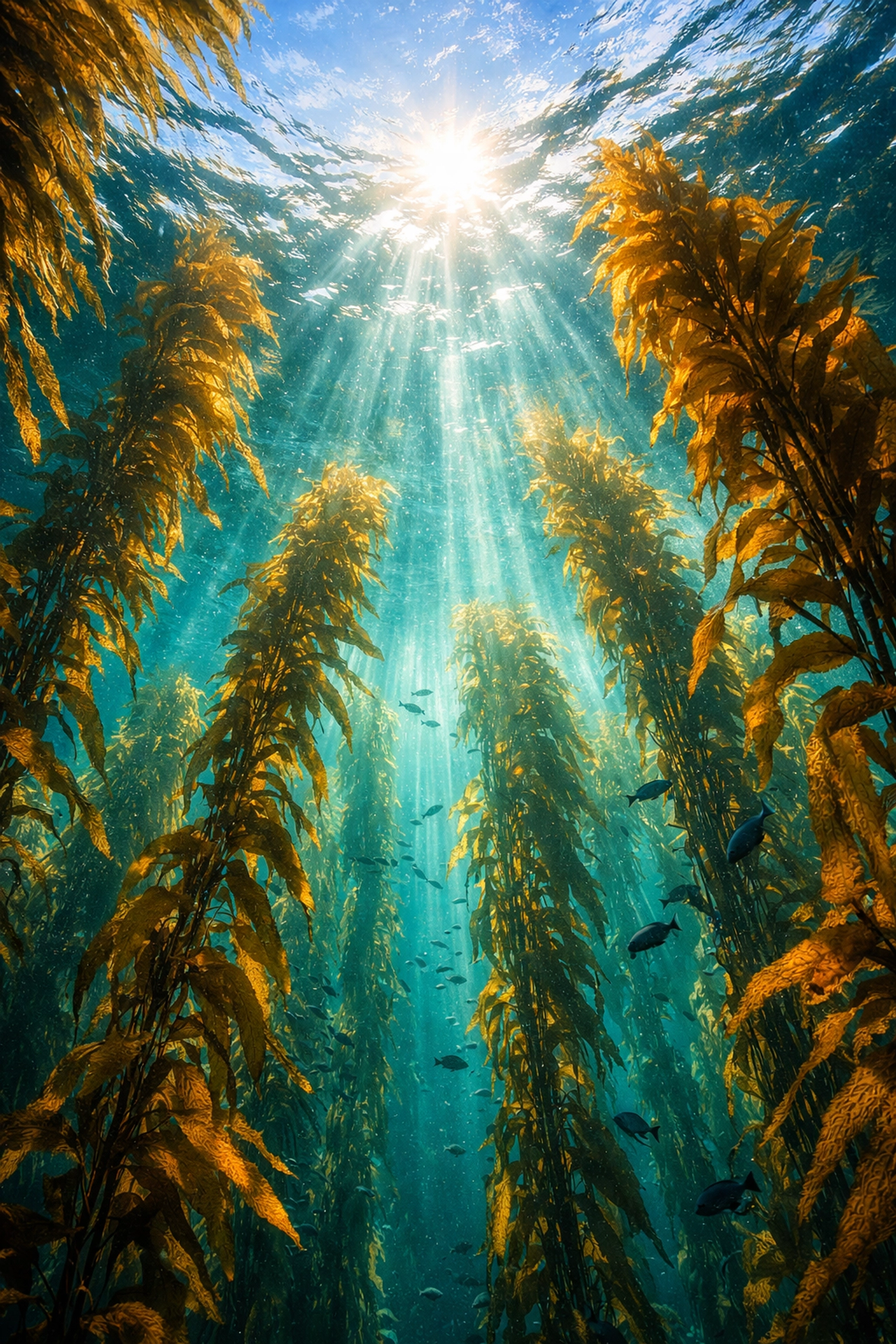
While direct kelp forest exploration typically requires advanced diving certification, educators can study these remarkable ecosystems through aquarium exhibits, research vessel programs, and shore-based observation platforms.
The Seaport Climate Science Program offers hands-on field experiences aboard research-equipped vessels where students participate in authentic scientific data collection including water sampling, plankton examination under microscopes, and echosounder technology use to study seafloor topography and kelp canopy structure.
These experiences connect students directly to ongoing climate science research while demonstrating how scientists study underwater ecosystems. Students learn to use professional scientific equipment and practice data collection protocols used in actual marine research.
Partnering with Expert Organizations for Enhanced Learning
Educational tours for teachers achieve maximum impact when partnering with organizations that specialize in coastal ecosystem education and provide expert guidance.
Marine Research Institutions
Birch Aquarium at Scripps Institution of Oceanography offers educational programming specifically designed for student groups, featuring interactive exhibits on local marine ecosystems, touch pools where students can safely interact with marine organisms, and presentations by marine scientists.
These institutional partnerships provide access to expertise and resources that individual educators cannot replicate independently. Scientists and educators at these facilities translate complex marine science into accessible, age-appropriate content while maintaining scientific accuracy.
Professional Eco-Tour Operators
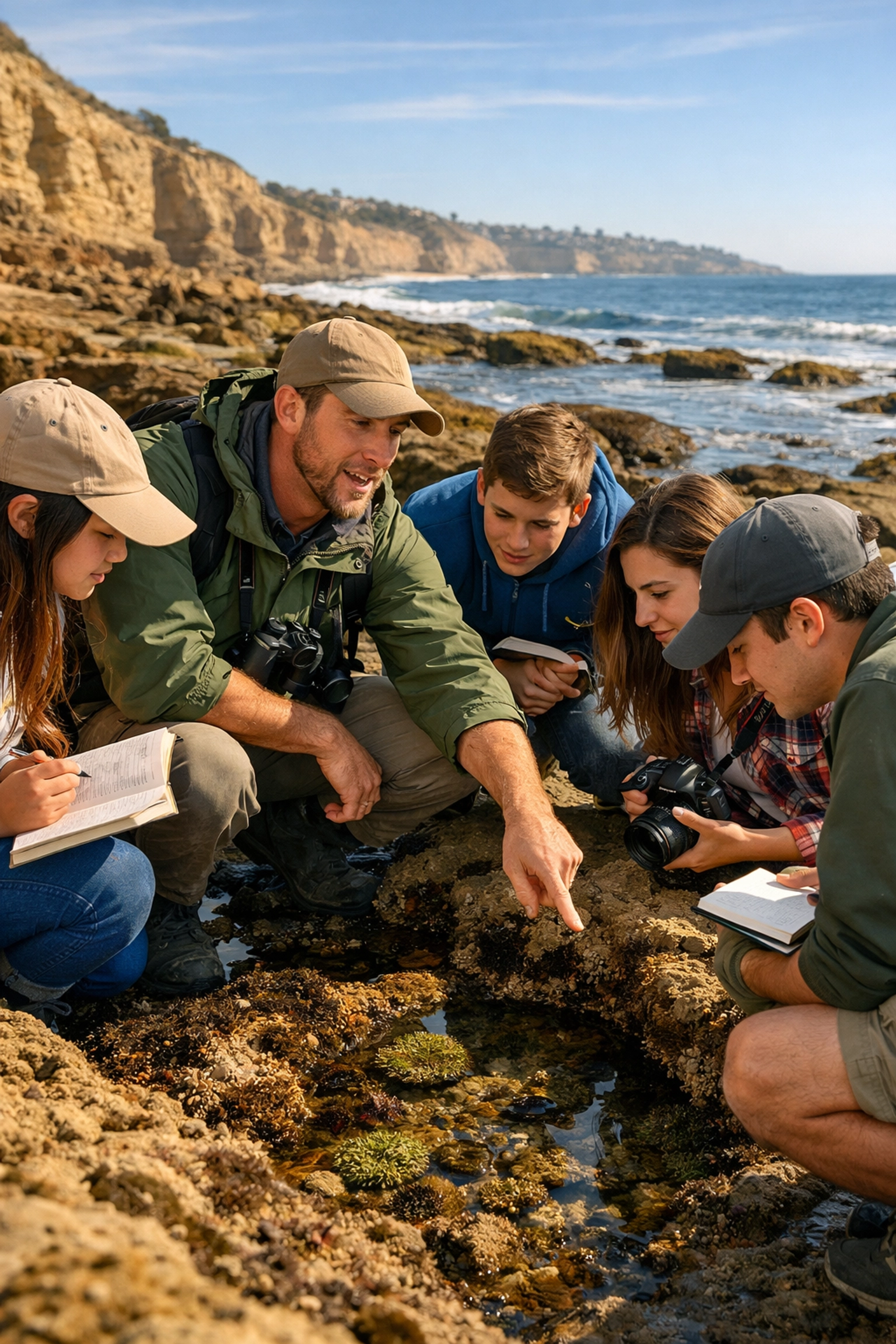
Certified eco-tour operators like Ocean Connectors provide guided experiences led by naturalists with extensive marine science backgrounds. These professionals identify species, explain ecological relationships, and facilitate meaningful engagement with coastal ecosystems while modeling appropriate environmental stewardship.
Professional guides also manage logistical aspects of coastal exploration, allowing teachers to focus on student engagement and learning facilitation rather than navigation and safety logistics.
Importantly, many eco-tour operators invest proceeds into youth education programs, meaning that your educational tour directly supports expanded access to marine science education for underserved students.
Maximizing Educational Value: Instructional Strategies
Transform coastal exploration from recreational tourism into rigorous educational experiences through intentional instructional design and strategic facilitation techniques.
Structured Observation Protocols
Provide students with specific observation frameworks rather than unguided exploration. Create field journals with prompts that direct attention to key ecological concepts:
Document three different examples of adaptation to wave action
Identify organisms occupying different trophic levels in the food web
Sketch zonation patterns and hypothesize about factors creating these patterns
Record evidence of human impact on coastal ecosystems
These structured approaches ensure students engage scientifically with their environment rather than simply looking at marine life without deeper analysis.
Integration of Technology
Utilize mobile applications for species identification, water quality testing equipment for hands-on data collection, and photography to document findings for later analysis.
Encourage students to connect their observations to larger scientific questions. How do the organisms we're observing respond to ocean acidification? What role do these ecosystems play in global carbon cycles? How might climate change alter the ecosystems we're studying?
Post-Trip Synthesis and Application
Design post-trip assignments that require students to synthesize their coastal ecosystem observations with classroom learning. Research projects examining specific species adaptations, presentations on ecosystem services provided by coastal habitats, or action plans for addressing threats to marine ecosystems all extend learning beyond the field experience itself.
Share student work with parents and the broader school community to demonstrate the educational value of these experiences and build support for future educational travel opportunities.
Logistics and Practical Considerations
Address practical details well in advance to ensure smooth execution of educational tours for teachers exploring San Diego's coastal ecosystems.
Transportation and Timing
Coordinate transportation that accommodates the specific timing requirements of tidal-dependent activities. Build flexibility into your schedule to account for weather contingencies that may necessitate site changes.
Communicate detailed itineraries to parents and administrators, including specific locations, expected return times, and emergency contact information.
Funding and Budget Management
Explore funding sources including grants focused on STEM education, parent-teacher organization support, and fundraising activities. Many marine education organizations offer reduced rates for school groups or scholarship opportunities for schools serving high-need communities.
Budget for admission fees, guided tour costs, transportation, and equipment rental if pursuing kayaking or other water-based activities. Include contingency funding for weather-related changes or unexpected expenses.
Inclusive Participation
Ensure that all students can participate meaningfully regardless of physical ability, economic circumstances, or prior experience. Work with families well in advance to address financial barriers, arrange necessary accommodations for students with disabilities, and provide equipment or clothing for students who may not have appropriate gear.
Create opportunities for students with varying comfort levels around water and marine life, offering alternative observation methods for students who may be hesitant to handle organisms or participate in water-based activities.
Long-Term Impact: Fostering Ocean Stewardship
Educational tours for teachers exploring coastal ecosystems create lasting impact that extends far beyond the immediate field experience. Students who engage directly with marine environments develop personal connections to ocean health that influence environmental attitudes and behaviors throughout their lives.
Emphasize the importance of ocean conservation and discuss specific actions students can take to protect coastal ecosystems. Connect local observations to global challenges including plastic pollution, overfishing, and climate change.
Encourage students to view themselves as future ocean stewards empowered to make informed decisions that support marine ecosystem health.
Moving Forward with Coastal Ecosystem Education
San Diego's diverse coastal ecosystems provide extraordinary opportunities for educators committed to delivering authentic, rigorous science education that inspires the next generation of marine scientists and environmental stewards.
By conducting thorough preparation, partnering with expert organizations, implementing structured learning protocols, and maintaining unwavering attention to safety, educators transform coastal exploration into transformative educational experiences that achieve meaningful curriculum objectives while fostering genuine appreciation for marine ecosystems.
Organizations like Appleseed Expeditions specialize in designing comprehensive educational travel experiences that handle logistical complexities while ensuring alignment with educational standards, allowing teachers to focus on instruction and student engagement. Explore opportunities to bring your students to San Diego's remarkable coastal ecosystems and witness firsthand the educational power of authentic marine science exploration.

Comments