


From Geysers to Glaciers: Educational Trips to Yellowstone for Earth Science Students

Why Yellowstone Is Essential for Earth Science Education
Providing students with firsthand exposure to active geological processes is paramount to developing comprehensive understanding of earth systems. Student travel to Yellowstone offers unparalleled opportunities to observe geothermal phenomena, volcanic evidence, and hydrothermal systems in action: transforming abstract textbook concepts into tangible, memorable experiences. A class trip to Yellowstone serves as a living laboratory where students witness the dynamic forces that shape our planet's surface and subsurface environments.
Educational trips to Yellowstone allow students to engage directly with some of North America's most active geological features. The park sits atop one of the world's largest active volcanic systems, creating a unique educational environment where thermal features demonstrate ongoing earth processes. This immediate connection between theory and observation creates learning opportunities unavailable in traditional classroom settings.
The Supervolcano Beneath: Understanding Yellowstone's Volcanic Foundation
Begin your educational journey by establishing context about Yellowstone's volcanic origins. The park lies above a hotspot where a mantle plume rises from deep within the Earth, creating the magma chamber that fuels the park's extraordinary thermal features. This volcanic system has produced three catastrophic eruptions over the past 2.1 million years, with the most recent occurring approximately 640,000 years ago.
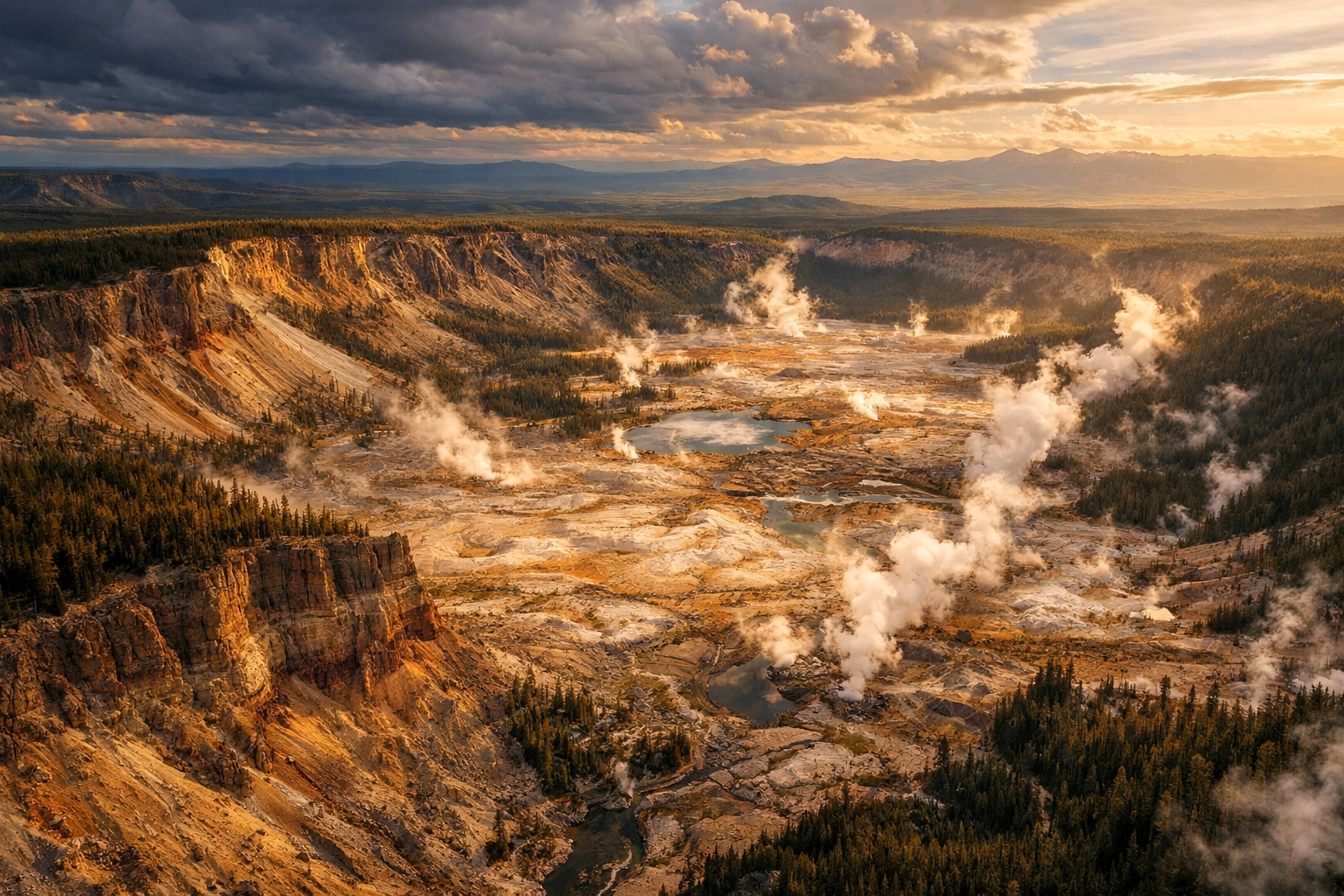
Ensure students understand the connection between plate tectonics and Yellowstone's location. Unlike volcanic chains formed at plate boundaries, Yellowstone's hotspot remains stationary while the North American plate moves southwest over it at approximately one inch per year. This movement has created a trail of extinct volcanic calderas stretching across the Snake River Plain in Idaho.
Key learning objectives for volcanic geology include:
The relationship between mantle plumes and surface volcanic activity
Caldera formation and collapse mechanisms
Evidence of past eruptions visible in rock layers and formations
Current monitoring systems that track volcanic activity and seismic events
The distinction between dormant and extinct volcanic systems
Old Faithful and the Mechanics of Geysers
No class trip to Yellowstone would be complete without observing Old Faithful, the park's most famous predictable geyser. Use this iconic feature to teach students about the specific conditions required for geyser formation and eruption. Emphasize that only one percent of Earth's thermal features are geysers, making Yellowstone: which contains approximately half the world's geysers: extraordinarily unique.
Explain the four essential requirements for geyser formation:
An abundant water supply from precipitation and snowmelt
An intense heat source from the underlying magma chamber
A specialized underground plumbing system with channels and reservoirs
A constriction or narrow point in the plumbing that allows pressure to build
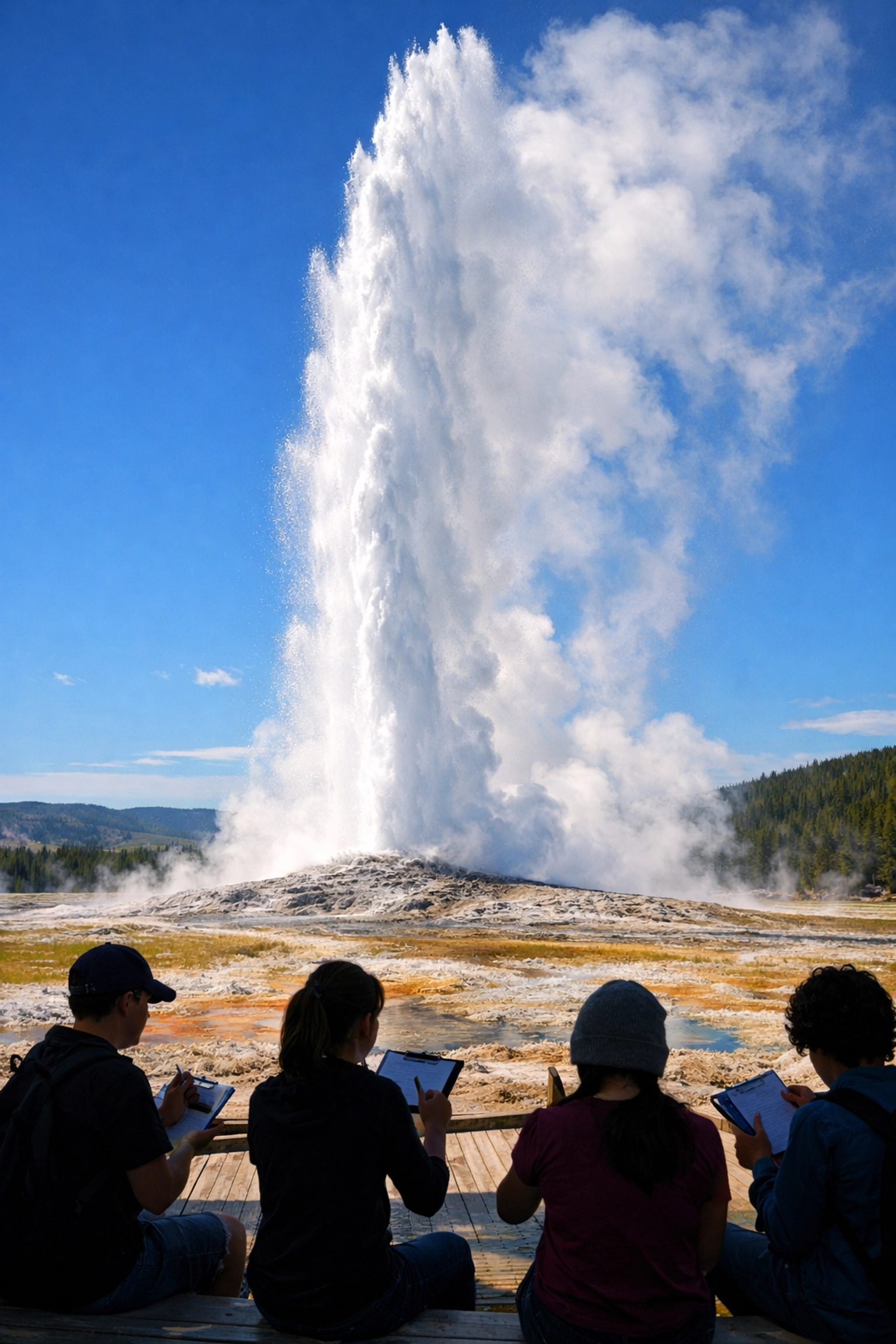
During your educational trip, allocate time for students to observe multiple eruption cycles. Old Faithful erupts approximately every 90 minutes, providing predictable viewing opportunities. Encourage students to time the eruption duration, estimate water volume expelled, and calculate the interval between eruptions. These direct observations transform passive viewing into active scientific inquiry.
Expand learning by visiting additional geyser basins throughout the park. Norris Geyser Basin represents the oldest, hottest, and most dynamic thermal area in Yellowstone. The constant change visible at Norris: with new thermal features emerging and others becoming dormant: demonstrates the ongoing geological evolution occurring beneath the surface.
Grand Prismatic Spring: Thermophiles and Extreme Life
The Grand Prismatic Spring provides exceptional opportunities to integrate biology with earth science during student travel to Yellowstone. As the largest hot spring in the United States and third largest in the world, this feature measures approximately 370 feet in diameter and exceeds 160 feet in depth. The spring's brilliant colors result from thermophilic microorganisms that thrive in different temperature zones around the spring's perimeter.
Instruct students to observe the color gradation carefully:
Deep blue center: Superheated water (approximately 189°F) too hot for most life
Green zones: Cyanobacteria communities tolerating moderate temperatures
Yellow bands: Carotenoid-producing bacteria adapted to cooler temperatures
Orange and red outer rings: Heat-loving bacteria and algae in the coolest runoff channels
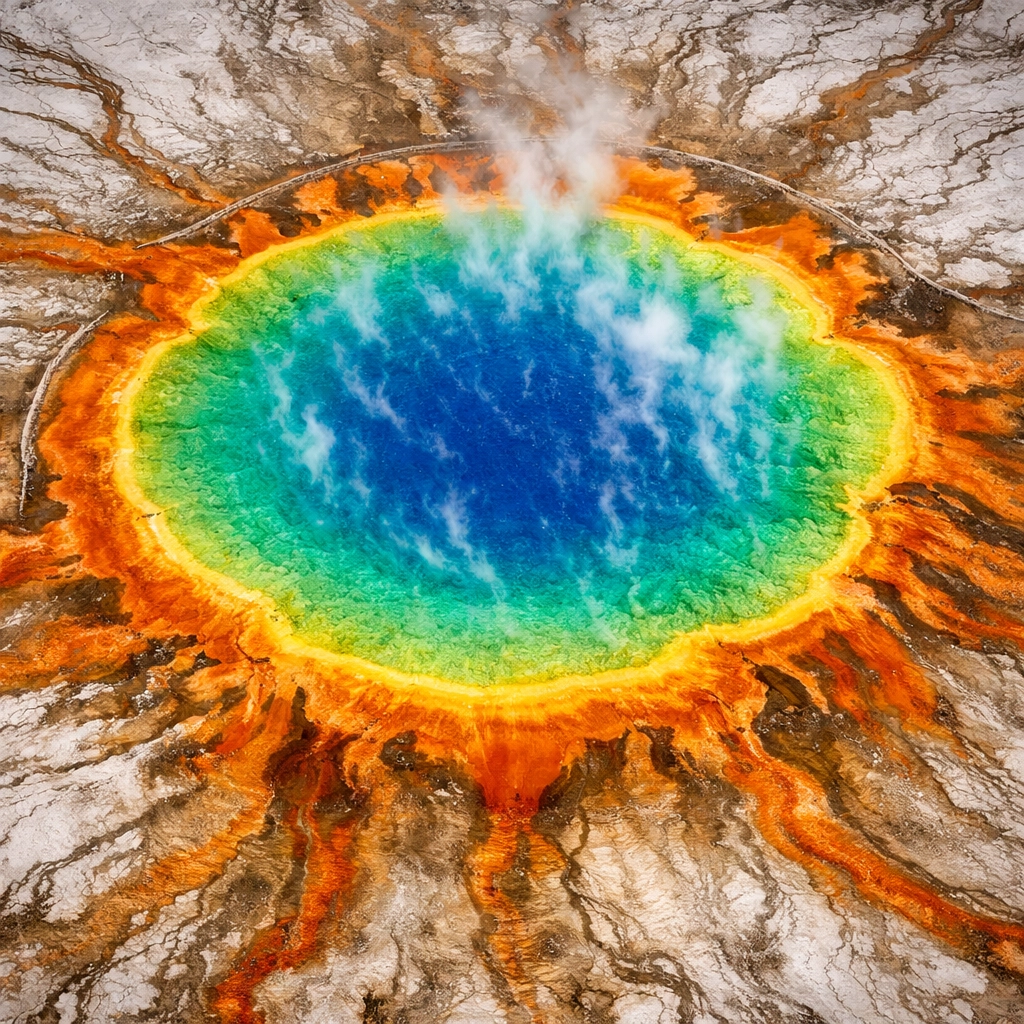
This single feature allows students to explore multiple scientific concepts simultaneously: geothermal heat transfer, pH extremes, mineral deposition, light refraction in deep water, and extremophile adaptation strategies. Encourage students to sketch the spring and label the different microbial communities based on color zones and estimated temperatures.
Discuss the broader implications of thermophile research. Scientists studying Yellowstone's heat-loving organisms have discovered enzymes with applications in medicine, biotechnology, and industrial processes. The Taq polymerase enzyme isolated from Yellowstone thermophiles revolutionized DNA research and made modern genetic testing possible: demonstrating how basic research in earth science yields unexpected practical benefits.
Hydrothermal Features Beyond Geysers
Expand student understanding by exploring Yellowstone's diverse hydrothermal features during your class trip to Yellowstone. The park contains more than 10,000 thermal features divided into several categories:
Hot Springs: The most numerous thermal features, where water circulates without erupting. Mammoth Hot Springs showcases active travertine terraces formed by calcium carbonate deposition, creating new formations continuously.
Fumaroles: Steam vents occurring where limited water immediately converts to steam upon reaching the surface. These features demonstrate the extreme subsurface temperatures and provide evidence of the magma chamber's proximity.
Mud Pots: Acidic features where hydrogen sulfide gas dissolves in water to form sulfuric acid, breaking down surrounding rock into clay particles. The bubbling, viscous mud demonstrates chemical weathering processes in action.
Ensure students observe safety protocols around all thermal features. Maintain distance from unmarked ground, stay on designated boardwalks, and emphasize that ground temperature exceeds boiling point in many areas. The educational value of these features depends entirely on responsible viewing practices that protect both students and the fragile thermal ecosystems.
The Yellowstone Caldera and Canyon Formation
Dedicate time during your educational trip to exploring the Yellowstone Canyon and its dramatic waterfalls. The canyon's formation involved multiple geological processes: volcanic activity, hydrothermal alteration, glaciation, and river erosion. The distinctive yellow rock that gives the park its name results from iron compounds in rhyolite that oxidized due to hydrothermal activity.
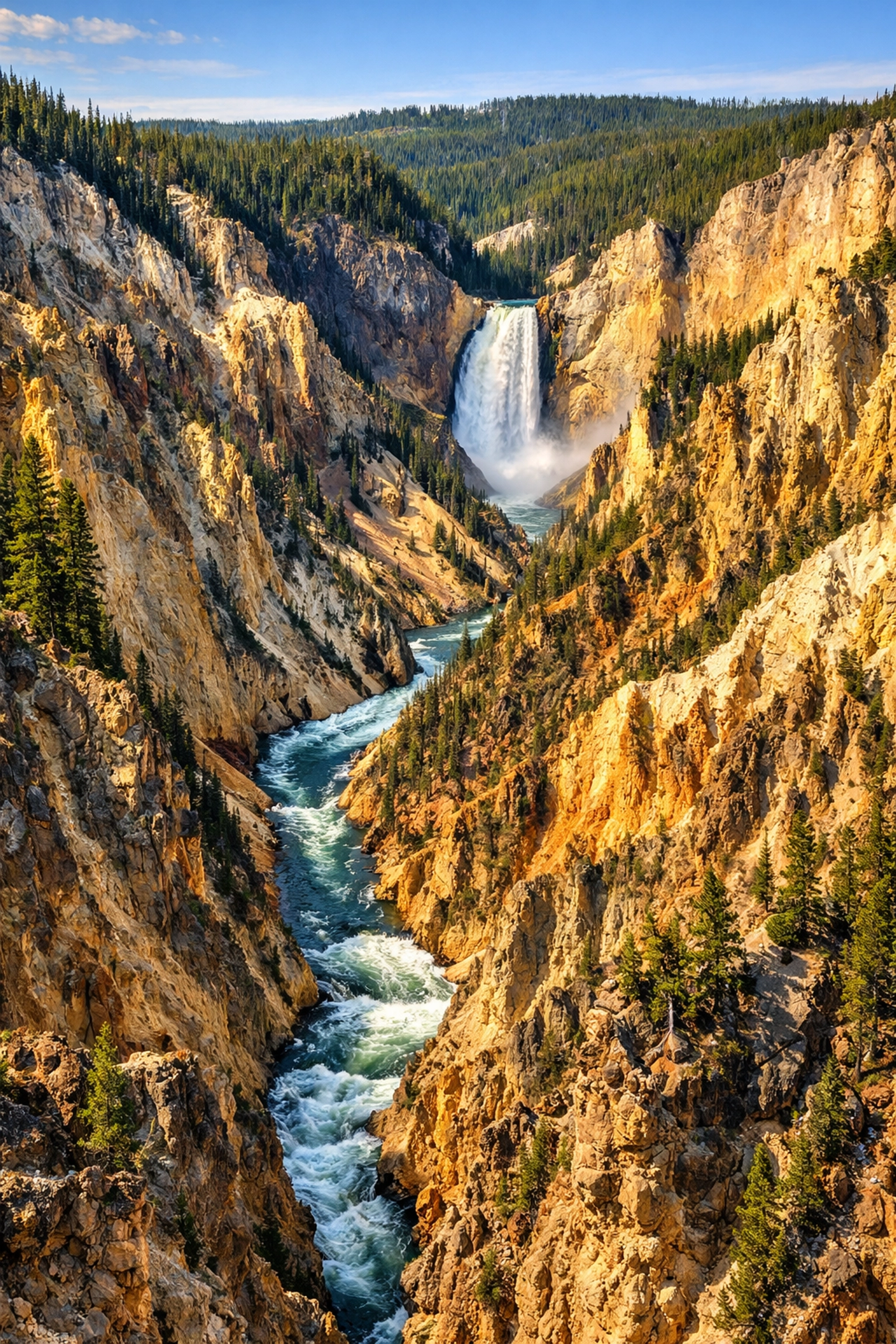
Discuss the evidence of past glaciation visible throughout the park. While Yellowstone is not currently known for active glaciers, ice sheets covered the region during the Pliocene and Pleistocene epochs, carving U-shaped valleys and depositing erratic boulders transported from distant locations. These glacial features complement the volcanic and hydrothermal geology, providing comprehensive earth science education.
Key observation points for canyon geology include:
Rock layer sequences revealing eruption chronology
Hydrothermal alteration zones with distinctive coloration
Evidence of differential erosion in various rock types
The powerful erosive force of the Yellowstone River
Upper and Lower Falls demonstrating the relationship between rock hardness and waterfall formation
Planning Your Yellowstone Earth Science Expedition
Successful student travel to Yellowstone requires meticulous planning and coordination. Begin preparing at least six months in advance to secure appropriate accommodations, arrange transportation, and coordinate with educational service providers.
Create a detailed itinerary that prioritizes geological features aligned with your curriculum objectives. Allocate sufficient time at each location for observation, data collection, and discussion. Rushing between features diminishes educational value: depth of understanding matters more than number of sites visited.
Consider partnering with specialized educational travel organizations that understand the unique requirements of earth science expeditions. Organizations like Appleseed Expeditions design customized programs specifically for student groups, providing expert guides, appropriate logistics, and curriculum-aligned activities that maximize learning outcomes while ensuring student safety throughout the journey.
Ensure all participants: students, parents, and chaperones: receive comprehensive pre-trip orientation covering:
Expected weather conditions and appropriate clothing for multiple climate zones
Hydration requirements at Yellowstone's elevation
Thermal feature safety protocols and park regulations
Emergency procedures and communication plans
Learning objectives and expected student participation
Respectful behavior expectations in this protected natural environment
Maximizing Educational Value Through Structured Activities
Transform observation into active learning by implementing structured field activities during your class trip to Yellowstone. Provide students with field notebooks, observation checklists, and data collection templates. Assign specific responsibilities to student teams: photographers documenting features, data recorders measuring eruption intervals, sketch artists illustrating geological formations, and scribes documenting observations.
Incorporate citizen science opportunities where students contribute to ongoing research projects. Several programs allow student groups to collect data on thermal feature behavior, water chemistry, or geological changes that contribute to scientific databases used by researchers.
Schedule daily reflection sessions where students synthesize observations, ask questions, and connect field experiences to classroom learning. These structured discussions reinforce learning and identify areas requiring additional explanation or exploration.
Bringing Yellowstone's Lessons Home
The educational impact of student travel to Yellowstone extends well beyond the trip itself. Prepare students to share their learning through presentations, reports, or creative projects that demonstrate understanding of geological concepts observed firsthand. These synthesis activities solidify learning and inspire peers who may participate in future educational trips.
A class trip to Yellowstone provides transformative educational experiences that inspire lifelong interest in earth sciences. The combination of active geological processes, accessible viewing opportunities, and expert educational resources makes Yellowstone an ideal destination for hands-on science education. By carefully planning your expedition and partnering with experienced educational travel specialists like Appleseed Expeditions, you create opportunities for students to witness the dynamic forces shaping our planet: transforming abstract concepts into unforgettable experiences that define their understanding of earth systems for years to come.
Contact Appleseed Expeditions today to begin planning your customized Yellowstone earth science expedition and provide your students with unparalleled opportunities to explore geothermal wonders, volcanic evidence, and hydrothermal systems in one of Earth's most remarkable natural laboratories.

Comments