


Service Learning Opportunities for High School Students: Making an Impact in the Grand Canyon

Service learning opportunities for high school students represent one of the most transformative educational experiences available today. When students combine academic knowledge with hands-on community service, they develop critical thinking skills, leadership abilities, and a profound sense of civic responsibility. The Grand Canyon provides an exceptional backdrop for this type of experiential education, offering unparalleled opportunities for environmental stewardship and conservation work that leaves a lasting impact on both the landscape and the students themselves.
Understanding Service Learning and Its Importance
Service learning differs significantly from traditional community service. While community service focuses primarily on completing volunteer hours, service learning integrates classroom instruction with practical projects that address real-world problems. This approach requires students to apply academic skills, conduct research, and engage in meaningful reflection throughout their experience.
The core components of effective service learning include:
Curriculum Integration: Projects connect directly to academic subjects such as environmental science, geology, and ecology
Community Partnership: Students work alongside park rangers, conservation specialists, and local organizations
Structured Reflection: Participants analyze their experiences to strengthen their commitment to civic responsibility
Measurable Impact: Projects produce tangible outcomes that benefit the environment and community
Many high schools now incorporate community service into graduation requirements. Grand Canyon Unified School District #4, for example, requires 40 hours of documented community service for graduation, encouraging students to complete 10 hours annually. Service learning trips to the Grand Canyon can help students fulfill these requirements while gaining invaluable hands-on experience.
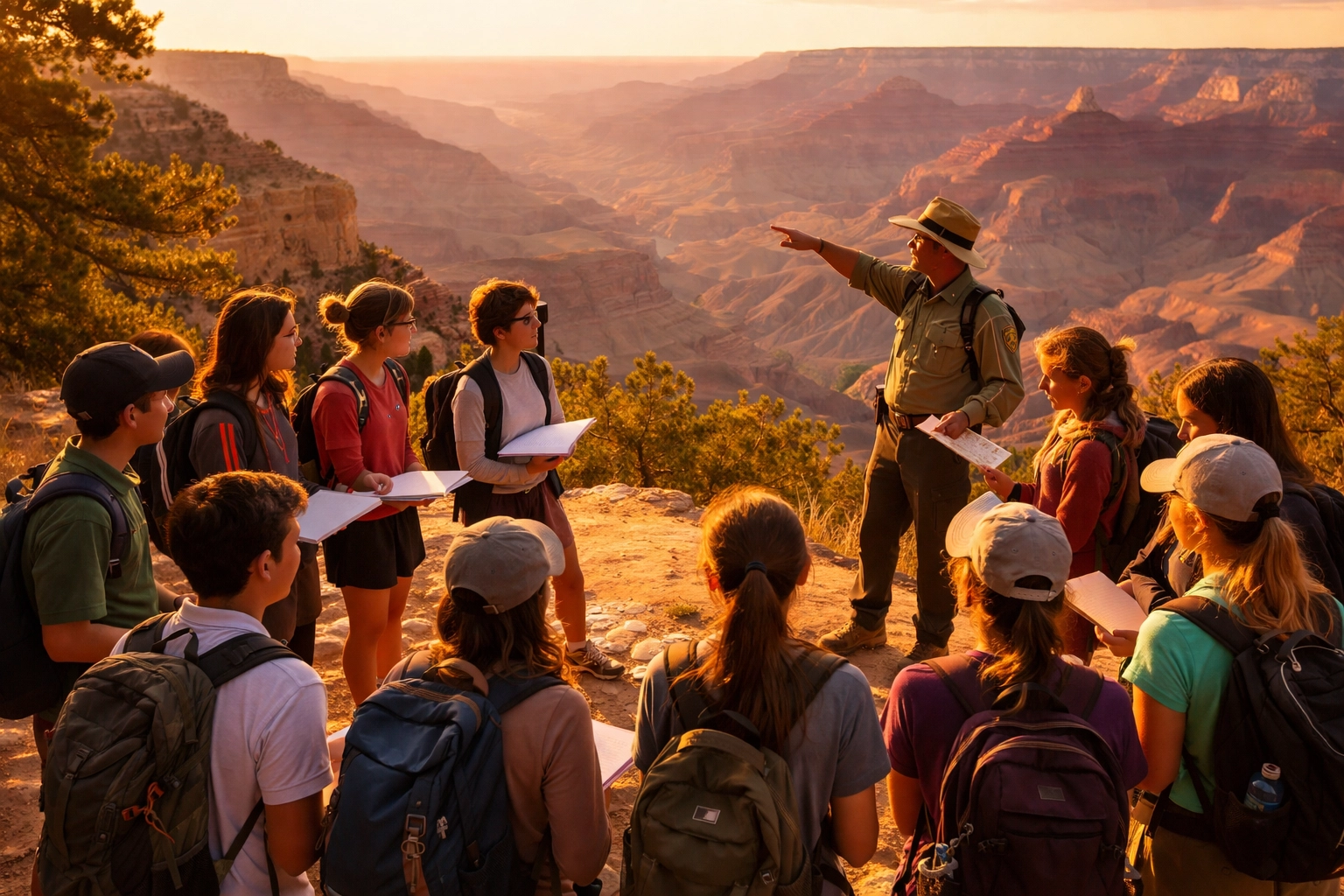
Environmental Stewardship Projects at the Grand Canyon
The Grand Canyon National Park offers exceptional volunteer opportunities specifically designed for high school students. These projects allow young people to contribute meaningfully to one of America's most treasured natural landmarks while developing practical skills and environmental awareness.
Trail Restoration and Maintenance
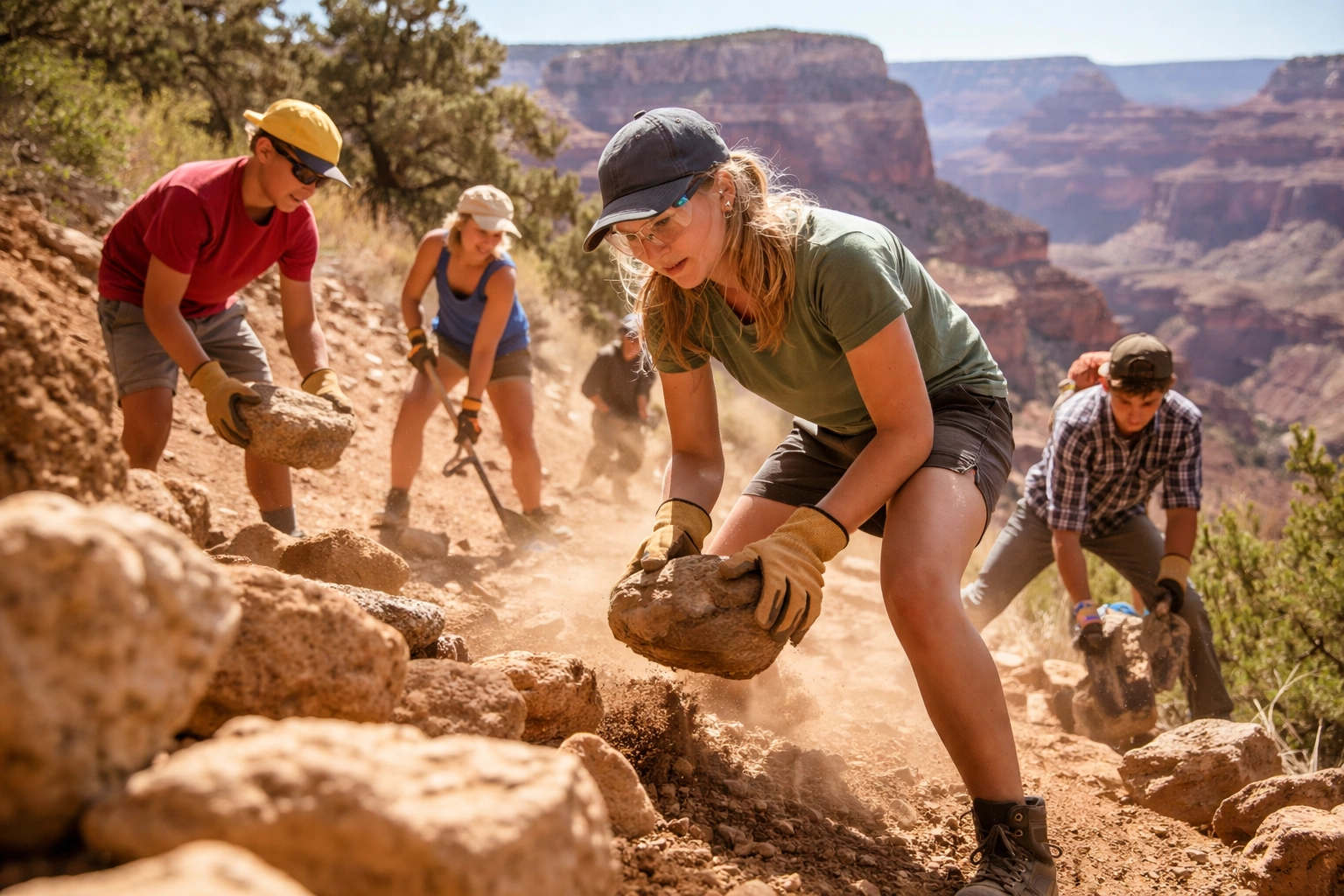
Trail maintenance represents one of the most impactful ways students can contribute to Grand Canyon conservation. Participants work alongside park staff to:
Repair erosion damage along heavily trafficked paths
Clear debris and vegetation that obstruct trail access
Install water bars and drainage structures to protect trail surfaces
Rebuild retaining walls using traditional construction techniques
Document trail conditions for ongoing maintenance planning
This physically demanding work teaches students the importance of infrastructure preservation while providing a deep appreciation for the effort required to maintain public lands.
Native Plant Restoration
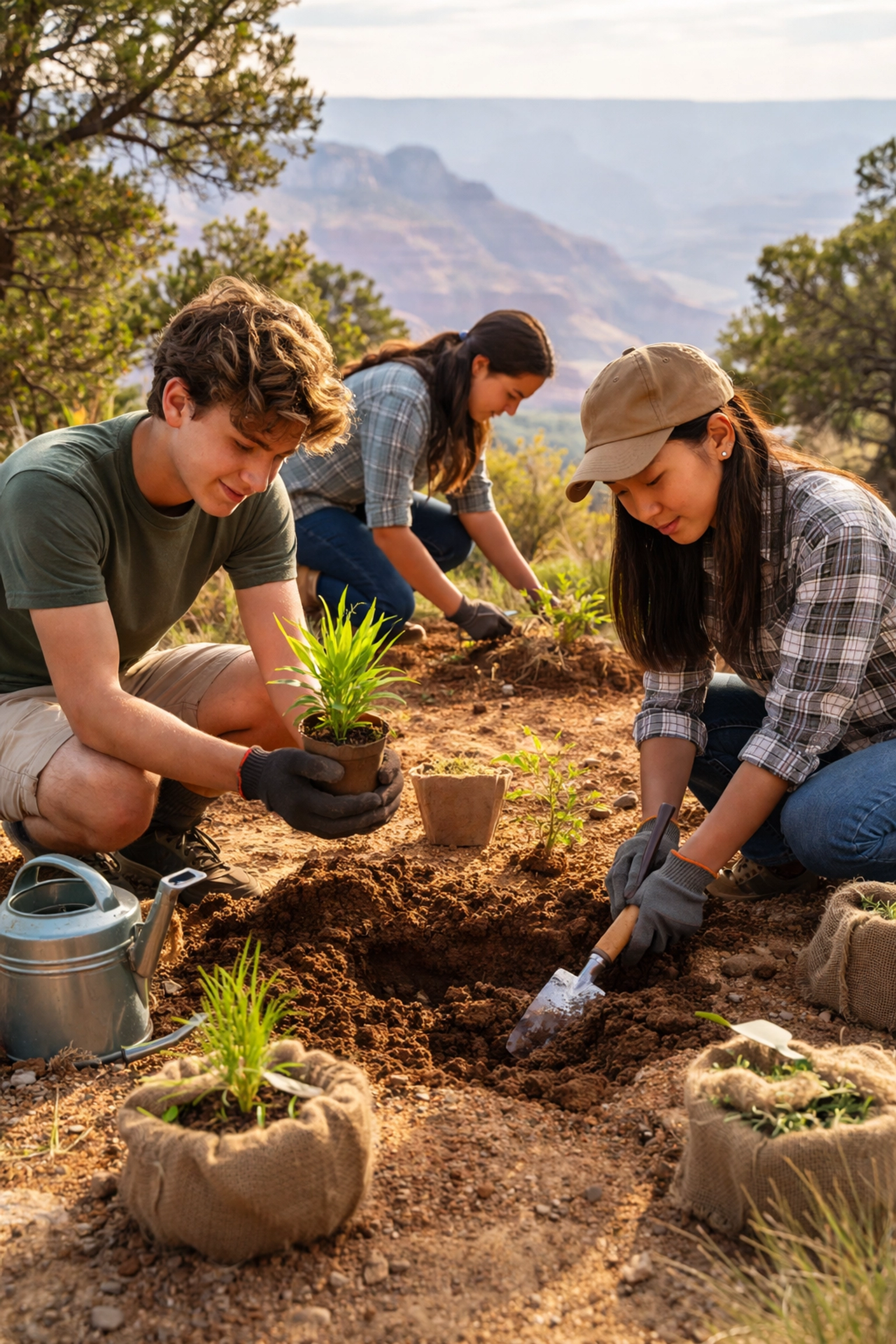
Invasive plant species pose a significant threat to the Grand Canyon's delicate ecosystem. Students participating in native plant restoration projects learn to:
Identify invasive species and understand their impact on native habitats
Safely remove non-native vegetation using approved techniques
Plant and nurture native species in designated restoration areas
Monitor restoration sites and document progress over time
These projects provide hands-on botanical education while contributing to the long-term ecological health of the canyon.
Wildlife Habitat Protection
Conservation efforts at the Grand Canyon include critical wildlife protection initiatives. High school students can participate in projects focused on:
California Condor Conservation: Learning about endangered species recovery programs and assisting with habitat monitoring
Wildlife Corridor Maintenance: Helping preserve natural pathways that allow animals to move safely through the park
Water Source Protection: Working to maintain natural springs and seeps that provide vital resources for canyon wildlife
These experiences connect students directly with the park's biodiversity while emphasizing the importance of habitat preservation.
Community Service Opportunities Beyond Conservation
Service learning opportunities for high school students at the Grand Canyon extend beyond environmental projects. The park offers various roles that develop different skill sets while contributing to visitor education and park operations.
Visitor Services and Education
Students with strong communication skills can assist with visitor services, helping guests navigate the park and understand its geological and cultural significance. These opportunities develop:
Public speaking and interpersonal communication abilities
Knowledge of Grand Canyon history, geology, and ecology
Customer service skills applicable to future careers
Confidence in educational presentation delivery
Museum and Research Support
The Grand Canyon's Science Building, Museum, and Research Library provide unique service opportunities for academically inclined students. Participants may assist with:
Cataloging specimens and artifacts
Organizing research materials and archives
Supporting educational programming development
Assisting with data entry and documentation projects
These roles provide exposure to careers in museum studies, research science, and archival work.
Planning an Effective Service Learning Experience
Ensuring a successful service learning trip to the Grand Canyon requires careful preparation and attention to detail. Educators and trip organizers should follow these essential steps:
Pre-Trip Preparation
Establish Clear Learning Objectives: Define specific academic goals that align with your curriculum. Determine which subjects the trip will reinforce and how students will demonstrate their learning.
Coordinate with Park Personnel: Contact Grand Canyon National Park's volunteer coordinator well in advance to arrange appropriate projects for your group. Discuss group size, physical abilities, and educational priorities.
Prepare Students Academically: Before departure, ensure students understand:
The geological history and formation of the Grand Canyon
Current conservation challenges facing the park
The specific projects they will undertake and their significance
Safety protocols and physical requirements
Address Logistics Thoroughly: Create detailed itineraries that include transportation arrangements, accommodation details, meal plans, and emergency procedures. Share this information with students, parents, and chaperones.
During the Experience
Maintain Consistent Supervision: Assign appropriate chaperone-to-student ratios and establish clear communication protocols. Ensure all adults understand their responsibilities and emergency procedures.
Facilitate Daily Reflection: Schedule time each evening for students to journal about their experiences, discuss challenges, and connect their work to academic concepts. This reflection strengthens the learning component of service learning.
Document the Experience: Capture photographs and videos of student work for post-trip presentations and future program promotion. Encourage students to maintain personal records of their contributions.
Post-Trip Integration
Require Formal Reflection: Assign essays, presentations, or projects that require students to analyze their experience and articulate what they learned. This step distinguishes service learning from simple volunteerism.
Celebrate Accomplishments: Recognize student contributions through school announcements, award ceremonies, or community presentations. Share outcomes with parents and administrators.
Maintain Connections: Encourage students to continue their engagement with conservation through local volunteer opportunities or future service trips.
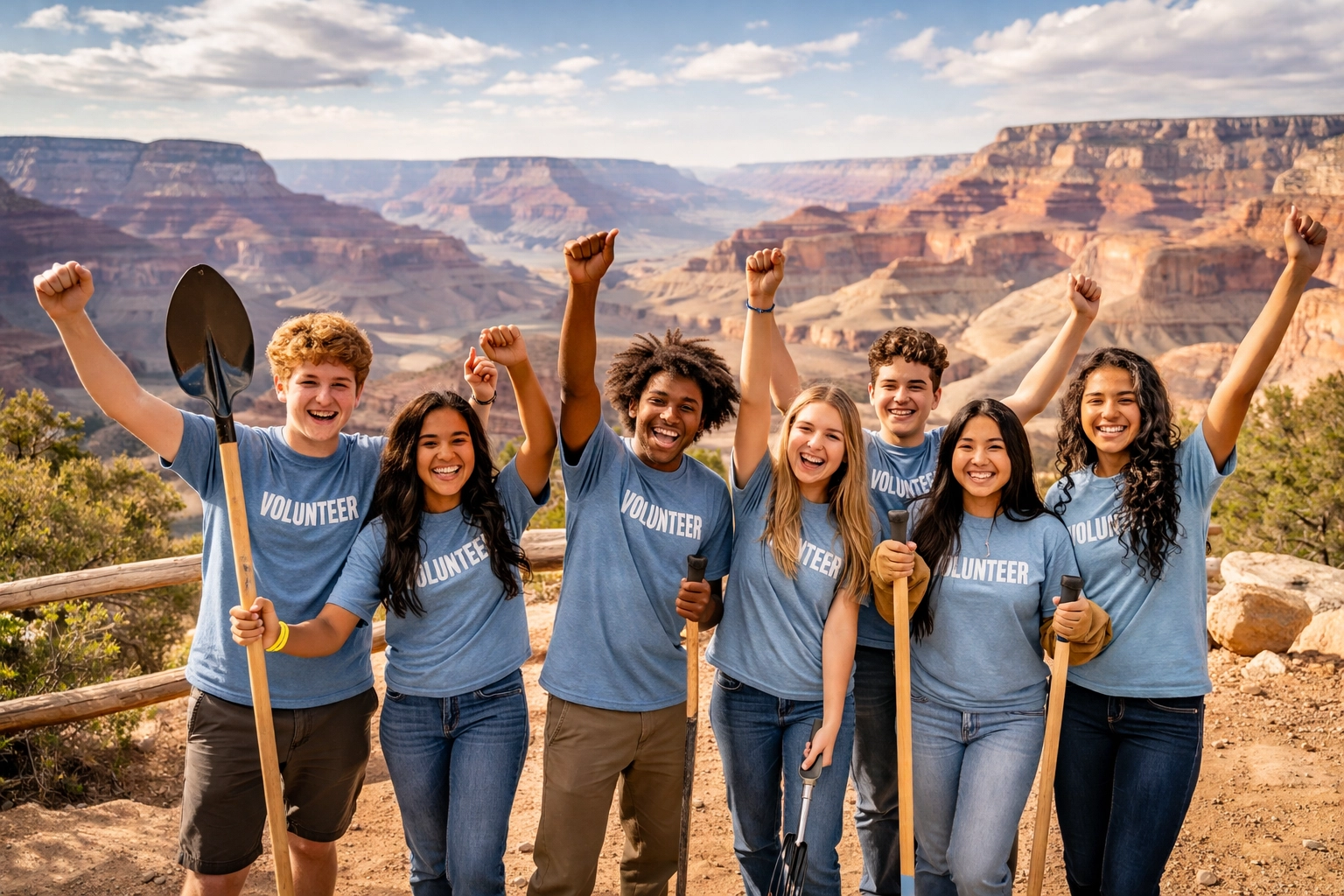
The Lasting Impact of Service Learning
Service learning opportunities for high school students produce benefits that extend far beyond the immediate experience. Research consistently demonstrates that students who participate in well-designed service learning programs develop:
Enhanced Academic Performance: Applying classroom knowledge to real-world situations reinforces learning and improves retention
Stronger Leadership Skills: Taking responsibility for meaningful projects builds confidence and initiative
Greater Civic Engagement: Students who serve their communities during high school are more likely to remain engaged citizens throughout their lives
Career Clarity: Exposure to conservation, education, and research careers helps students make informed decisions about their futures
Environmental Stewardship Values: Hands-on conservation work creates lasting commitment to protecting natural resources
Experience the Grand Canyon with Appleseed Expeditions
Appleseed Expeditions specializes in designing transformative educational travel experiences that combine rigorous academic content with meaningful service opportunities. Our Grand Canyon programs connect students with conservation projects, expert naturalists, and unforgettable learning experiences in one of Earth's most spectacular landscapes.
Our experienced team handles all logistics, from transportation and accommodations to project coordination with park personnel. Educators can focus on teaching while we manage the details that make service learning trips successful.
Contact Appleseed Expeditions today to begin planning a service learning experience that will transform your students' understanding of environmental stewardship while creating memories that last a lifetime. Together, we can help the next generation make a meaningful impact at the Grand Canyon.

Comments