


Struggling For Student Engagement? 10+ Grand Canyon Adventures That Make Earth Science Unforgettable

Ensuring student engagement in Earth science education requires innovative approaches that transform abstract geological concepts into tangible, memorable experiences. A well-planned student trip to Grand Canyon provides unparalleled opportunities to achieve this transformation, offering direct access to 1.8 billion years of Earth's history displayed in spectacular rock formations.
The Grand Canyon serves as Earth's most comprehensive natural textbook, where students can observe geological processes, fossil evidence, and desert ecosystems in their authentic context. Implementing strategic educational adventures during your school trip to Grand Canyon will maximize learning outcomes while creating lasting scientific curiosity among your students.
Virtual Learning Foundations: Preparing Students for Discovery
Begin your Grand Canyon educational journey with comprehensive virtual field trips that establish foundational knowledge before students experience the canyon firsthand. These interactive programs feature high-resolution imagery, embedded videos, and comprehension questions designed for 10-20 minute learning segments that accommodate diverse learning styles.
Virtual field trips serve multiple educational purposes: pre-trip preparation, post-visit reinforcement, and accessibility for students unable to participate in physical excursions. Teachers can seamlessly integrate these materials into digital classrooms or distribute via email, ensuring all students access essential background knowledge about canyon formation, geological time scales, and scientific observation techniques.
Establish specific learning objectives aligned with Next Generation Science Standards before implementing virtual components. Focus on geological vocabulary, rock layer identification, and scientific inquiry methods that students will apply during their physical Grand Canyon experience.
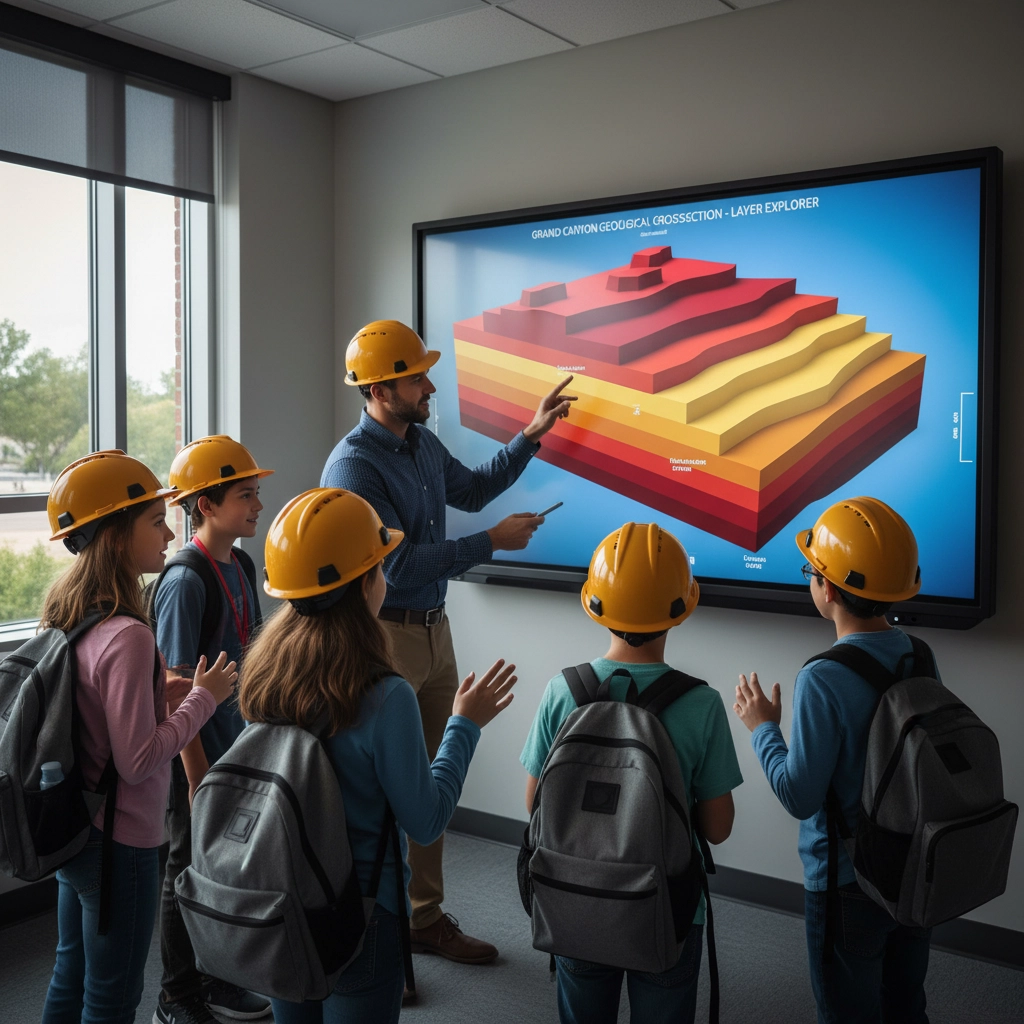
Ranger-Led Programs: Expert-Guided Scientific Investigation
Schedule ranger-led educational programs specifically designed for grades 3-8 that directly support Arizona Science Standards and curriculum requirements. These professionally developed programs cover geology, ecology, cultural history, and conservation topics with expert National Park Service interpreters leading hands-on investigations.
The Dynamic Earth Field Trip program targets middle school students studying Earth science fundamentals. Students analyze evidence of different environments across geologic time periods, make detailed observations of rock properties, and investigate weathering, erosion, and deposition patterns. This program effectively breaks down the abstract concept of "deep time" through direct observation of the Grand Canyon's layered geological record.
Ensure optimal program availability by booking ranger-led experiences 6-12 months in advance, as these popular educational opportunities fill quickly during peak academic seasons. Research educational fee waivers through proper National Park Service channels to reduce overall trip costs and maximize accessibility for all students.
Hands-On Geological Field Studies
Implement specialized geology programs that combine camping experiences with intensive field study. The Geology Hike and Camp program offers a moderate three-day educational experience where students stay at Mather Campground while participating in daily guided hikes to dramatic canyon overlooks.
Expert guides lead students through comprehensive studies of Grand Canyon formation processes, fossil identification, ancient environmental reconstruction, stratigraphy analysis, and geomorphology principles. Students develop practical skills in geological observation, data collection, and scientific reasoning while experiencing the canyon's educational value firsthand.
For advanced students, consider summer geology courses that combine classroom instruction with extended field experiences. These intensive programs include Colorado River expeditions and create genuinely transformative educational experiences while building authentic scientific expertise.
Adventure-Based Learning: Combining Excitement with Education
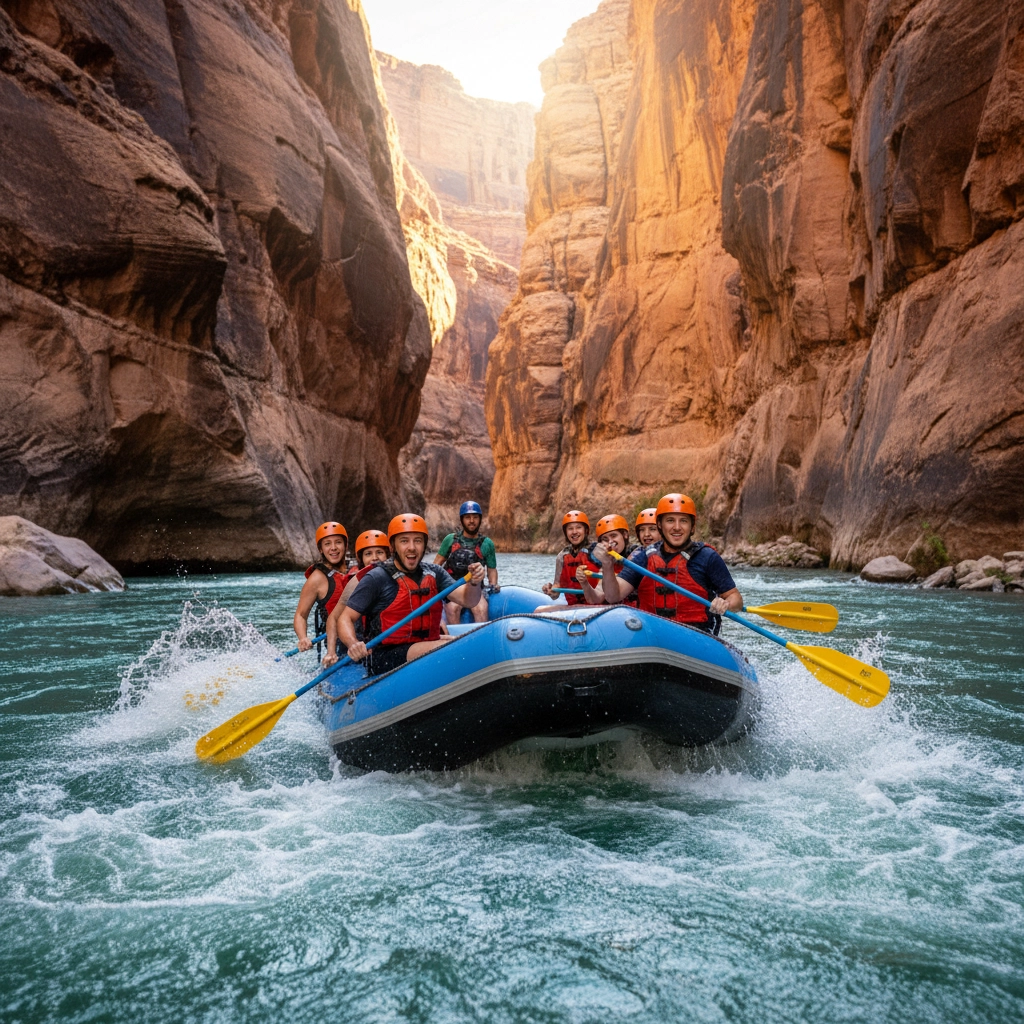
Incorporate Colorado River rafting expeditions that merge geological field study with outdoor adventure education. Multi-day rafting programs scheduled for late April and early May feature both river and hiking components, allowing students to observe the canyon's geological story from multiple unique perspectives.
These expeditions provide students with direct access to rock formations typically invisible from rim viewpoints. Students can examine fossil evidence, observe unconformities, and witness active erosion processes while developing teamwork skills and environmental awareness through immersive outdoor experiences.
Guided hiking programs along South Rim and North Rim trails offer varied difficulty levels and educational perspectives. Structure these experiences around specific geological observation points where students can collect data, make sketches, and generate evidence supporting classroom concepts about sedimentary processes, volcanic activity, and landscape evolution.
Interactive Museum and Discovery Programs
Utilize the Junior Ranger Program designed for ages 4-14 to provide structured interactive learning through visitor centers and museum facilities. Students earn official badges while exploring canyon formation processes, desert wildlife habitats, and Native American cultural connections to the landscape.
Strategic educational stops at Desert View Watchtower provide dramatic canyon perspectives and opportunities for structured observation activities. Students can use telescopes, complete geological identification worksheets, and participate in guided discussions about landscape formation processes visible from elevated viewpoints.
The Grand Canyon Skywalk offers an innovative glass walkway extending 70 feet over the canyon, providing unique perspectives that combine awe-inspiring views with systematic geological observation opportunities. This experience allows students to observe vertical rock sequences and understand scale relationships impossible to achieve from traditional viewpoints.
Fossil Discovery and Paleontological Investigation
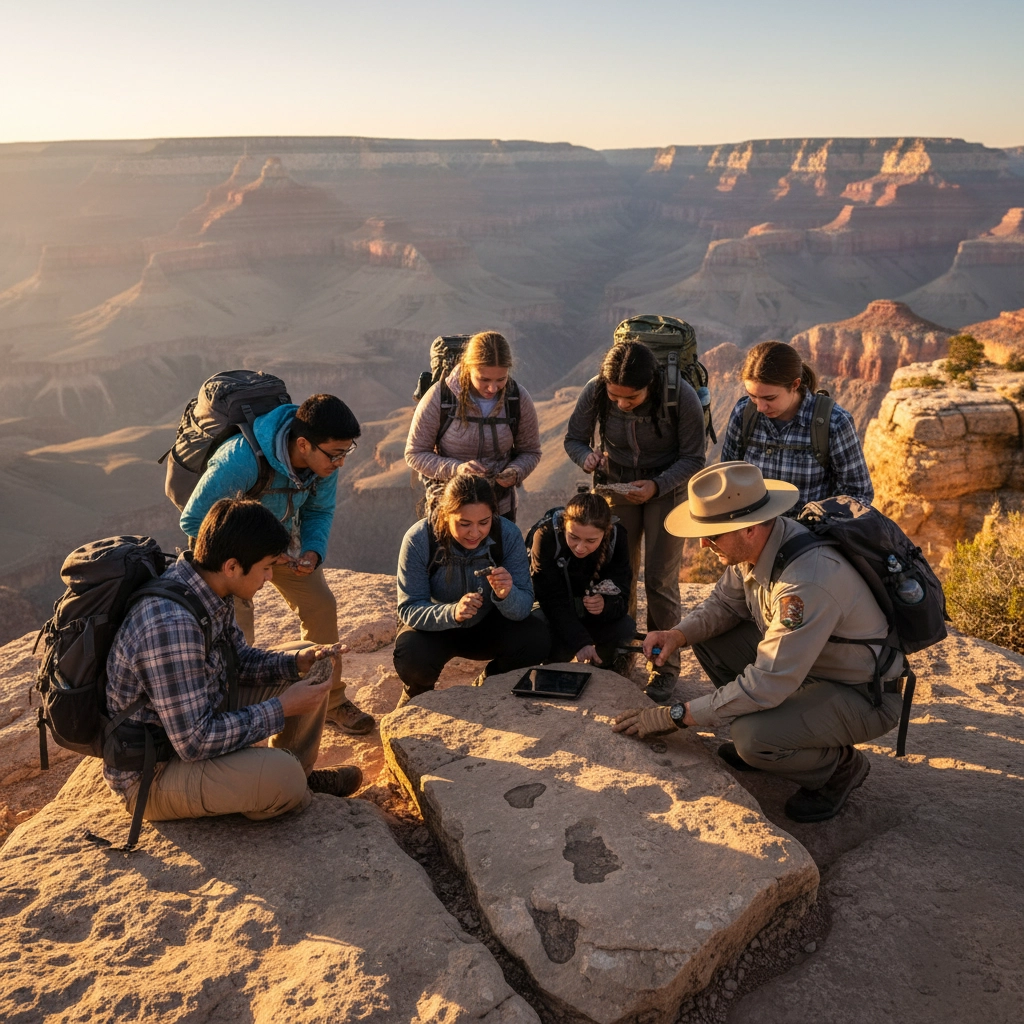
Organize supervised fossil hunting activities in designated areas where students can discover actual remnants of ancient life forms preserved in canyon rock layers. Focus on marine fossils including brachiopods, crinoids, and trilobites that provide evidence of ancient ocean environments.
Teach students proper paleontological techniques including careful excavation methods, detailed documentation procedures, and ethical collecting practices. Emphasize how fossil evidence supports scientific understanding of environmental change over geological time periods.
Incorporate microscopic fossil examination using portable field microscopes to reveal detailed structural features invisible to naked-eye observation. Students develop scientific observation skills while discovering the intricate beauty of ancient life forms preserved in canyon sediments.
Desert Ecosystem and Wildlife Studies
Implement comprehensive desert ecology investigations focusing on high desert plant and animal adaptations. Students observe how organisms survive in extreme temperature variations, limited water availability, and intense solar radiation characteristic of Grand Canyon environments.
Schedule early morning or late afternoon wildlife observation sessions when desert animals are most active. Students can document bighorn sheep, elk, mule deer, and numerous bird species while learning about food webs, habitat requirements, and conservation challenges facing desert ecosystems.
Develop plant identification activities focusing on desert-adapted species including prickly pear cactus, Utah juniper, and pinyon pine. Students investigate structural adaptations, water conservation strategies, and symbiotic relationships that enable survival in arid environments.
Maximizing Educational Impact Through Strategic Planning
Structure your educational trip to Grand Canyon using a comprehensive three-stage framework that maximizes learning outcomes. Pre-visit preparation should introduce geological concepts, cultural history, and ecological principles using available educational resources and documentary materials.
During field experiences, engage students through ranger-led programs, guided investigations, and direct observation of rock layers and geological processes. Require students to maintain detailed field notebooks, collect systematic observations, and generate evidence supporting scientific conclusions about canyon formation and environmental change.
Post-visit reinforcement activities should include reflection journals, research projects, scientific presentations, and creative assignments that help students process their experiences and demonstrate mastery of Earth science concepts. Design assessment rubrics that evaluate both scientific understanding and critical thinking development.
Safety and Logistical Considerations
Prioritize comprehensive safety planning for all Grand Canyon educational activities. Establish clear emergency procedures, maintain constant student supervision ratios, and ensure all participants understand canyon-specific safety requirements including proper hydration, sun protection, and trail safety protocols.
Communicate detailed trip expectations, costs, and preparation requirements to parents at least 6-12 months in advance. Provide comprehensive packing lists, physical preparation recommendations, and educational objectives to ensure all stakeholders understand the program's academic and logistical requirements.
Confirm that selected programs accommodate your specific group size and provide necessary educational support materials. Research transportation options, accommodation requirements, and meal planning to ensure seamless implementation of your Grand Canyon educational experience.
A well-executed educational trip to Grand Canyon transforms abstract Earth science concepts into vivid, memorable experiences that inspire lifelong scientific curiosity. Through careful planning, strategic program selection, and comprehensive safety preparation, your students will gain profound understanding of geological processes while developing critical thinking skills essential for scientific literacy.
For schools seeking expertly designed Grand Canyon educational experiences, Appleseed Expeditions specializes in creating transformative science-focused programs that maximize student engagement while ensuring comprehensive safety and educational outcomes. Our experienced guides and curriculum-aligned activities help educators achieve their most ambitious learning objectives through carefully structured outdoor education adventures.

Comments