


Struggling For Student Engagement? 10 San Juan Islands Kayaking Adventures That Make Pacific Northwest Wildlife Unforgettable

Student engagement remains one of the most significant challenges educators face today. Traditional classroom instruction, while valuable, often fails to ignite the lasting curiosity that transforms students into lifelong learners. The solution lies in experiential education: and few destinations deliver transformative wildlife encounters quite like the San Juan Islands of the Pacific Northwest.
Kayaking through the pristine waters of the San Juan archipelago offers students the opportunity to observe orcas, sea otters, harbor seals, and bald eagles in their natural habitat. These experiences create lasting memories that no textbook can replicate. The following guide presents ten carefully curated kayaking adventures designed to maximize student engagement while ensuring safety and educational value.
Why the San Juan Islands Transform Student Learning
The San Juan Islands, located in Washington State's Puget Sound, represent one of North America's premier marine ecosystems. This archipelago of over 400 islands provides an unparalleled outdoor classroom for marine biology, ecology, and environmental science education.
The west side of San Juan Island offers the best opportunities for wildlife encounters, with resident orca pods frequenting these nutrient-rich waters from spring through fall. Students who witness a pod of orcas surface beside their kayak develop a visceral connection to marine conservation that classroom lectures simply cannot achieve.
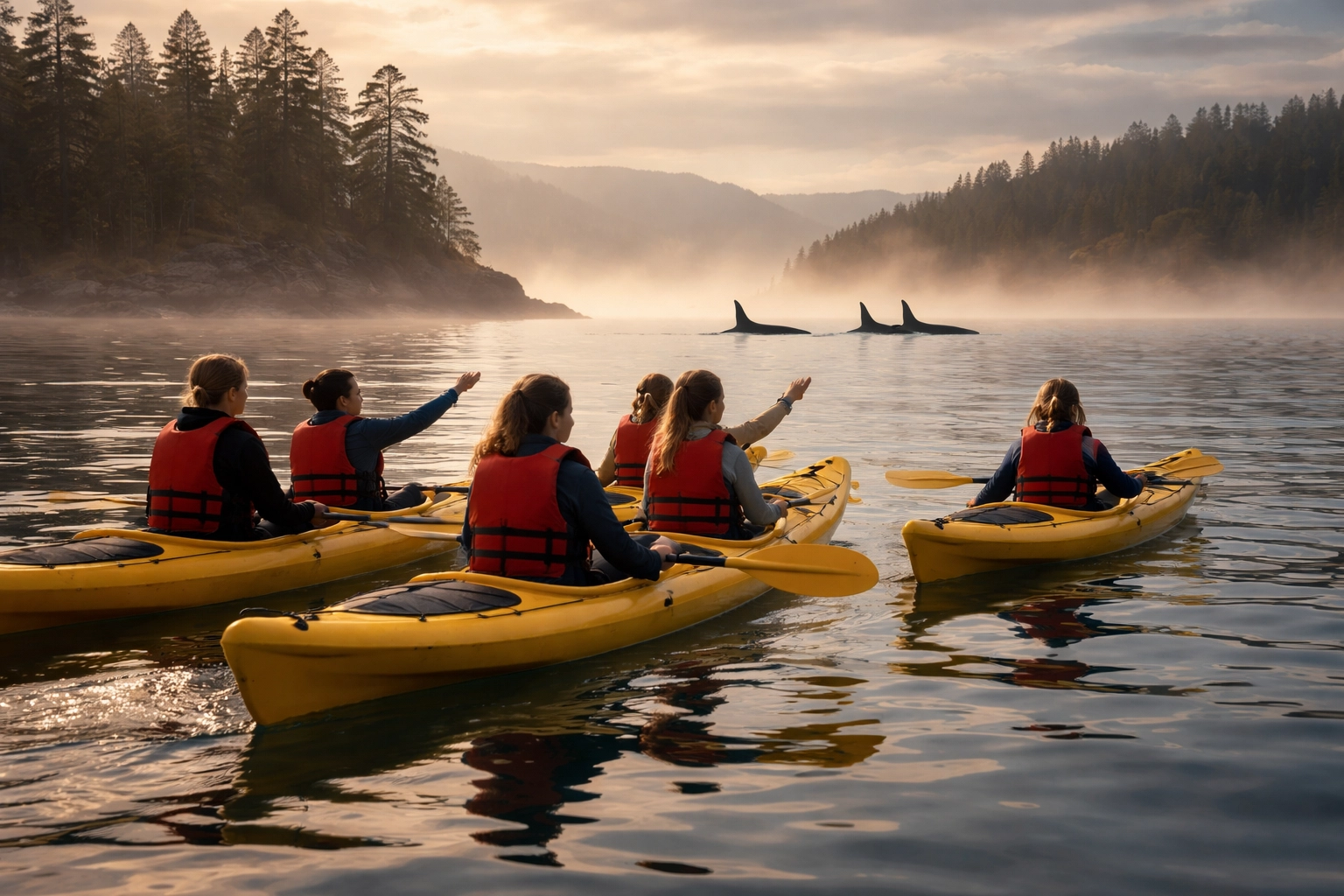
The optimal season for educational kayaking expeditions runs from April through early October, with peak conditions occurring between May and September. Planning your student trip during this window maximizes wildlife viewing opportunities and ensures favorable weather conditions.
10 Kayaking Adventures That Maximize Student Engagement
1. Half-Day Wildlife Observation Tours
Three-hour guided tours provide an accessible introduction for students new to kayaking. These expeditions focus on coastal exploration and wildlife identification, allowing students to practice observation skills while building confidence on the water. Expert naturalist guides maintain small group ratios of approximately six students per guide, ensuring personalized attention and maximizing educational value.
2. Full-Day Marine Biology Expeditions
Full-day tours offer extended time on the water, enabling students to venture further into prime wildlife habitat. These expeditions typically include beach lunch breaks where guides discuss intertidal ecology, providing hands-on examination of tide pools and shoreline ecosystems. Students learn to identify species relationships and understand the delicate balance of marine food webs.
3. Three-Day Camping Kayak Adventures
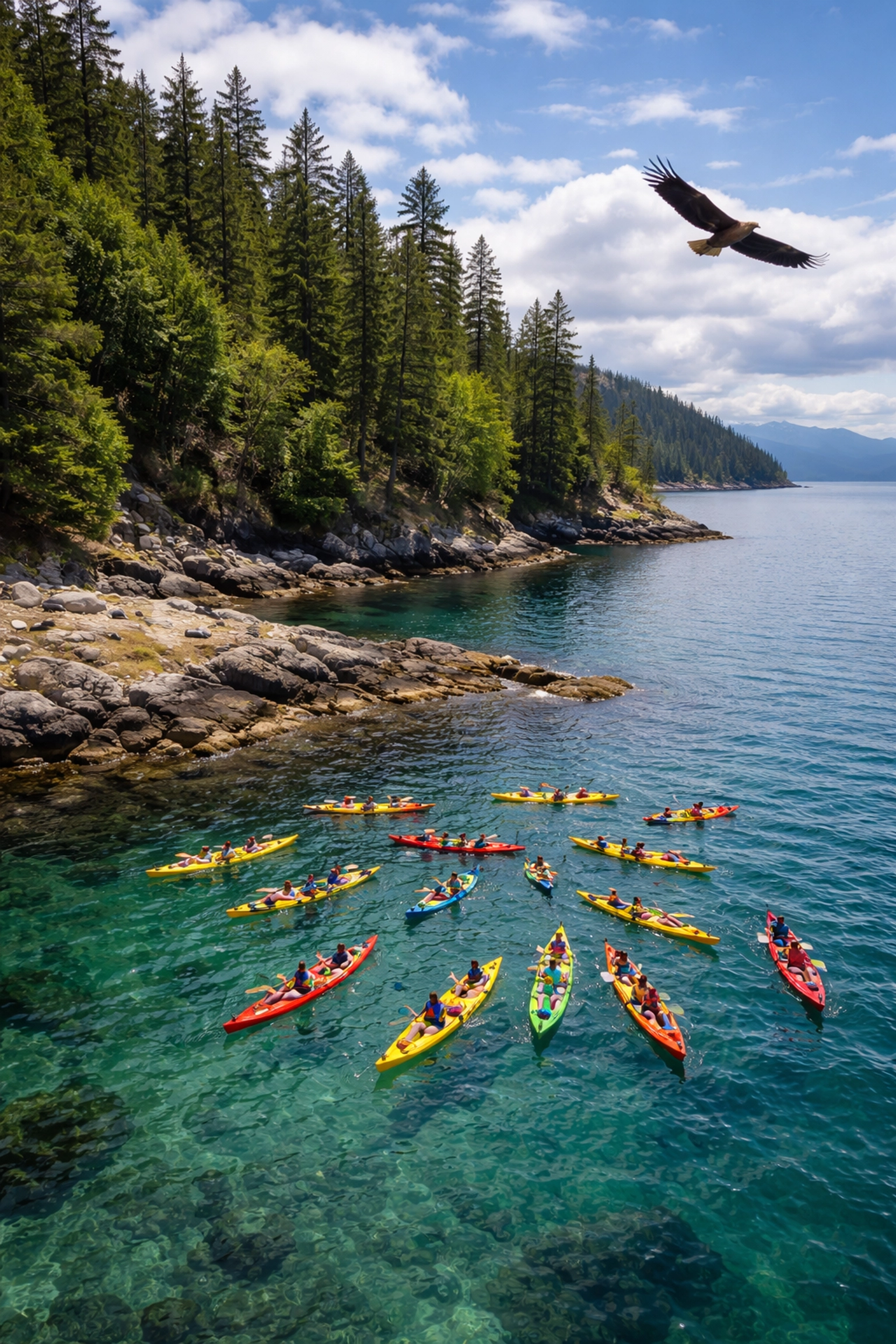
Multi-day expeditions departing from May through October combine paddling with overnight camping at scenic state park locations. These immersive experiences include freshly prepared meals at wilderness campsites, allowing students to disconnect from technology and fully engage with the natural environment. The extended duration increases opportunities for significant wildlife encounters, including orca sightings.
4. Five-Day Ultimate Island Exploration
Comprehensive five-day expeditions cover extensive territory, visiting multiple islands and showcasing the full diversity of the San Juan ecosystem. Students on these extended trips frequently report transformative experiences, developing genuine passion for marine conservation. These expeditions suit advanced students or groups seeking maximum immersion.
5. Bioluminescent Night Kayaking
Evening tours during summer months reveal the magical phenomenon of bioluminescence: microscopic organisms that glow when disturbed by paddle strokes. This unique experience introduces students to marine microbiology in an unforgettable context. Night paddles typically begin at $150 per person and require advance booking due to high demand.
6. Orca-Focused Research Expeditions
Specialized tours focus specifically on orca observation and research methodology. Students learn to identify individual whales by dorsal fin shape and saddle patch patterns, contributing to citizen science databases. These expeditions connect classroom learning about endangered species directly to field research practices.
7. Sea Otter Habitat Exploration
Sea otters, once nearly extinct in Washington waters, have made a remarkable recovery. Tours focusing on sea otter habitat teach students about conservation success stories and ecosystem restoration. Observing these charismatic animals using tools to crack open shellfish demonstrates remarkable animal intelligence and adaptation.
8. Bird Watching Kayak Tours
The San Juan Islands host abundant avian life, including bald eagles, great blue herons, cormorants, and numerous seabird species. Birding-focused kayak tours develop student observation skills while covering ornithology concepts. The quiet approach of kayaks allows closer encounters than motorized vessels typically achieve.
9. Geology and Coastal Formation Tours
Kayaking provides unique perspectives on coastal geology, glacial formations, and erosion patterns. Tours emphasizing earth science connect seamlessly with Pacific Northwest volcanic and tectonic studies. Students can observe sea caves, rocky outcrops, and evidence of the region's dramatic geological history.
10. Conservation Service Learning Expeditions
Some operators offer expeditions combining kayaking with beach cleanup and conservation service projects. These experiences teach environmental stewardship while providing direct action opportunities. Students return home not merely as observers but as active participants in marine conservation.
Cultural Enrichment: Native American Heritage Experiences
A comprehensive Pacific Northwest educational expedition extends beyond natural science to include cultural learning. The San Juan Islands and surrounding Puget Sound region hold deep significance for Coast Salish peoples, including the Lummi, Samish, and other tribes who have called these waters home for thousands of years.
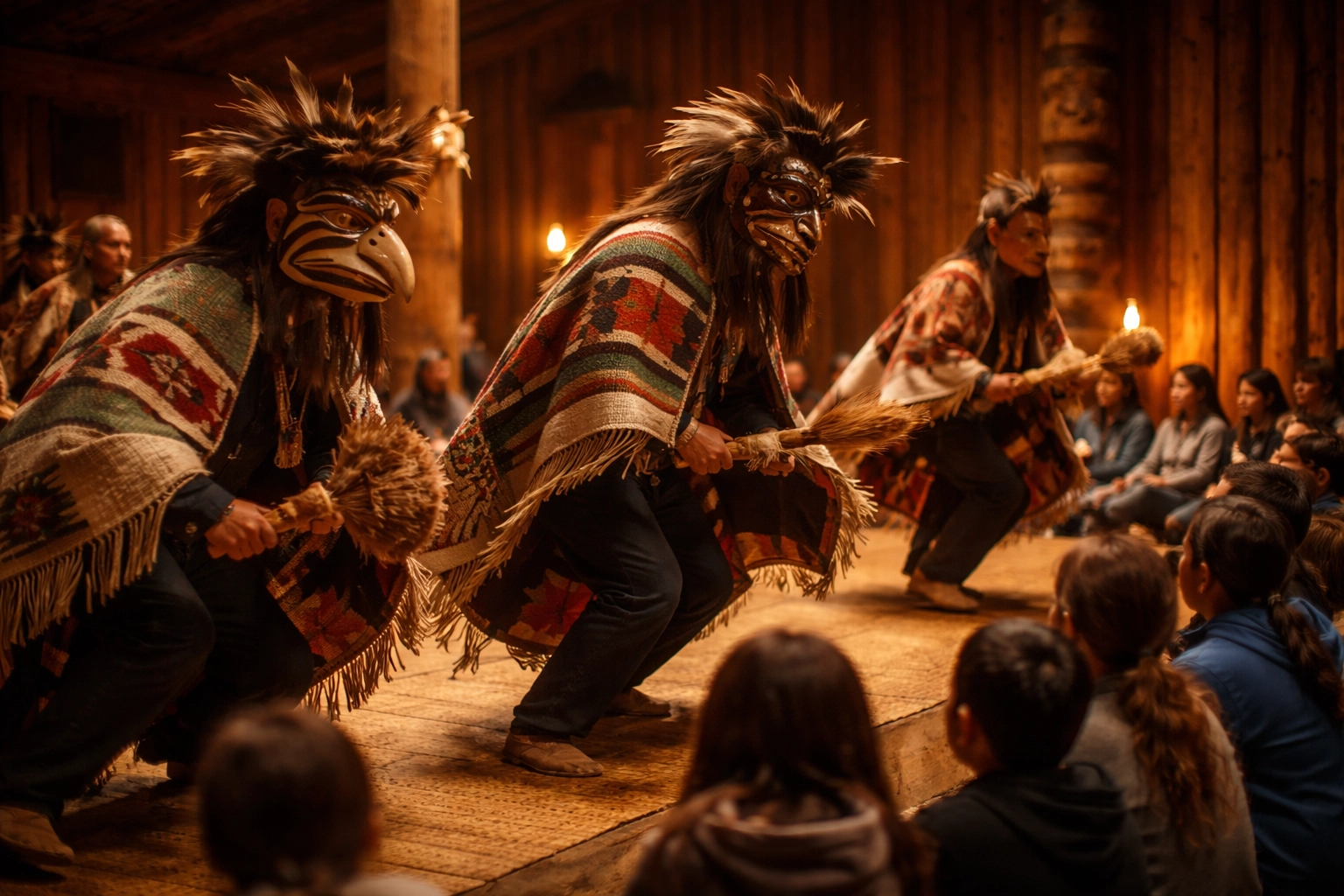
Incorporating visits to experience Native American cultural presentations, including traditional dances, provides students with essential context about human relationships with the marine environment. These cultural exchanges teach respect for indigenous knowledge systems and demonstrate sustainable practices that protected these ecosystems for millennia.
When planning your expedition, coordinate with tribal cultural centers to arrange appropriate educational presentations. Students benefit enormously from understanding how indigenous peoples developed sophisticated marine resource management long before European contact. Traditional ecological knowledge offers valuable perspectives that complement Western scientific approaches.
Safety and Preparation: Essential Guidelines for Educators
Ensuring student safety during kayaking expeditions requires thorough preparation and vigilant supervision. Consider the following essential guidelines:
Pre-Trip Preparation:
Verify that all students can swim and assess comfort levels with water activities
Confirm medical conditions and ensure appropriate medications are accessible
Distribute detailed itineraries to parents and school administrators
Review emergency procedures with all chaperones and students
Equipment and Training:
Ensure proper fitting of personal flotation devices for every participant
Arrange pre-departure paddling instruction with qualified guides
Verify that outfitters maintain appropriate safety certifications and insurance
Confirm communication equipment availability for emergency situations
On-Water Protocols:
Maintain visual contact with all student kayaks throughout expeditions
Establish clear signals for group communication on the water
Brief students on wildlife approach distances and respectful observation practices
Monitor weather conditions continuously and adjust plans accordingly
Planning Your Pacific Northwest Educational Expedition
The San Juan Islands kayaking experience integrates naturally with broader Pacific Northwest science studies. Many educators combine island kayaking with visits to Mount Rainier for volcanic and alpine ecology studies, Olympic National Forest for rainforest exploration, or conservation service work with organizations like Farmers Frog.
This regional approach maximizes educational impact while creating a cohesive narrative connecting marine, forest, and mountain ecosystems. Students develop comprehensive understanding of Pacific Northwest ecology across multiple habitat types.
Ready to transform student engagement through unforgettable Pacific Northwest wildlife encounters?Appleseed Expeditions specializes in designing comprehensive educational travel experiences that combine kayaking adventures, wildlife observation, cultural enrichment, and scientific inquiry. Our expert team handles logistics, safety planning, and educational programming, allowing educators to focus on facilitating transformative learning experiences.
Contact Appleseed Expeditions today to begin planning your San Juan Islands kayaking adventure and discover why experiential education in the Pacific Northwest creates the engaged, passionate learners every educator hopes to inspire.

Comments