


The Supervolcano Classroom: Why Educational Trips to Yellowstone are Unforgettable

Understanding the dynamic forces that shape our planet is fundamental to earth science education. Yellowstone National Park provides an unparalleled opportunity for students to witness geological processes in real time, standing directly atop one of the world's most powerful and closely monitored supervolcanoes. A class trip to Yellowstone transforms abstract concepts from textbooks into tangible, observable phenomena that students will remember throughout their academic careers and beyond.
The Yellowstone Caldera: A Living Laboratory
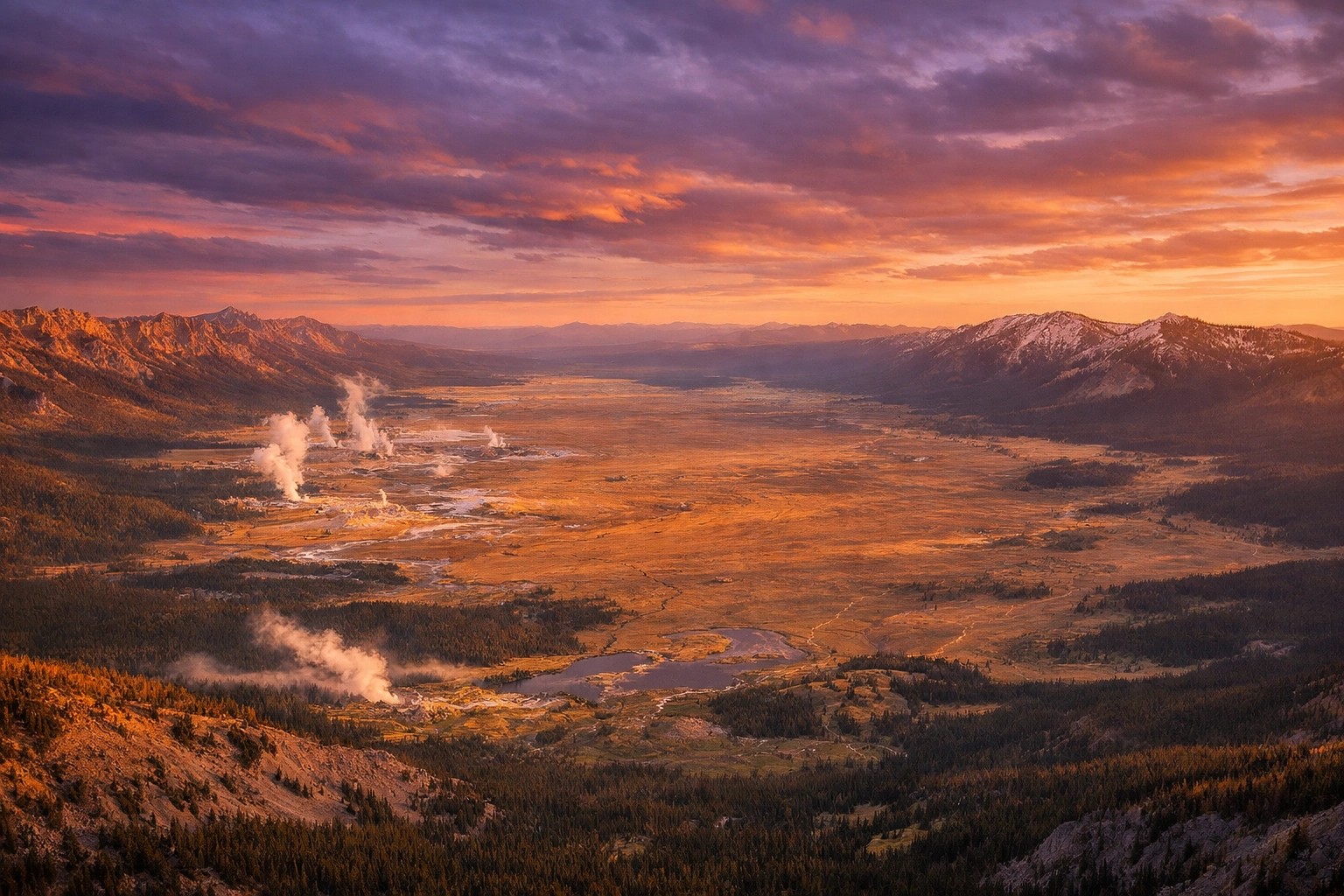
The Yellowstone caldera represents one of the most significant geological features on Earth. This massive volcanic system measures approximately 30 by 45 miles, formed during the last major eruption 640,000 years ago. Student travel to Yellowstone offers the unique opportunity to explore an active supervolcano system where the evidence of immense geological power is visible at every turn.
The caldera itself is not immediately obvious to casual observers: the landscape appears as a vast, relatively flat expanse punctuated by mountain ranges. This subtlety provides an excellent teaching moment: emphasize to students that the most powerful geological features are not always the most visually dramatic from ground level. Encourage them to study topographic maps before arrival and compare their expectations with observations in the field.
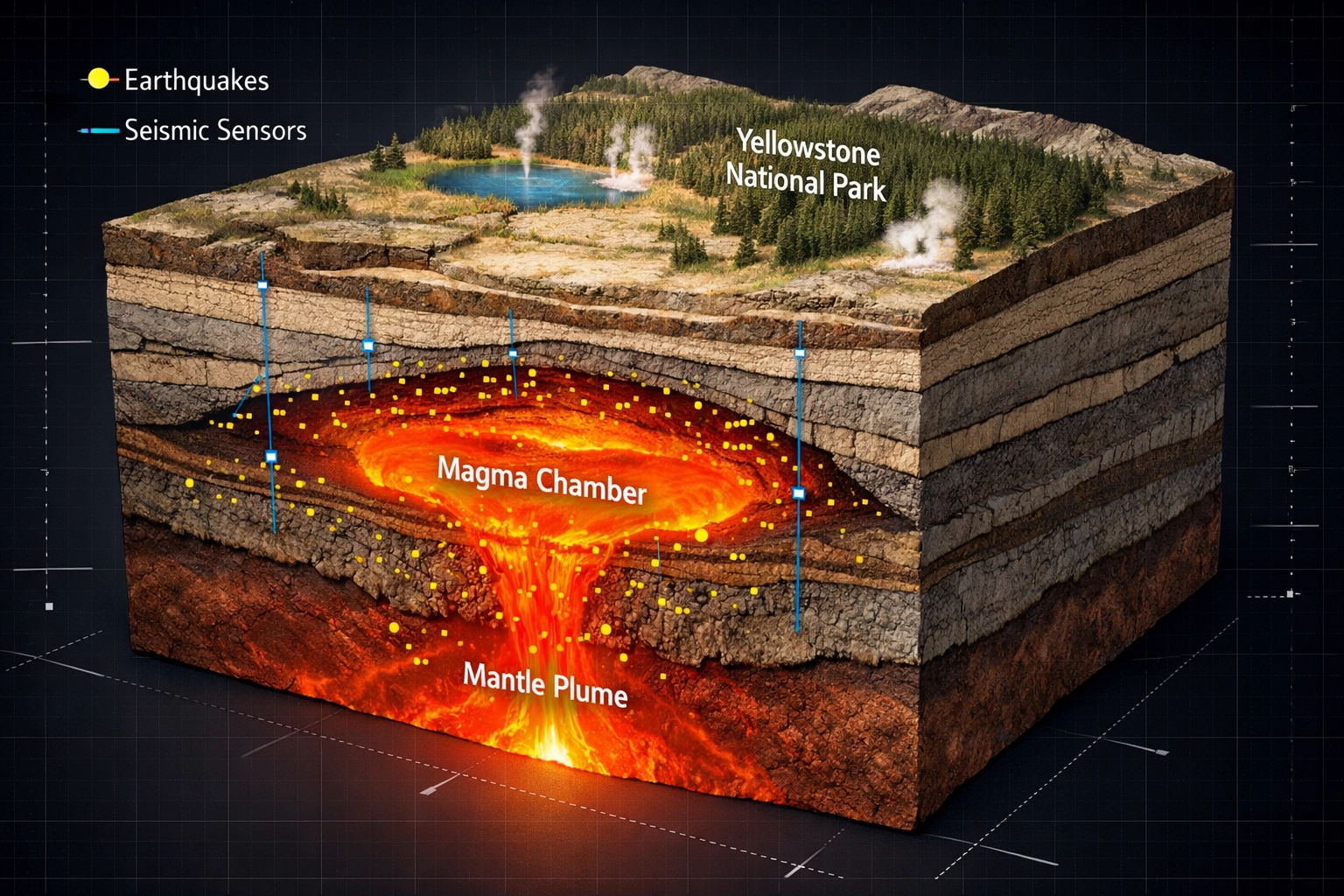
Beneath Yellowstone's scenic surface lies a magma chamber of extraordinary proportions. Current research indicates that the magma reservoir extends to depths of approximately 28 miles, with an upper chamber beginning just 3 to 9 miles below the surface. Educational trips to Yellowstone should include discussion of this three-dimensional geological structure, helping students visualize the massive heat engine driving all surface phenomena they observe.
Seismic Activity: Monitoring Earth's Heartbeat
Yellowstone experiences between 1,500 and 3,000 earthquakes annually, making it one of the most seismically active regions in the United States. The vast majority of these tremors measure below magnitude 3.0 and remain imperceptible to visitors. However, this constant seismic activity provides crucial data for understanding the supervolcano's current state and behavior.
Prepare students to understand the distinction between normal background seismicity and potentially concerning earthquake swarms. Explain that scientists continuously monitor Yellowstone through a sophisticated network of seismographs, GPS stations, and satellite measurements. Discuss the following key monitoring parameters:
Ground deformation: The caldera floor rises and falls in response to pressure changes in the magma system below
Earthquake frequency and location: Patterns reveal where stress is accumulating or releasing
Gas emissions: Changes in volcanic gas output can indicate magma movement
Thermal features: Variations in geyser eruption intervals or spring temperatures may signal subsurface changes
Emphasize that current monitoring shows Yellowstone operating within normal parameters, with no indication of an impending eruption. This reassurance is important for both students and parents while maintaining the educational value of discussing volcanic hazards responsibly.
The Geothermal Manifestations: Surface Evidence of Deep Heat
The connection between the deep magma system and surface geothermal features represents one of the most important concepts for students to grasp during their visit. Yellowstone contains more than 10,000 thermal features, including approximately 500 geysers: more than 60% of the world's total.
Plan your class trip to Yellowstone to include visits to multiple geyser basins, each demonstrating different aspects of hydrothermal systems:
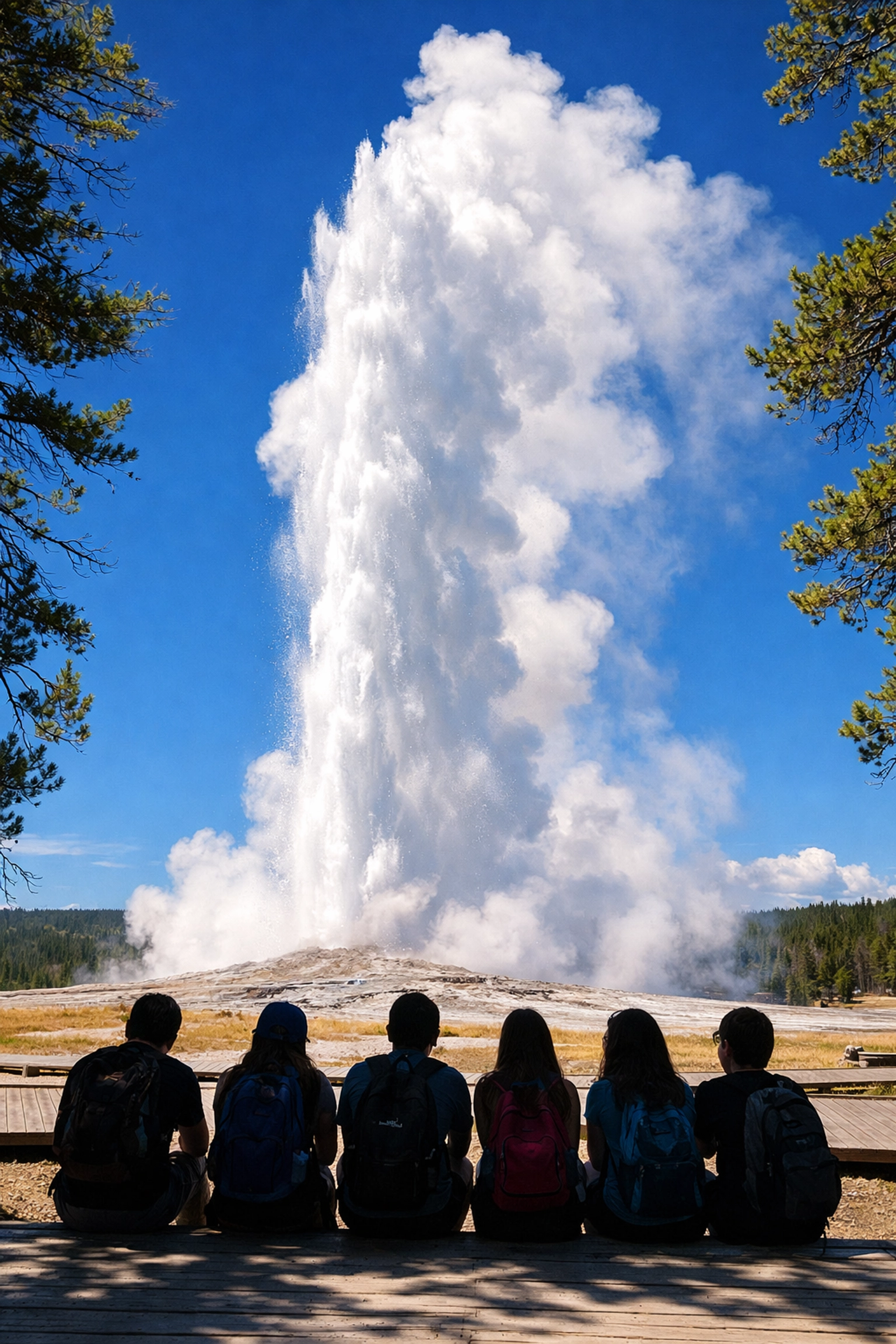
Old Faithful and Upper Geyser Basin: Begin here to establish baseline understanding. Old Faithful's predictable eruptions, occurring approximately every 90 minutes, demonstrate the regular cycling of a mature hydrothermal system. Encourage students to time eruptions, estimate water volume expelled, and calculate the energy required to superheat and propel thousands of gallons of water skyward.
Norris Geyser Basin: Visit this location to observe Yellowstone's hottest and most dynamic thermal area. Water temperatures here reach the boiling point at Yellowstone's elevation (199°F), and the basin's features change more rapidly than elsewhere in the park. Discuss with students how the acidic chemistry here differs from alkaline basins, creating distinctive colors and mineral deposits.
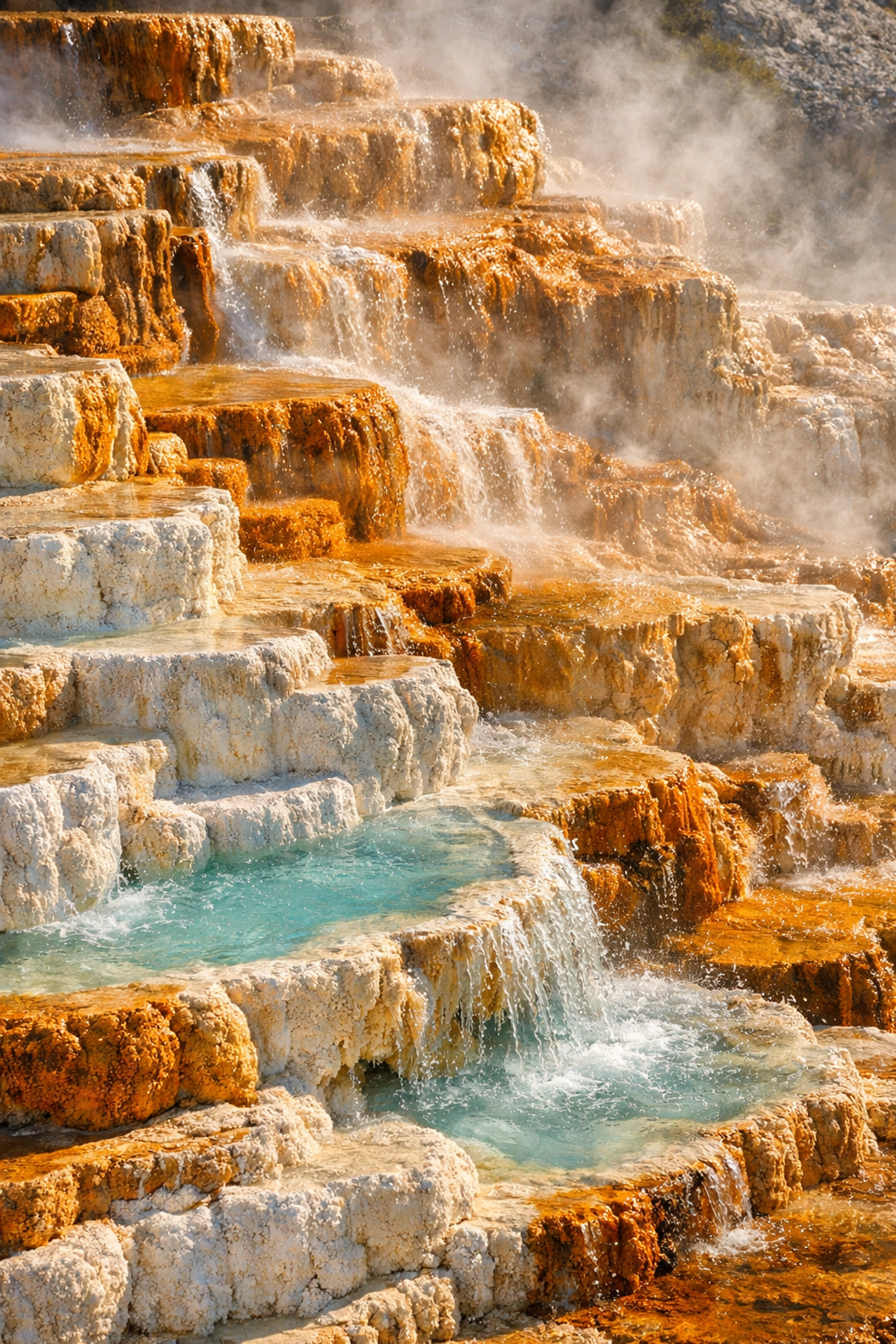
Mammoth Hot Springs: Include this site to demonstrate how hydrothermal systems create massive travertine terraces through mineral deposition. The actively growing terraces provide visual evidence of ongoing geological processes at rates students can comprehend.
Preparing Students for Maximum Learning Impact
Effective educational trips to Yellowstone require thorough preparation to maximize both learning outcomes and safety. Begin planning at least six months in advance, incorporating the following essential elements into your preparation timeline:
Pre-Trip Academic Preparation:
Review plate tectonics, volcanic systems, and hydrothermal processes in classroom lessons
Assign students specific features or phenomena to research and present to peers upon arrival
Provide topographic maps and satellite imagery for students to study caldera structure
Discuss the differences between effusive and explosive volcanic eruptions
Introduce the Volcanic Explosivity Index (VEI) and Yellowstone's place in geological history
Safety Protocols and Thermal Area Rules: Emphasize the critical importance of boardwalk safety. Thermal features at Yellowstone pose genuine hazards; the water in many springs exceeds 200°F and can cause severe burns instantly. Establish and enforce the following non-negotiable rules:
Students must remain on designated boardwalks and trails at all times
No running, horseplay, or sudden movements near thermal features
Maintain safe distances from all wildlife
Stay together in assigned groups with designated chaperones
Immediately report any injuries or unsafe conditions to trip leaders
Create detailed emergency procedures and ensure all chaperones understand protocols for various scenarios, including thermal burns, altitude-related issues, and wildlife encounters. Share these procedures with parents well before departure.
Connecting Seismic Monitoring to Student Observations
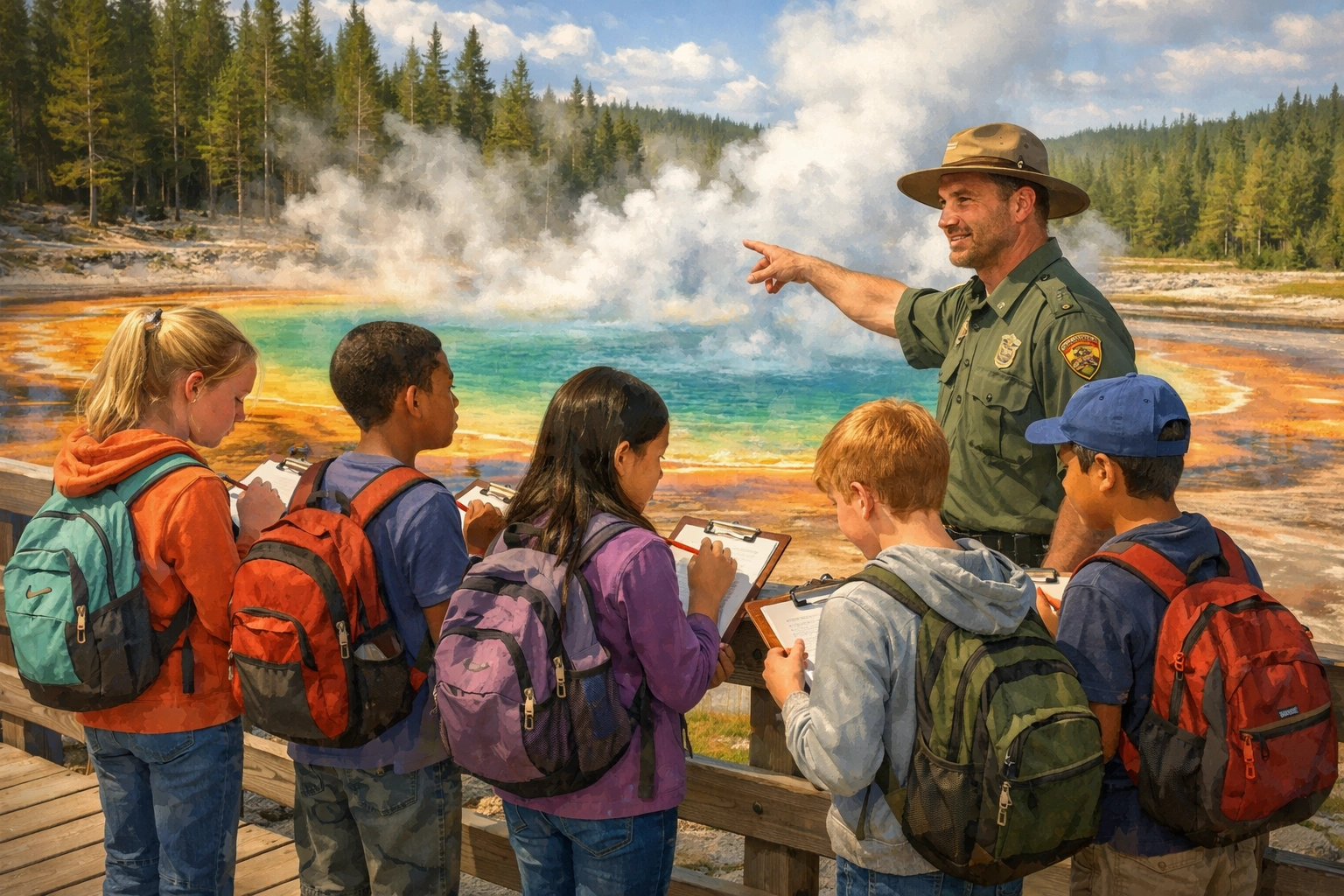
Arrange visits to the Yellowstone Heritage and Research Center or incorporate ranger-led programs that explain the sophisticated monitoring network protecting the park. Students should understand that scientists track the supervolcano through multiple independent measurement systems, creating redundancy and reliability.
Encourage students to think critically about what they're observing: Why do some geysers erupt predictably while others remain erratic? What relationship exists between earthquake locations and geyser basin activity? How do scientists distinguish between normal seismic activity and potentially hazardous changes?
Incorporate hands-on activities where possible. Students can measure geyser eruption intervals, record thermal feature temperatures (from safe distances on boardwalks), and note changes in water clarity or color that indicate subsurface chemical or thermal variations.
The Educational Value Beyond Geology
Student travel to Yellowstone provides interdisciplinary learning opportunities extending beyond earth science. The park's ecosystem depends entirely on geothermal heat, creating unique habitats for thermophilic organisms that thrive in conditions lethal to most life forms. Discuss how these extremophiles have provided insights for biotechnology and astrobiology research.
Wildlife in Yellowstone adapts to the volcanic landscape in fascinating ways. Bison and elk utilize thermal areas during winter for warmth and to access vegetation. These behavioral adaptations demonstrate the interconnection between geological processes and biological systems.
Planning Your Class Trip to Yellowstone with Confidence
Organizing a successful educational trip to Yellowstone requires attention to logistical details, academic objectives, and safety considerations. Work with experienced educational travel providers who understand the specific needs of student groups and possess expertise in maximizing learning outcomes while maintaining appropriate supervision and safety protocols.
Appleseed Expeditions specializes in creating transformative science-focused experiences for student groups visiting Yellowstone. Our carefully designed itineraries ensure students engage with the park's most educationally valuable features while maintaining the highest safety standards. Expert naturalist guides facilitate deep learning through hands-on activities and engaging interpretation that brings the supervolcano's story to life.
A class trip to Yellowstone represents far more than a simple field trip: it is an investment in scientific literacy and environmental stewardship that resonates throughout students' academic journeys. The supervolcano classroom awaits, offering lessons that no traditional classroom can replicate. Contact Appleseed Expeditions to begin planning your unforgettable educational adventure to one of Earth's most extraordinary geological laboratories.

Comments