


The Teacher's Guide: Planning Meaningful Educational Tours for Teachers in the Grand Canyon

Updated: Feb 6
Planning educational tours for teachers requires careful preparation, strategic alignment with curriculum standards, and a clear vision for student outcomes. The Grand Canyon stands as one of the most powerful outdoor classrooms in North America, offering unparalleled opportunities to bring geology, ecology, cultural history, and environmental science to life.
This comprehensive guide provides the practical framework you need to plan a meaningful Grand Canyon educational experience. From establishing learning objectives to designing post-trip assessments, every step matters when creating a trip that extends far beyond a simple field excursion.
Why the Grand Canyon Is the Perfect Destination for Educational Tours
The Grand Canyon represents nearly two billion years of geological history exposed in its layered rock formations. For educators seeking to transform abstract textbook concepts into tangible learning experiences, few destinations offer this level of educational depth.
Key educational advantages include:
Direct observation of geological processes spanning millions of years
Diverse ecosystems ranging from desert to alpine environments
Rich Native American cultural heritage and ongoing tribal connections
Extensive National Park Service educational programming
Opportunities for interdisciplinary learning across science, history, and environmental studies
When planning educational tours for teachers, the Grand Canyon provides a unique setting where students can physically touch rock layers that formed before complex life existed on Earth. This kind of experiential learning creates lasting educational impact that classroom instruction alone cannot achieve.
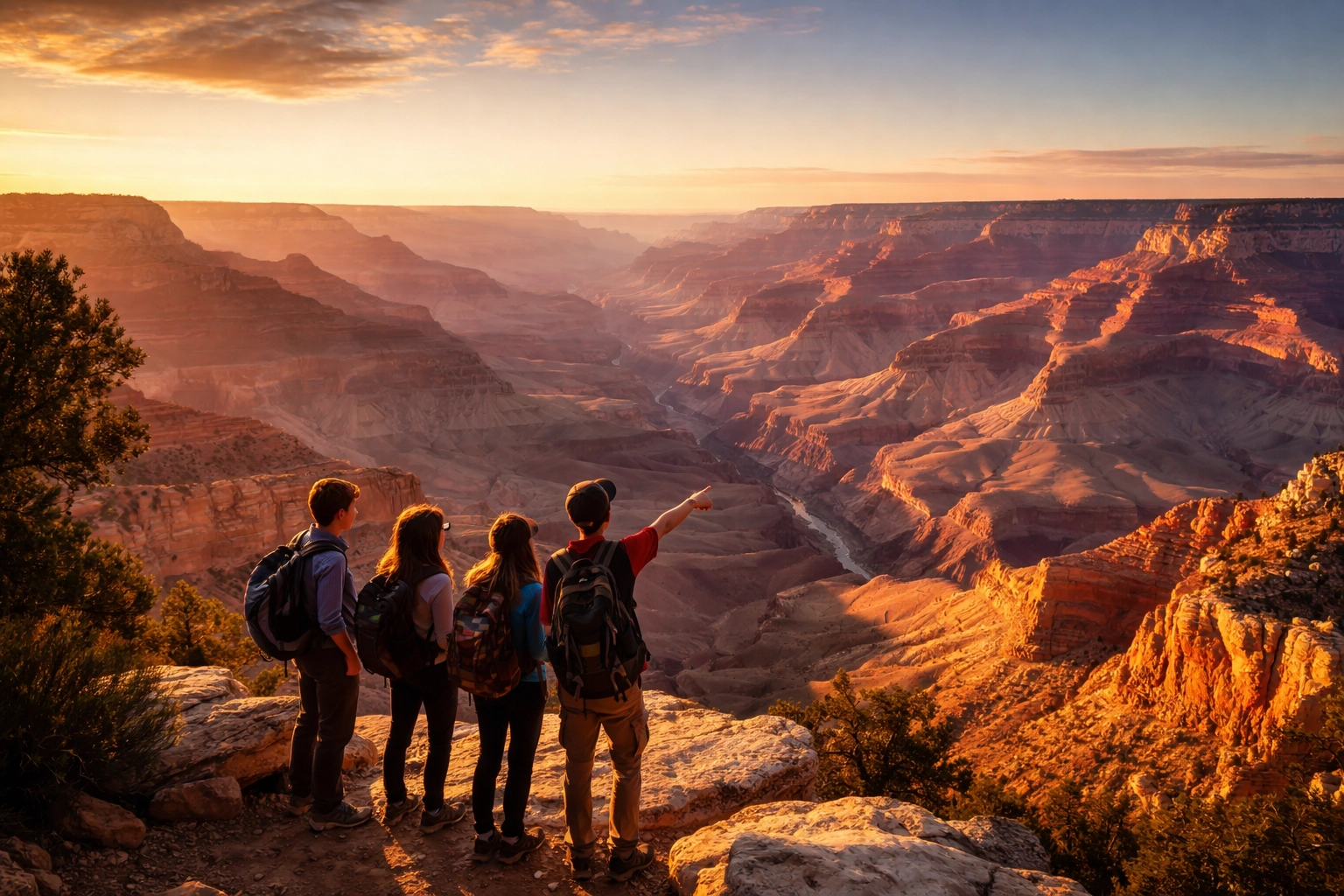
Start Your Planning Process 6-12 Months in Advance
Successful educational tours for teachers begin with early and thorough preparation. The National Park Service ranger-led programs operate on limited schedules with high demand, particularly during spring months when school groups flood the park.
Essential early planning steps:
Establish your travel window. Spring and fall offer the most favorable weather conditions and program availability.
Contact the National Park Service Education Team. Reach out immediately after establishing travel dates to secure priority access to programs and resources.
Reserve accommodations. Lodging near the Grand Canyon fills quickly, especially for large groups.
Secure transportation. Coordinate bus rentals or charter services well in advance.
Submit program registration requests. Many ranger-led educational programs have registration windows that close months before the actual trip dates.
Waiting until the last minute often results in missed opportunities for the most impactful educational programming. Prioritize early action to ensure your students receive the full benefit of available resources.
Establish Clear Educational Objectives
Before selecting specific programs or finalizing your itinerary, define your learning outcomes with precision. Educational tours for teachers succeed when every activity connects directly to measurable academic goals.
Questions to guide your objective-setting:
What curriculum standards will this trip address?
Which subject areas will receive primary emphasis: geology, ecology, cultural history, or environmental science?
What skills do you want students to develop through this experience?
How will you assess student learning before, during, and after the trip?
Document these priorities in writing and share them with administrators, parents, and chaperones. This ensures everyone understands the trip's academic purpose and can support students in achieving established goals.

Align Your Trip with Curriculum Standards
Educational tours for teachers must demonstrate clear connections to state and national curriculum standards. The Grand Canyon naturally supports numerous academic frameworks, particularly in earth science, environmental studies, and geography.
Common curriculum connections include:
Earth Science: Rock cycle processes, geological time scales, erosion and weathering, plate tectonics, and stratigraphy
Environmental Science: Ecosystem diversity, conservation principles, human environmental impact, and climate studies
History and Social Studies: Native American history and culture, westward expansion, national park development, and land management policy
Mathematics: Scale and measurement, data collection and analysis, topographical mapping
Research your specific state standards before finalizing your program selections. This foundational work guides your activity choices and ensures alignment with broader academic achievement goals required by your school or district.
Reserve Educational Programs Early
The Grand Canyon offers several free ranger-led educational programs specifically designed for student groups. These programs accommodate up to 50 students per group and require advance registration through official park channels.
Priority programs to consider:
Geo-Glimpse Program at the Yavapai Geology Museum features interactive demonstrations and hands-on rock sample examinations
Ranger-led field trips provide structured educational experiences covering canyon formation, wildlife, and cultural significance
Junior Ranger Program offers interactive learning opportunities where students earn official badges while exploring visitor centers and museums
For more intensive experiences, the Grand Canyon Conservancy Field Institute has operated since 1993 and offers day hikes, backpacking expeditions, and specialized classes led by expert instructors. These multi-day programs allow students to explore diverse ecosystems both above and below the rim.
Consider partnering with an experienced educational travel provider like Appleseed Expeditions to handle complex logistics while you focus on facilitating student learning.
Prepare Students Before Departure
Effective educational tours for teachers include comprehensive pre-visit classroom activities that introduce key concepts before students arrive at the destination. This foundational preparation deepens engagement during the actual experience.
Pre-trip preparation activities:
Introduce geological concepts using interactive story maps, educational films, and documentary resources
Discuss cultural context including the significance of the Grand Canyon to Native American communities
Review safety protocols and establish clear behavioral expectations
Assign observation roles such as geology recorder, wildlife observer, weather monitor, and photography coordinator
Distribute field journals and customized observation worksheets designed for Grand Canyon activities
Access teacher workshops offered by the National Park Service to enhance your preparation. These provide curriculum materials, activity guides, and lesson plans you can adapt to your specific student population.
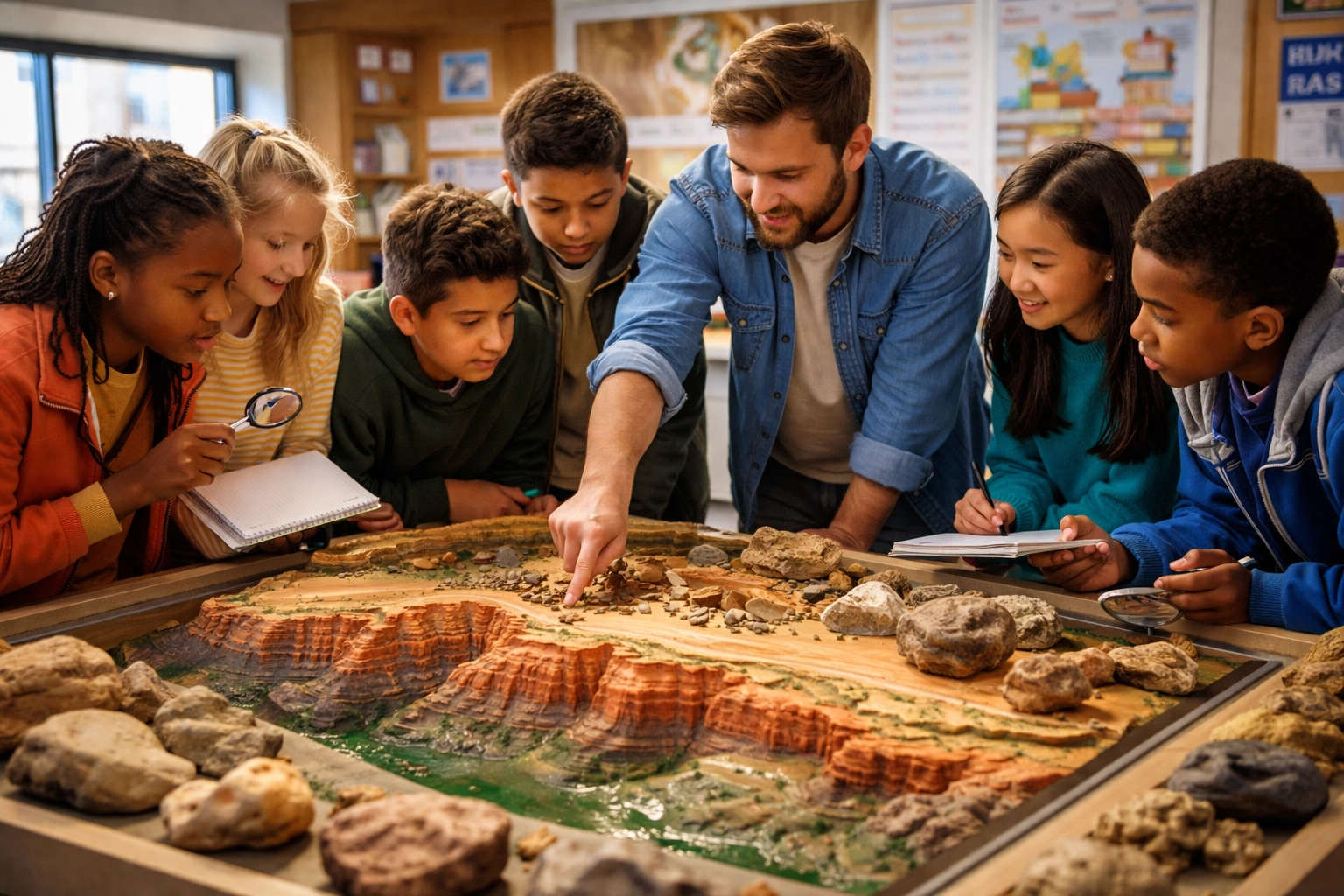
Maximize Learning During the Trip
Design your itinerary with specific learning objectives for each activity and location. Share detailed schedules with students, parents, and chaperones to ensure everyone understands educational goals and daily expectations.
Strategies for active learning:
Assign specific observation roles to ensure every student participates actively in the learning process
Require learning journal entries at each major stop, recording observations, questions, and reflections
Integrate technology appropriately by allowing students to photograph geological formations and cultural sites for educational presentations
Build in reflection time for students to process what they've learned before moving to the next activity
Encourage questions and model scientific curiosity throughout the experience
Establish clear guidelines that balance educational technology use with environmental respect and present-moment awareness. Students should engage with the landscape directly, not merely through their device screens.
Design Meaningful Post-Trip Activities
The learning continues long after your group returns home. Design post-visit activities that reinforce field experiences and allow students to demonstrate their understanding.
Effective post-trip assessment options:
Peer presentations sharing key observations and insights
Scientific reports analyzing geological or ecological data collected during the trip
Multimedia presentations combining photographs, journal entries, and research
Artistic interpretations expressing the Grand Canyon experience through creative mediums
Guided class discussions connecting field observations to curriculum concepts
These activities help students process their experiences while demonstrating achievement of established learning objectives. Consider sharing exceptional student work with the broader school community to celebrate the educational value of the trip.
Partner with Experienced Educational Travel Providers
Planning educational tours for teachers involves numerous logistical challenges that can distract from your primary focus on student learning. Working with an experienced educational travel organization simplifies the process while enhancing educational outcomes.
Appleseed Expeditions specializes in creating meaningful Grand Canyon experiences that align with curriculum standards and maximize student engagement. Our team handles the complex logistics: transportation, accommodations, program reservations, and safety planning: so you can concentrate on facilitating transformative learning experiences.
Benefits of partnering with Appleseed Expeditions:
Expert guides who share fascinating insights about geological formations, wildlife, and cultural history
Carefully designed itineraries that balance educational programming with appropriate rest and reflection time
Comprehensive safety protocols and emergency planning
Support for pre-trip preparation and post-trip assessment activities
Take the Next Step
The Grand Canyon offers educators an extraordinary opportunity to transform abstract curriculum concepts into tangible, memorable learning experiences. With careful planning, clear objectives, and strategic partnerships, your educational tour can create lasting academic and personal impact for your students.
Begin your planning process today by contacting Appleseed Expeditions to discuss your vision for a meaningful Grand Canyon educational experience. Our team is ready to help you create a trip that exceeds your expectations and inspires your students for years to come.

Comments