


Why Educational Tours for Teachers to the Grand Canyon Are the Ultimate Classroom Upgrade

Let's be honest: no matter how engaging your PowerPoint presentation is, a photo of the Grand Canyon will never compete with standing on the rim and watching the Colorado River snake through 1.8 billion years of Earth's history. For educators looking to level up their teaching game, educational tours for teachers to the Grand Canyon offer something textbooks simply cannot: perspective, both literally and figuratively.
The Grand Canyon isn't just a pretty postcard destination. It's a 277-mile-long, mile-deep classroom that covers geology, ecology, cultural history, and environmental science in ways that make students actually lean forward in their seats. And here's the secret: when teachers experience it firsthand, the magic doesn't stay at the rim. It follows them back to their classrooms.
The Professional Development You Didn't Know You Needed
Professional development workshops can sometimes feel like checking boxes. Another webinar. Another certificate. But educational tours for teachers flip that script entirely.
The National Park Service offers teacher workshops at the Grand Canyon that provide curriculum materials, activity guides, and lesson plans you can adapt directly for your classroom. These aren't generic resources: they're built around one of the most geologically significant sites on the planet.
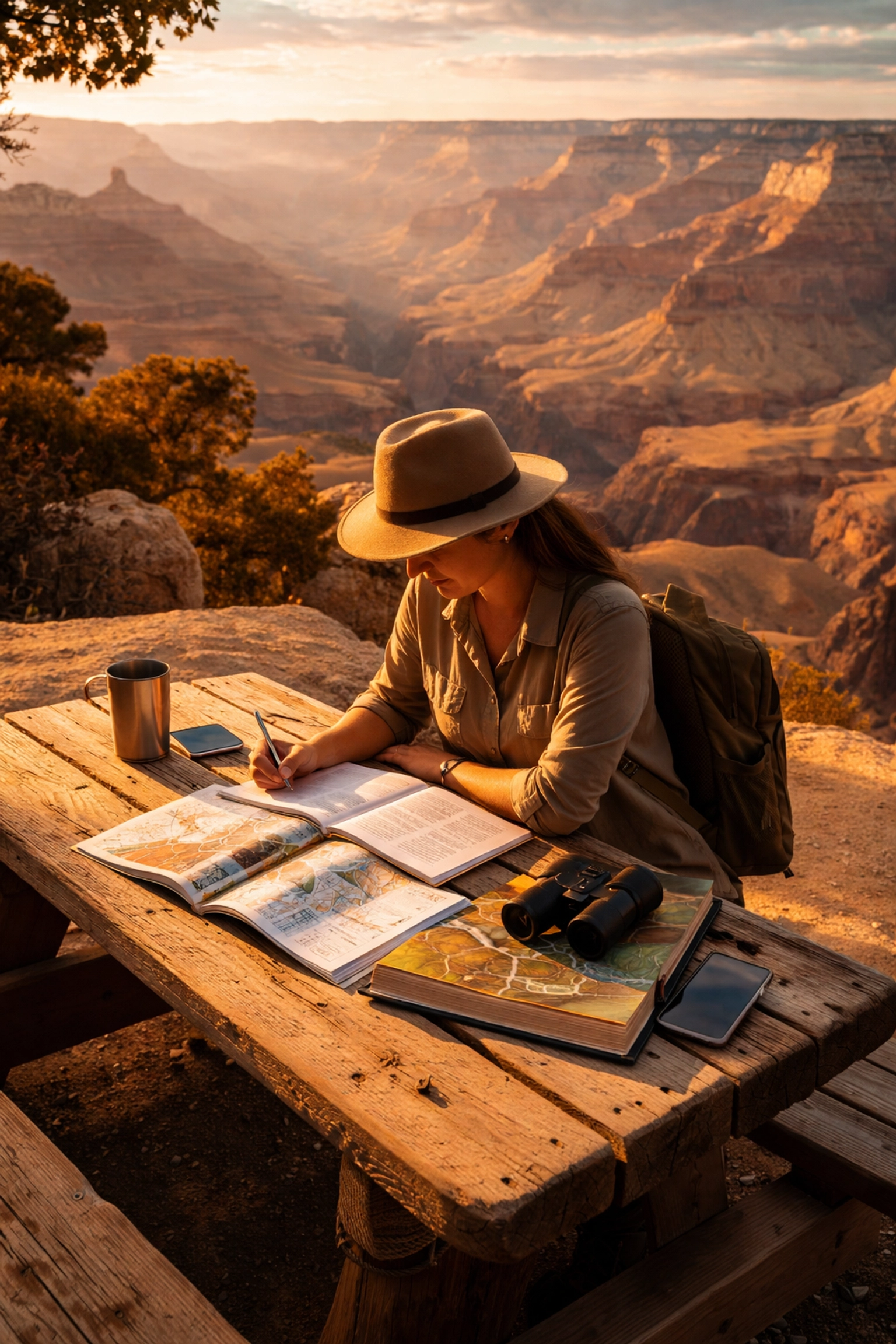
When you participate in these programs, you walk away with:
Ready-to-use curriculum materials designed by experts who understand both the science and the pedagogy
Activity guides that translate complex geological concepts into hands-on learning experiences
Lesson plans that connect Grand Canyon content to state and national standards
A network of fellow educators who share your passion for experiential learning
This kind of professional development doesn't just improve your instruction: it transforms how you think about teaching earth science, environmental studies, and natural history.
From Tourist to Expert: How Firsthand Experience Changes Everything
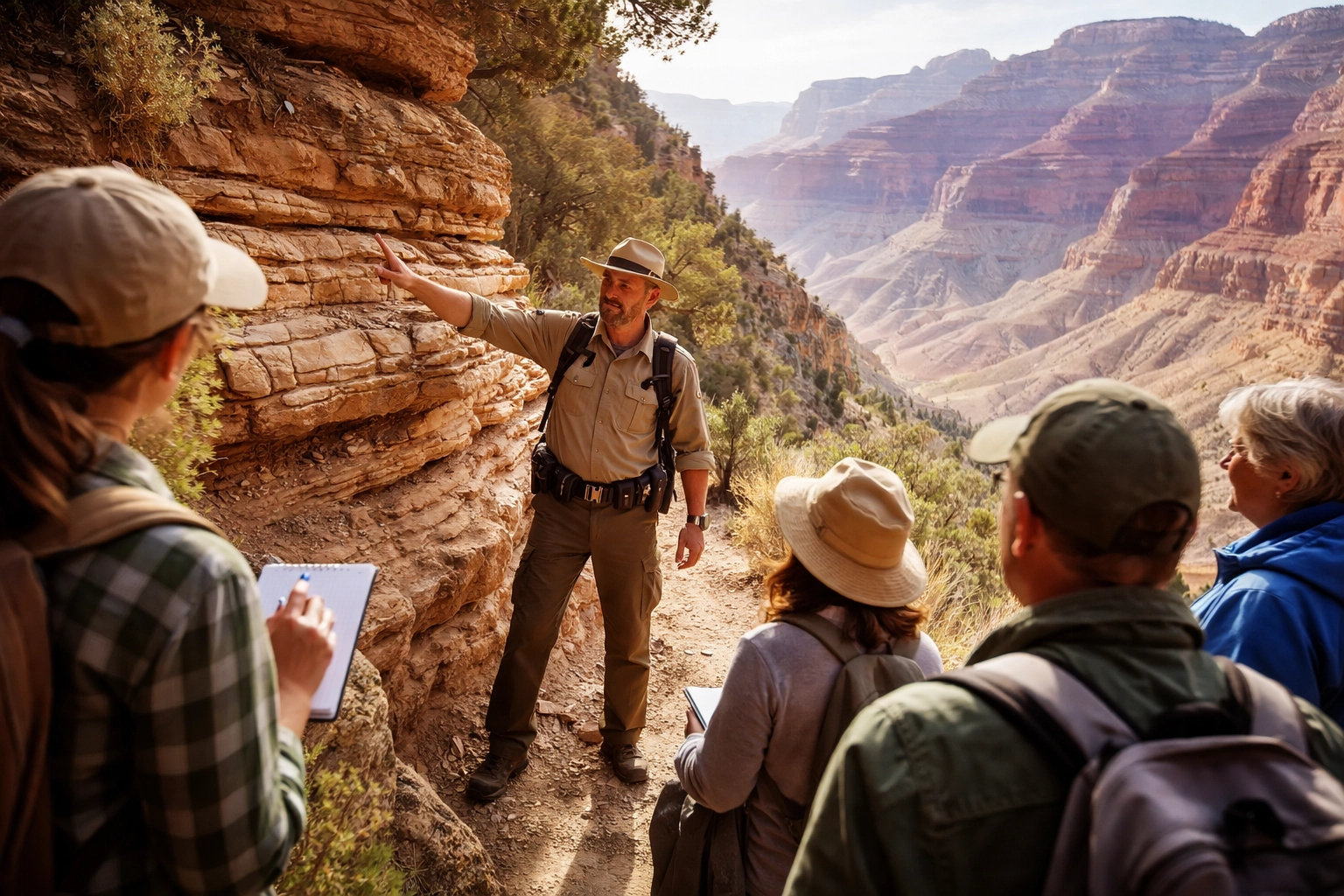
There's a significant difference between a teacher who has read about the Vishnu Basement Rocks and one who has touched them. Educational tours for teachers provide direct access to professional guides, park rangers, and subject matter experts who share insights you won't find in any textbook.
Imagine explaining the concept of deep time to your students after you've personally stood at Lipan Point and traced the geological layers from the Kaibab Limestone at the rim down to the ancient Vishnu Schist at the bottom. Suddenly, 1.8 billion years isn't an abstract number: it's a story you can tell with authority because you've seen the evidence with your own eyes.
This firsthand expertise allows you to:
Provide more accurate and engaging instruction based on real observations
Answer student questions with confidence and depth
Share personal anecdotes that make abstract concepts memorable
Demonstrate genuine enthusiasm that's contagious in the classroom
Students can tell when their teacher is passionate about a subject. That passion often stems from personal experience, and few experiences rival standing on the edge of one of the world's natural wonders.
Better Preparation Leads to Better Student Outcomes
Here's where educational tours for teachers really pay dividends: preparation.
When you've walked the trails, identified the rock layers, and learned from the experts yourself, you can develop pre-visit and post-visit curriculum activities that actually connect to what students will experience. You'll know which overlooks offer the best opportunities for geological observation. You'll understand the logistics of moving a group through the park. You'll anticipate the questions students will ask because you probably asked them yourself.
This preparation translates into:
Specific learning objectives tailored to actual site conditions
More meaningful student experiences during field trips
Enhanced background knowledge that helps you guide discussions
Identified educational hotspots where learning opportunities are richest
Teachers who have participated in educational tours arrive at field trips ready to facilitate genuine discovery rather than simply supervising a walk along the rim.
The Experiential Learning Framework That Works
Educational tours for teachers don't just show you what to teach: they show you how to teach it. The Grand Canyon serves as the perfect laboratory for implementing experiential learning strategies that you can carry back to any classroom setting.
During these professional development experiences, educators learn to implement:
Active Student Engagement Techniques
Passive observation has its place, but the Grand Canyon invites active participation. Teachers learn strategies for guiding students through inquiry-based exploration, asking questions that spark curiosity rather than delivering facts that demand memorization.
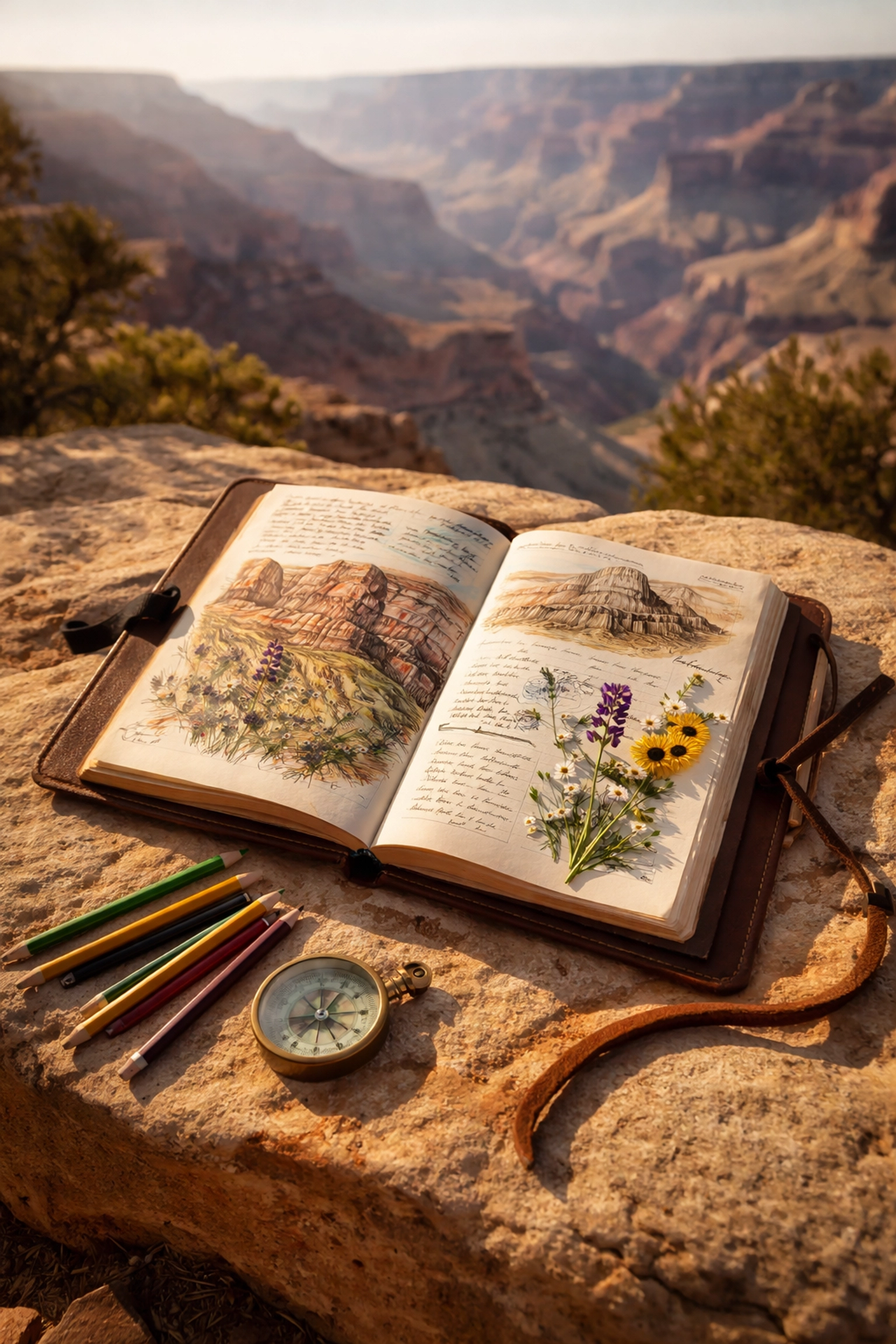
Field Journal Documentation
The practice of scientific observation and documentation becomes real when students sketch rock formations, record wildlife sightings, and reflect on their experiences in real-time. Teachers who have kept their own field journals understand the power of this practice.
Integrated Curriculum Connections
The Grand Canyon doesn't respect subject boundaries, and neither should your teaching. A single hike can incorporate:
Geology: Reading rock layers and understanding formation processes
Biology: Identifying plant and animal adaptations to desert and riparian environments
History: Learning about Native American cultural connections to the land
Environmental Science: Discussing conservation challenges and climate impacts
Mathematics: Calculating depths, distances, and geological time scales
Teachers who experience this integration firsthand become better at breaking down the artificial walls between subjects in their own classrooms.
The Ripple Effect: From One Teacher to Many Students
Consider the math. One teacher who participates in educational tours for teachers might teach for another 20 years. That teacher might reach 100 students per year. That's 2,000 students who benefit from enhanced instruction, personal stories, and genuine expertise: all because one educator took the time to stand on the rim of the Grand Canyon and learn.
The investment in teacher professional development at the Grand Canyon multiplies across classrooms, school years, and student generations. It's not just about one trip; it's about fundamentally upgrading how earth science and environmental education are delivered.
Making It Happen: Your Next Steps
If you're convinced that educational tours for teachers represent the professional development opportunity you've been seeking, here's how to move forward:
Research available programs through the National Park Service and educational travel organizations
Connect with your administration about professional development funding and approval
Identify curriculum connections that align with your teaching responsibilities
Plan for implementation by considering how you'll translate your experience into classroom practice
Consider bringing students once you've experienced the Canyon yourself
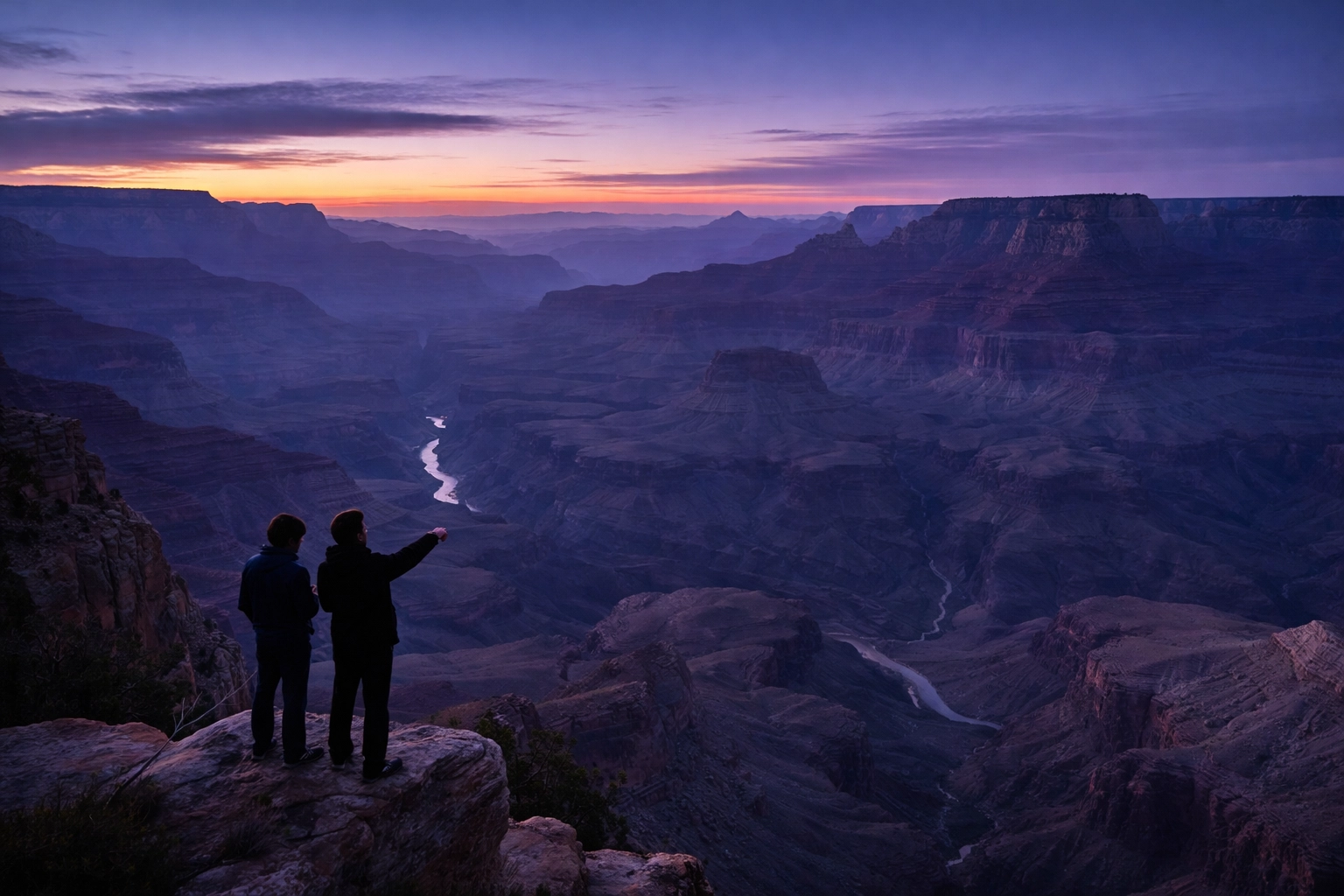
The Grand Canyon has been teaching lessons for nearly two billion years. It's time for you to become one of its students: so you can become an even better teacher.
Experience the Grand Canyon with Appleseed Expeditions
At Appleseed Expeditions, we specialize in creating meaningful educational experiences that transform both teachers and students. Our Grand Canyon programs combine expert-led instruction, hands-on learning, and the kind of awe-inspiring moments that stick with participants for a lifetime.
Whether you're looking to enhance your own professional development or bring your students to experience the ultimate outdoor classroom, we're here to help you plan an expedition that exceeds expectations.
Ready to upgrade your classroom? Contact us to start planning your Grand Canyon educational tour today.

Comments