


Beyond the Rim: Transformative Educational Outcomes of a Grand Canyon Expedition
- Caleb Mullenix
- Apr 12
- 5 min read

The Grand Canyon is often described as a "living laboratory," a title it earns through its sheer scale and the chronological story it tells of our planet’s history. For students, stepping beyond the rim is not merely a sightseeing excursion; it is a profound immersion into the mechanics of Earth Science and a catalyst for personal growth. An expedition of this magnitude requires careful planning, a rigorous focus on academic standards, and a commitment to service-learning.
At Appleseed Expeditions, we believe that when a geology student program is structured with intentionality, it produces outcomes that extend far beyond the classroom. The following analysis explores how a Grand Canyon expedition facilitates academic mastery, leadership development, and the discovery of personal purpose.
The Living Laboratory: Real-World Earth Science
The primary academic draw of the Grand Canyon is its unparalleled display of Earth’s geological history. While a textbook can describe the concept of stratigraphy, seeing nearly two billion years of history exposed in the canyon walls provides a depth of understanding that traditional instruction cannot replicate.
Mastering Geological Concepts
A structured geology student program allows students to engage directly with the following concepts:
Stratigraphy and the Law of Superposition: By descending from the rim to the river, students physically move through time. They observe the Kaibab Limestone at the top and the ancient Vishnu Basement Rocks at the bottom, witnessing how sedimentary layers are deposited over millions of years.
Erosion and Weathering: The Colorado River serves as the primary sculptor of the canyon. Students can study the power of hydraulic action and the role of climate in shaping the V-shaped profiles of the inner gorge versus the wider upper reaches.
The Great Unconformity: This geological phenomenon represents a massive gap in the rock record. Investigating why hundreds of millions of years of rock are missing provides a critical thinking challenge for students as they piece together the tectonic and erosional history of the region.
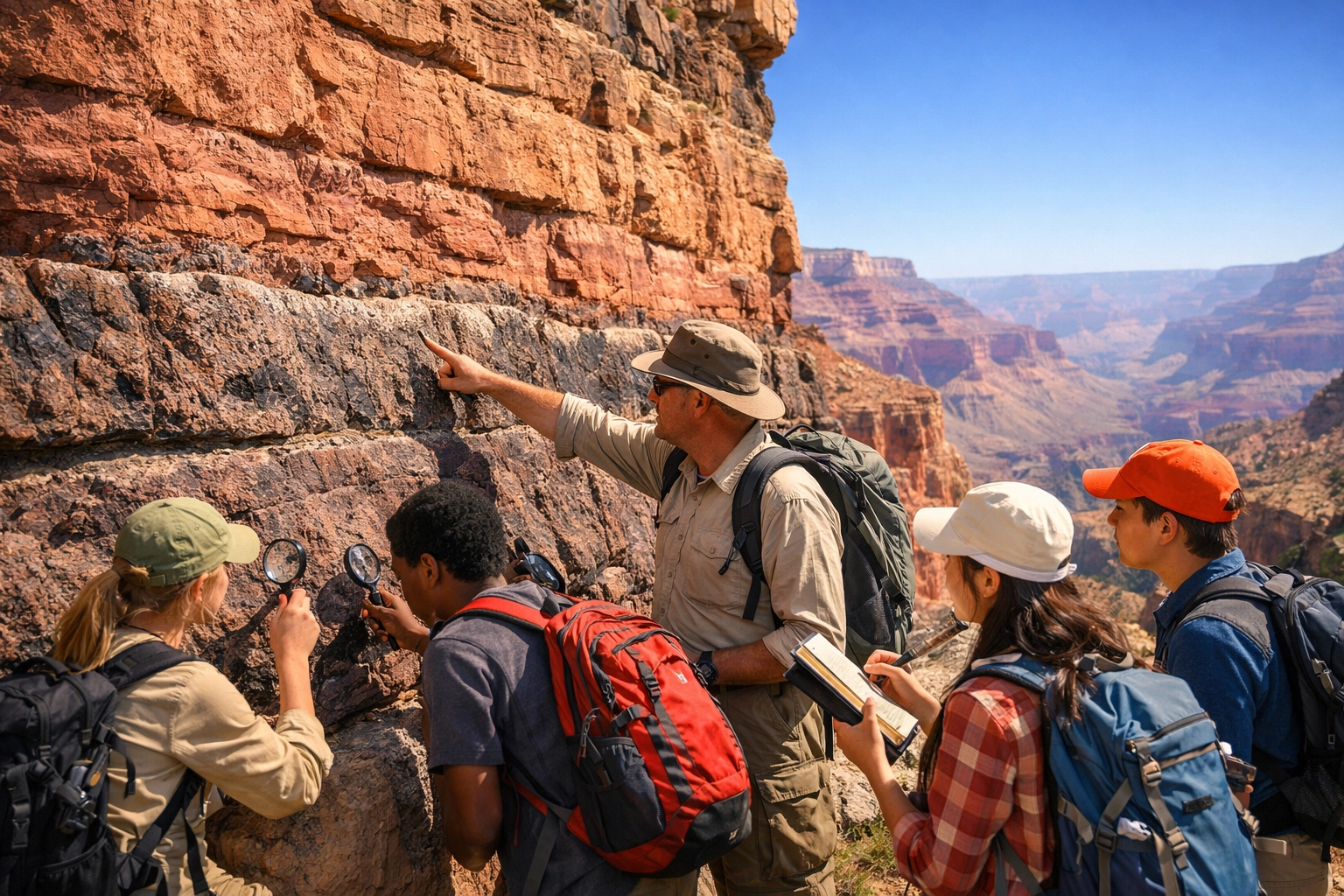
By aligning these field observations with Next Generation Science Standards (NGSS), educators ensure that the expedition serves as a rigorous academic exercise. Students are encouraged to keep field journals, sketch rock formations, and formulate hypotheses regarding the canyon’s formation, transforming them from passive observers into active scientists.
Leadership Development on the Trail
The physical demands of a Grand Canyon expedition provide an ideal environment for fostering leadership. Navigating elevation changes, managing gear, and maintaining morale within a group are tasks that require resilience and effective communication.
Technical and Soft Skill Integration
Leadership development in this context is twofold:
Technical Proficiency: Students learn to manage their resources, including water filtration, navigation, and camp setup. Mastery of these skills builds self-reliance and confidence.
Interpersonal Communication: Group dynamics are tested in the backcountry. Students must practice conflict resolution, clear communication of needs, and collective decision-making.
The transition from the structured environment of a school to the unpredictable nature of the trail marks a significant developmental milestone. Many students find that the challenges faced in the canyon: such as a difficult ascent or managing a changing weather pattern: prepare them for the complexities of adulthood and professional life. This process of overcoming obstacles is essential for building a robust sense of self-efficacy.
Developing Your Purpose Through Service
At the heart of every Appleseed Expeditions trip is the integration of service-learning. We believe that true education involves looking outward and understanding one's role in a larger community. Grand Canyon student service trips offer a unique opportunity for students to engage in meaningful work that benefits the environment and local populations.
Finding Meaning in Contribution
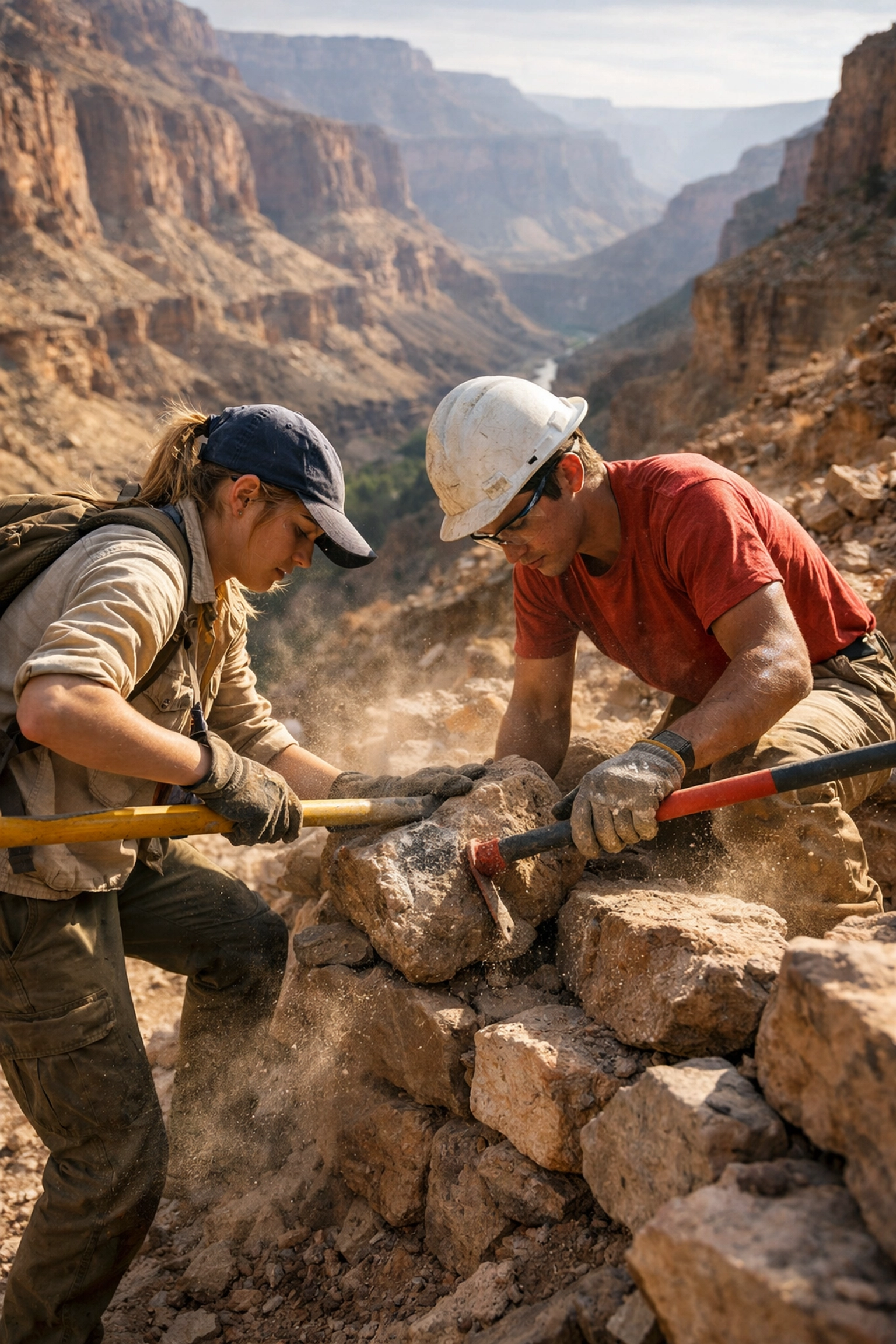
Developing your purpose often begins with service. By participating in conservation projects, such as invasive species removal or trail restoration, students develop a sense of stewardship for public lands. This work provides several key benefits:
Empathy and Perspective: Working alongside local conservationists or tribal members allows students to understand the cultural and historical significance of the canyon beyond its geological features.
Civic Responsibility: Service-learning emphasizes that students are part of a global ecosystem. Their efforts contribute to the preservation of a World Heritage site, instilling a lifelong commitment to environmental advocacy.
Sense of Accomplishment: Seeing the tangible results of a day’s labor: whether it is a cleared trail or a restored habitat: provides a deep sense of purpose that academic achievements alone often do not provide.
Structured Planning: Ensuring Educational Impact
The depth of a student’s transformation is directly proportional to the level of preparation and structure provided by the organizing body. To maximize the educational outcomes of a Grand Canyon expedition, educators and organizers must follow a meticulous, step-by-step approach.
1. Establish Clear Learning Objectives
Before the trip begins, define exactly what students should gain. Whether the focus is on Earth Science, leadership, or cultural history, having defined goals ensures that every activity serves a purpose. Review our About page to see how we align our expeditions with educational standards.
2. Prioritize Safety and Risk Management
Ensuring the safety of students is of paramount importance. A Grand Canyon expedition involves inherent risks, from dehydration to difficult terrain.
Detailed Itineraries: Provide parents and students with a minute-by-minute plan of activities.
Emergency Protocols: Ensure all guides are certified in Wilderness First Aid and that there is a clear plan for communication in areas without cellular service.
Physical Preparation: Advise students on the necessary physical training required to handle the rigors of the canyon.
3. Implement Structured Reflection
The most profound learning often occurs after the activity is finished. Incorporate nightly reflection sessions where students can discuss their experiences, the challenges they faced, and the geological features they observed. This practice helps solidify the connections between the field experience and academic theory.
4. Post-Trip Reinforcement
The expedition should not end when the students return home. Encourage students to present their findings, share their service experiences with their school community, and continue their studies in Earth Science. For those interested in expanding their horizons further, our STEM-focused trips offer additional avenues for real-world application.
The Emotional and Psychological Impact
Beyond the academic and leadership gains, the Grand Canyon often facilitates an emotional and spiritual transformation. The scale of the canyon has a humbling effect, often described by students as a "perspective shift." In a world dominated by digital screens and immediate gratification, the slow, deliberate pace of a canyon expedition allows for a deep connection with the natural world.
Students often report a newfound respect for nature and a heightened sense of environmental responsibility. This emotional resonance is what makes the experience truly "transformative." It is the moment a student realizes that the world is much larger than their immediate surroundings and that they have a responsibility to protect it.
Conclusion: A Commitment to Excellence
A Grand Canyon expedition is a life-changing event that offers unparalleled opportunities for academic growth and personal development. By focusing on a rigorous geology student program, fostering leadership, and developing your purpose through service, educators can provide their students with an experience that will shape their futures.
For educators looking to facilitate these outcomes, Appleseed Expeditions offers expert guidance and meticulously planned itineraries. Whether you are interested in Grand Canyon expeditions or looking to explore other regions like the Big Bend, our mission remains the same: to provide students with the tools they need to grow, learn, and serve.
Ensure that your students are prepared for the world beyond the classroom by choosing an expedition that prioritizes safety, academic rigor, and meaningful service. Together, we can help the next generation find their purpose beyond the rim.
Are you a teacher looking to plan your next educational adventure? Visit our Teacher Preview page to learn more about how we support educators in creating world-class travel experiences.
Comments