


Exploring Yellowstone: A Student's Guide to Science, Wildlife, and Real-World Learning
- Caleb Mullenix
- Nov 18, 2025
- 5 min read

Picture this: you're standing next to Old Faithful, watching thousands of gallons of superheated water shoot 130 feet into the air, while your teacher explains the complex geological forces that make this spectacle possible. Welcome to Yellowstone National Park – nature's ultimate classroom where textbook concepts come alive in the most spectacular ways imaginable.
Yellowstone isn't just America's first national park; it's a living laboratory containing half of the world's geothermal features, diverse ecosystems spanning multiple climate zones, and wildlife populations that offer unparalleled opportunities for real-world scientific observation. For students, this 2.2-million-acre wonderland transforms abstract classroom learning into tangible, memorable experiences that inspire curiosity and deepen understanding across multiple scientific disciplines.
The Science Behind Yellowstone's Geological Wonders
Understanding Yellowstone's unique landscape begins with its foundation – literally. The entire park sits atop an active supervolcano, with a magma chamber just 3-5 miles beneath the surface. This geological reality creates the park's famous geothermal features, each offering distinct learning opportunities for students studying earth sciences.
The Grand Prismatic Spring, Yellowstone's largest hot spring, demonstrates principles of thermophile biology and mineral deposition in ways no laboratory could replicate. As students observe the spring's rainbow colors, they're actually witnessing different heat-loving bacteria thriving at various temperatures – from the 160°F center where only the most extreme organisms survive, to the cooler outer rings where different species create distinct color bands.
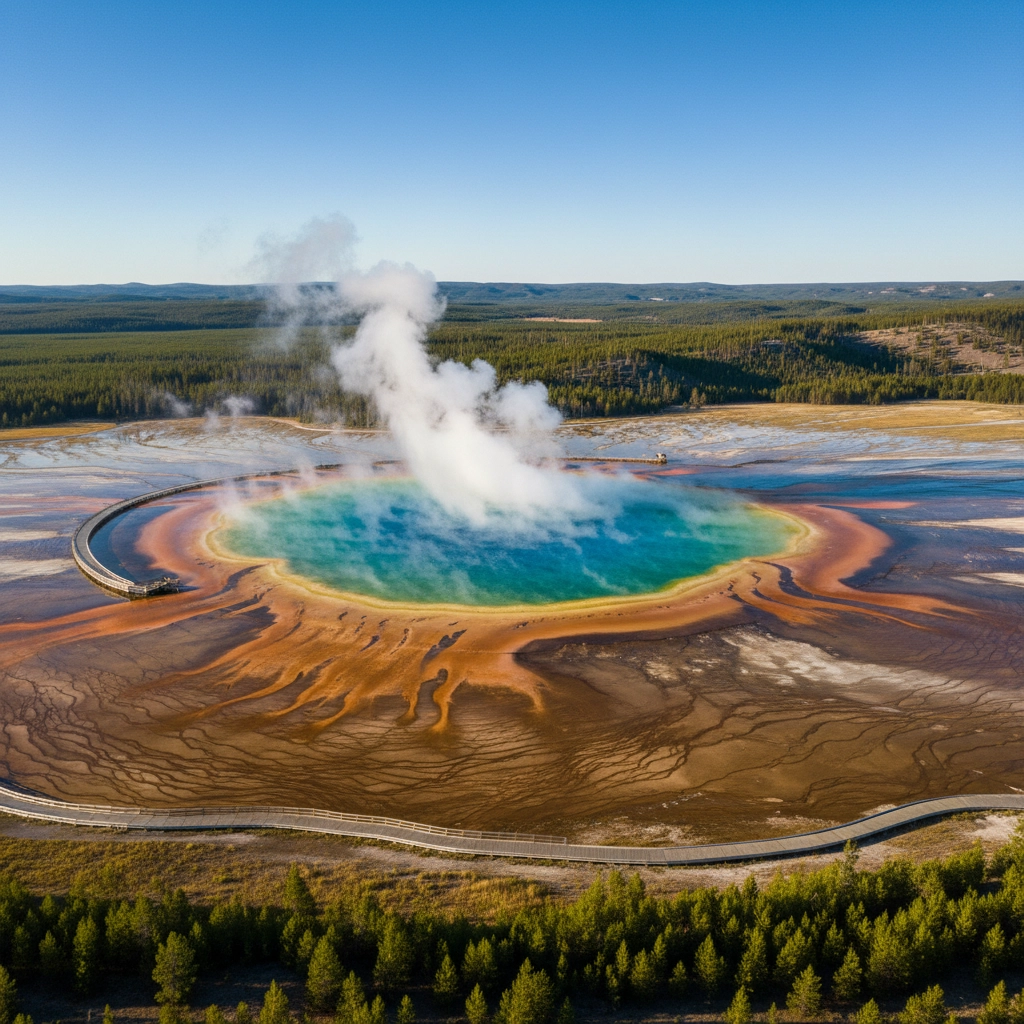
Geysers like Old Faithful provide real-time lessons in pressure, temperature, and fluid dynamics. Students can observe how underground plumbing systems work, learning about constricted tubes, pressure buildup, and the precise conditions necessary for eruptions. The predictability of Old Faithful's eruptions (approximately every 90 minutes) allows students to make predictions, collect data, and understand the scientific method through direct observation.
The Yellowstone Caldera itself tells a story spanning 640,000 years, offering opportunities to discuss geological time scales, volcanic processes, and how massive eruptions shape landscapes. Students can examine volcanic rocks, study formation layers, and understand how scientists use evidence to reconstruct Earth's history.
Wildlife Encounters and Ecological Learning
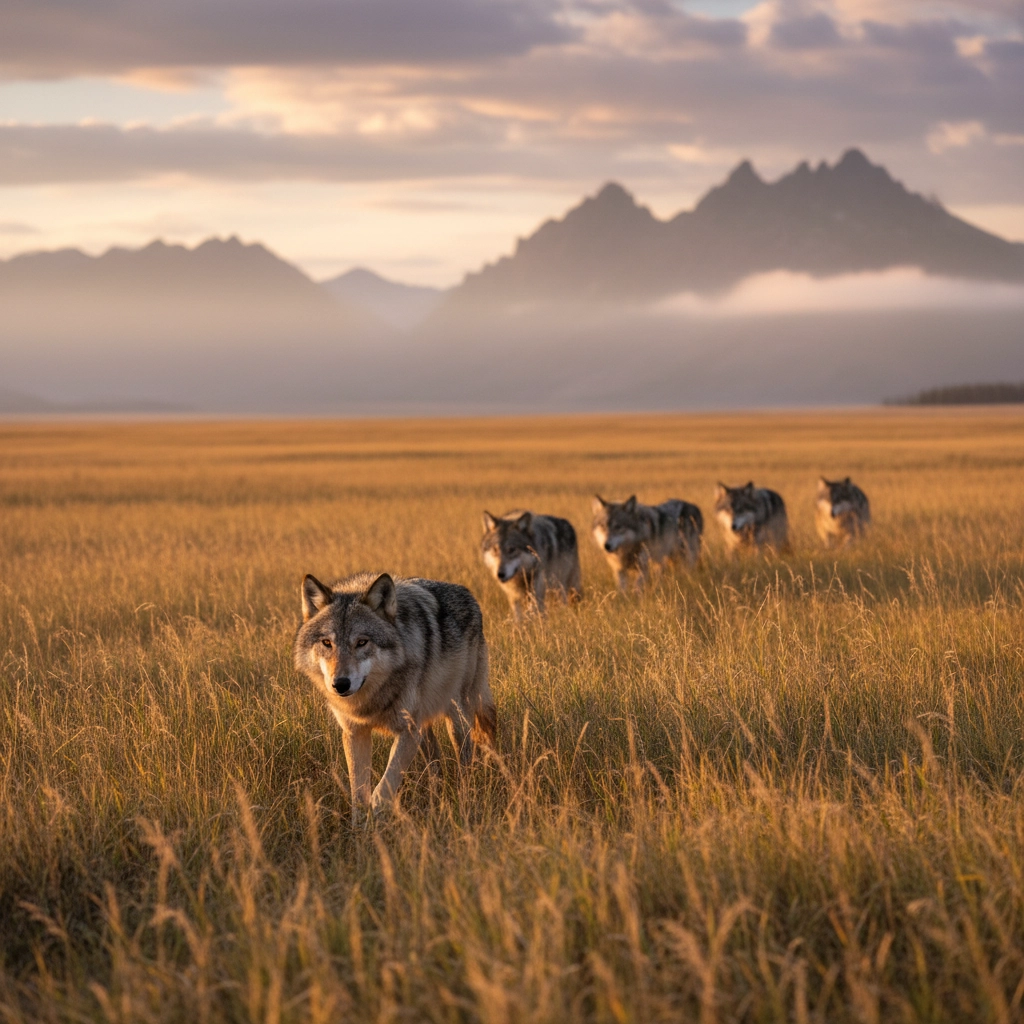
Lamar Valley, often called "America's Serengeti," provides students with front-row seats to ecosystem dynamics in action. Here, complex predator-prey relationships, population management, and conservation success stories unfold before your eyes.
The reintroduction of wolves to Yellowstone in 1995 created one of the most documented ecological experiments in modern conservation history. Students can observe how wolves affect elk behavior, which in turn influences vegetation growth, river patterns, and habitat for other species – a phenomenon known as a trophic cascade. This real-world example demonstrates how interconnected ecosystems truly are.
Bison herds roaming the valley offer lessons in animal behavior, migration patterns, and human-wildlife conflict management. Students learn about the challenges of managing wild populations that don't recognize park boundaries, and how scientists balance conservation with public safety.
Bird watching in Yellowstone introduces students to habitat specialization and migration ecology. From osprey fishing in the Yellowstone River to mountain bluebirds in alpine meadows, each species demonstrates specific adaptations to their environment. The park's elevation range from 5,282 to 11,358 feet creates diverse habitats supporting over 285 bird species.
Hands-On Educational Opportunities
Yellowstone's educational programs transform passive observation into active learning. The Junior Ranger program encourages students to explore independently while completing activities that develop observation skills, scientific thinking, and environmental stewardship. Students earn official badges while learning about park management, wildlife protection, and scientific research methods.
The Young Scientist program takes learning deeper, engaging students in actual research questions that park scientists are investigating. Students might study thermal feature temperatures, track animal behavior, or analyze water quality – contributing to ongoing research while developing scientific methodology skills.
Ranger-led programs throughout the park provide expert interpretation of natural phenomena. Evening programs often include stargazing sessions, where students learn about light pollution, astronomy, and how dark skies contribute to ecosystem health. These programs demonstrate how scientific knowledge builds through observation, questioning, and investigation.
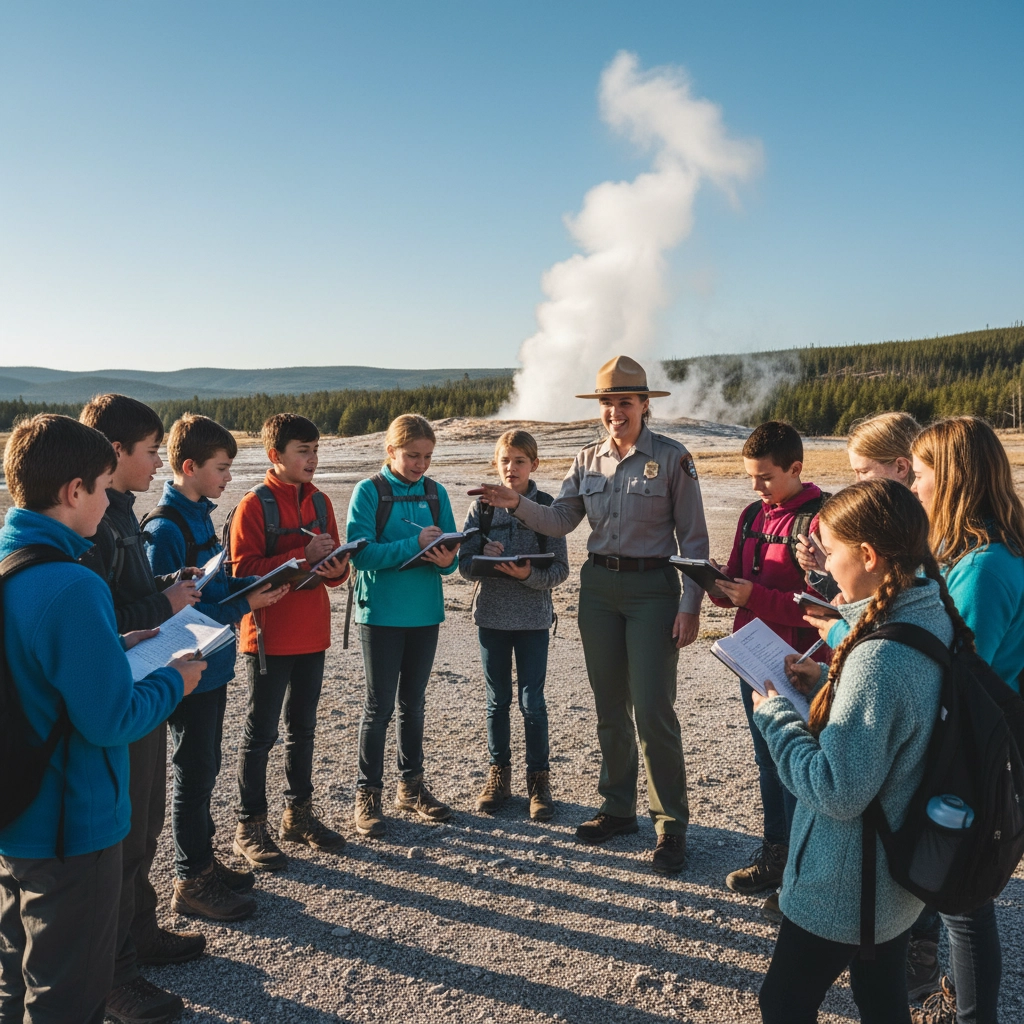
Teacher workshops offered through Yellowstone Forever prepare educators to maximize learning opportunities. These programs model hands-on teaching techniques while providing resources for classroom follow-up activities that reinforce park experiences.
Planning Your Educational Visit
Successful educational trips to Yellowstone require strategic planning to maximize learning opportunities within practical constraints. The park's figure-eight road system divides into Grand Loop's north and south sections, each containing distinct educational focuses.
The northern loop emphasizes wildlife and thermal features, including Mammoth Hot Springs' terraced limestone formations, Lamar Valley's wildlife viewing, and Tower Falls' geological formations. This area works particularly well for biology and earth science studies.
The southern loop showcases iconic geothermal features like Old Faithful, Grand Prismatic Spring, and the Grand Canyon of Yellowstone. These locations excel for physics, chemistry, and geology lessons, while the canyon area provides opportunities to study erosion, water cycles, and geological time.
Spring and fall visits offer distinct advantages for educational groups. Late spring (May-June) provides active wildlife with newborn animals, while fall (September-October) offers elk bugling season and clearer weather for stargazing. Summer brings full road access but also larger crowds that can impact learning experiences.
Making the Most of Your Learning Experience
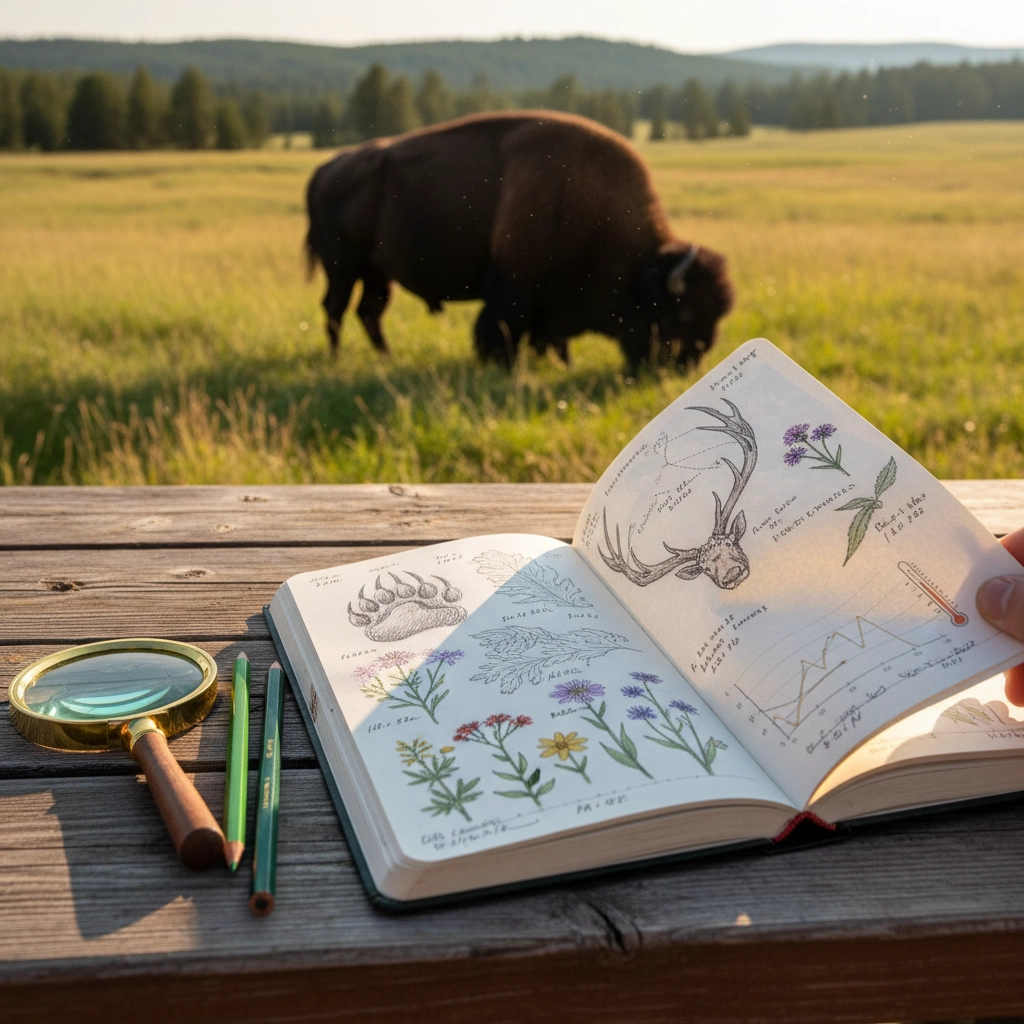
Transform your Yellowstone visit from sightseeing to scientific investigation through active engagement strategies. Encourage students to maintain field notebooks, recording observations about wildlife behavior, geological formations, and ecosystem relationships. Photography can document changes over time and provide material for later analysis and discussion.
Develop specific research questions before arrival. Rather than simply viewing features, students might investigate: How do thermal features affect local vegetation? What evidence suggests volcanic activity? How do different elevations support different species? This approach encourages critical thinking and scientific methodology.
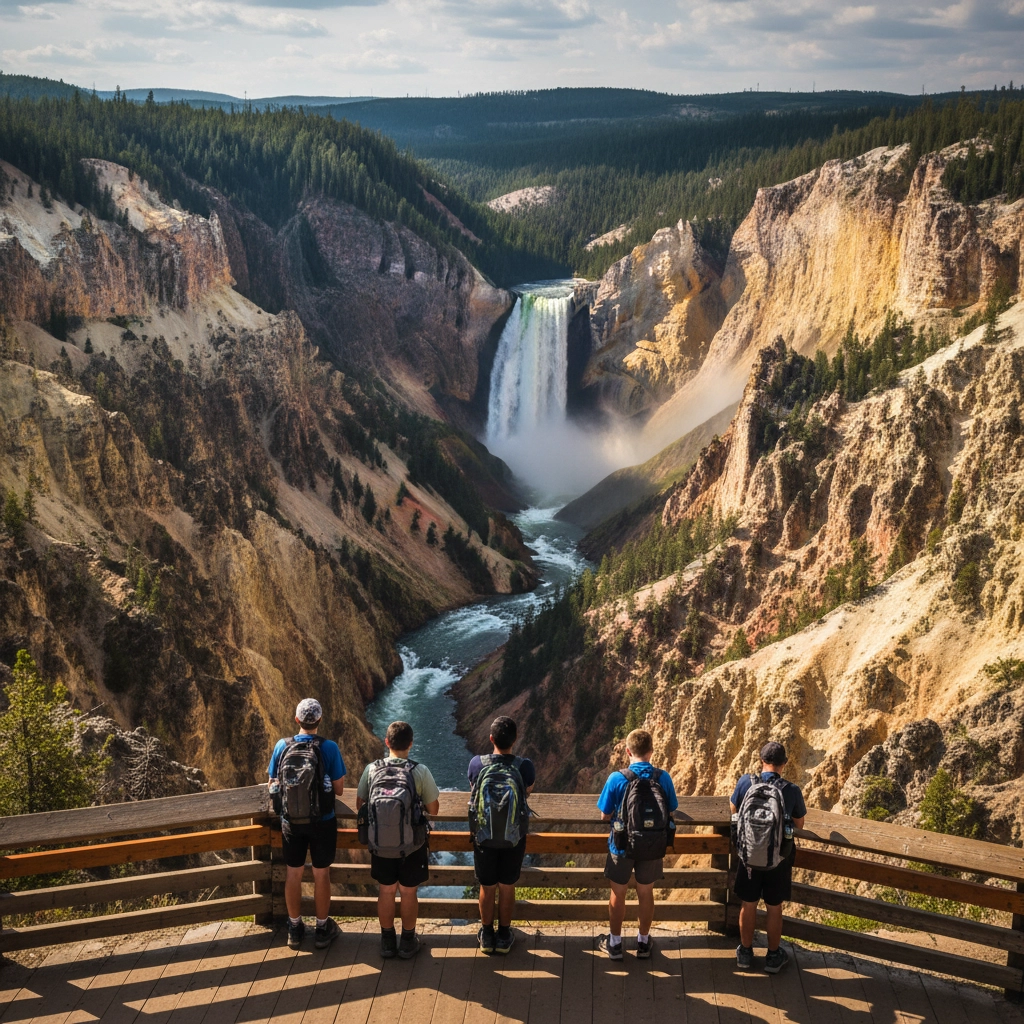
Connect observations to broader scientific concepts. A geyser eruption demonstrates pressure and temperature relationships, but it also illustrates energy transfer, chemical processes in extreme environments, and how geological processes affect surface features. Help students see these connections across disciplines.
Utilize technology appropriately to enhance rather than replace direct observation. Apps can provide additional information about features and wildlife, while GPS devices can help students understand mapping and location concepts. However, ensure technology supports rather than distracts from hands-on learning.
Bringing Yellowstone Science to Life
Post-visit activities extend learning beyond the park boundaries. Students can research thermal features in other locations, investigate how national park policies protect scientific resources, or design experiments based on observations made during their visit.
Many schools develop ongoing relationships with Yellowstone through distance learning programs, allowing students who cannot visit physically to still access park resources and participate in scientific investigations. These programs demonstrate how technology can overcome geographical barriers to learning.
The interdisciplinary nature of Yellowstone science naturally connects geology, biology, chemistry, physics, environmental science, and even social studies and mathematics. Students learn that real-world scientific problems require knowledge from multiple fields, preparing them for modern scientific careers.
Ready to Transform Your Students' Understanding of Science?
At Appleseed Expeditions, we specialize in creating transformative educational experiences that bring scientific concepts to life in Yellowstone's extraordinary classroom. Our expert-guided trips combine hands-on learning with safety, ensuring your students engage deeply with the park's wonders while developing lasting connections to scientific inquiry. Contact us today to discover how we can customize a Yellowstone science expedition that meets your curriculum goals and inspires the next generation of scientists and environmental stewards.
Yellowstone National Park offers students unmatched opportunities to witness scientific principles in action, from the microscopic extremophiles thriving in hot springs to the massive geological forces shaping landscapes over millennia. These experiences create lasting memories while building scientific literacy, environmental awareness, and appreciation for the natural world that textbooks alone cannot provide.
Comments