


Grand Canyon School Trips vs. Classroom Geology: Why Your Students Need Real Rock Formation Experience

Ensuring your students develop genuine scientific understanding requires moving beyond textbook diagrams and classroom lectures to authentic field experiences. The Grand Canyon represents one of Earth's most comprehensive geological classrooms, where students can witness 1.8 billion years of geological history carved into accessible, visible layers. Research consistently demonstrates that students who experience geological concepts through direct observation and hands-on exploration develop deeper understanding, stronger scientific confidence, and more lasting engagement than those limited to traditional classroom instruction.
The Critical Limitations of Classroom-Only Geology Education
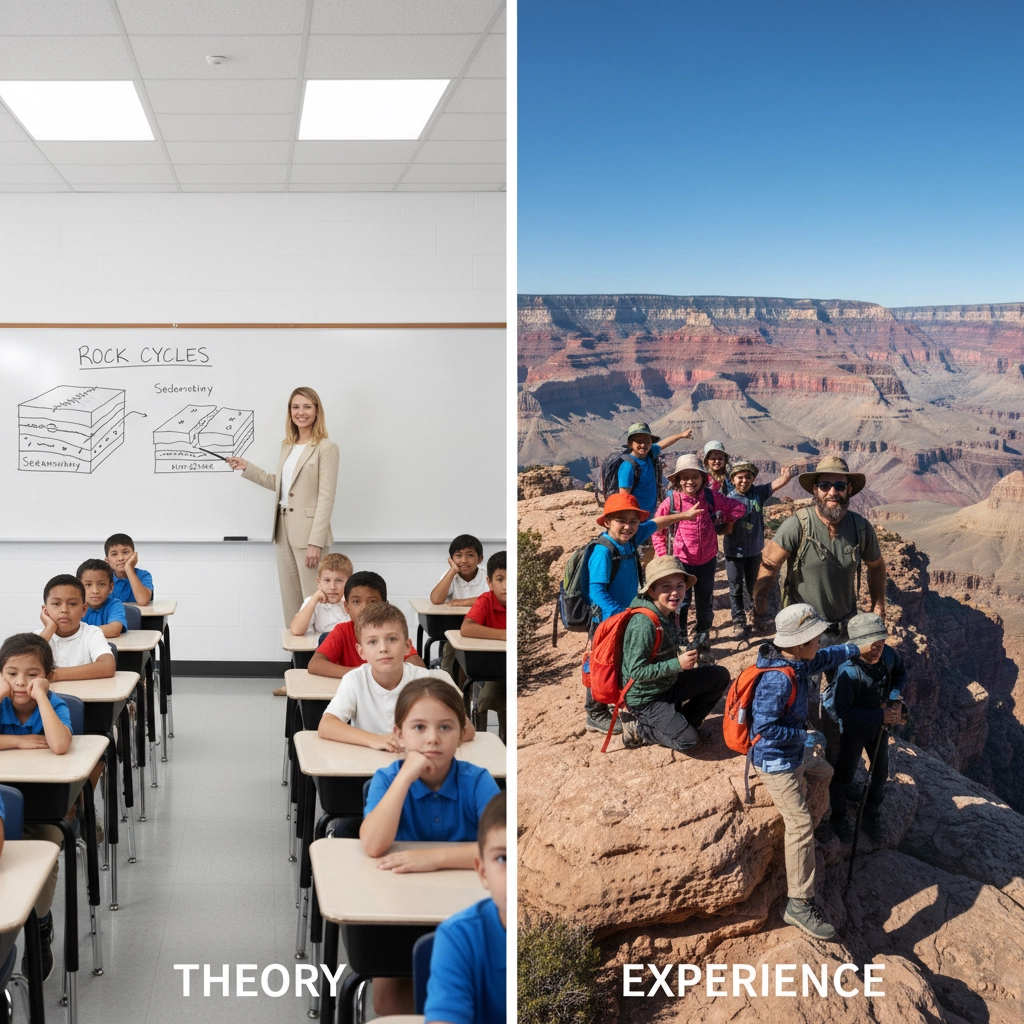
Traditional classroom geology instruction faces inherent constraints that limit student comprehension and engagement. Textbook diagrams, while informative, cannot convey the true scale and complexity of geological formations. Students attempting to understand concepts like erosion rates, sedimentary deposition, or geological time scales through two-dimensional images lack the spatial awareness and contextual understanding necessary for deep learning.
Classroom instruction relies heavily on abstract thinking, requiring students to visualize processes they have never witnessed. When students examine photographs of rock layers, they cannot appreciate the massive time scales involved or the physical forces that created these formations. The disconnect between theoretical knowledge and tangible reality often results in superficial understanding that students quickly forget after examinations.
Furthermore, traditional classroom environments fail to generate the intrinsic motivation necessary for sustained scientific engagement. Students may complete assignments and memorize terminology without developing genuine curiosity about geological processes or considering earth science careers.
The Transformative Power of Grand Canyon Field Experiences
Multisensory Learning Creates Lasting Memory Formation
Field experiences at the Grand Canyon engage multiple senses simultaneously, creating neurological connections that textbook learning cannot replicate. When students observe layered rock formations stretching across vast horizons, feel temperature variations between canyon rim and floor, and witness erosional processes operating in real-time, their brains process information through multiple pathways.
This multisensory engagement produces significantly stronger memory formation compared to passive classroom instruction. Students participating in Grand Canyon educational trips demonstrate measurably improved performance on state science assessments, with field trip experiences often representing the clearest concepts they retain from their entire academic experience.
Building Authentic Scientific Identity and Professional Confidence
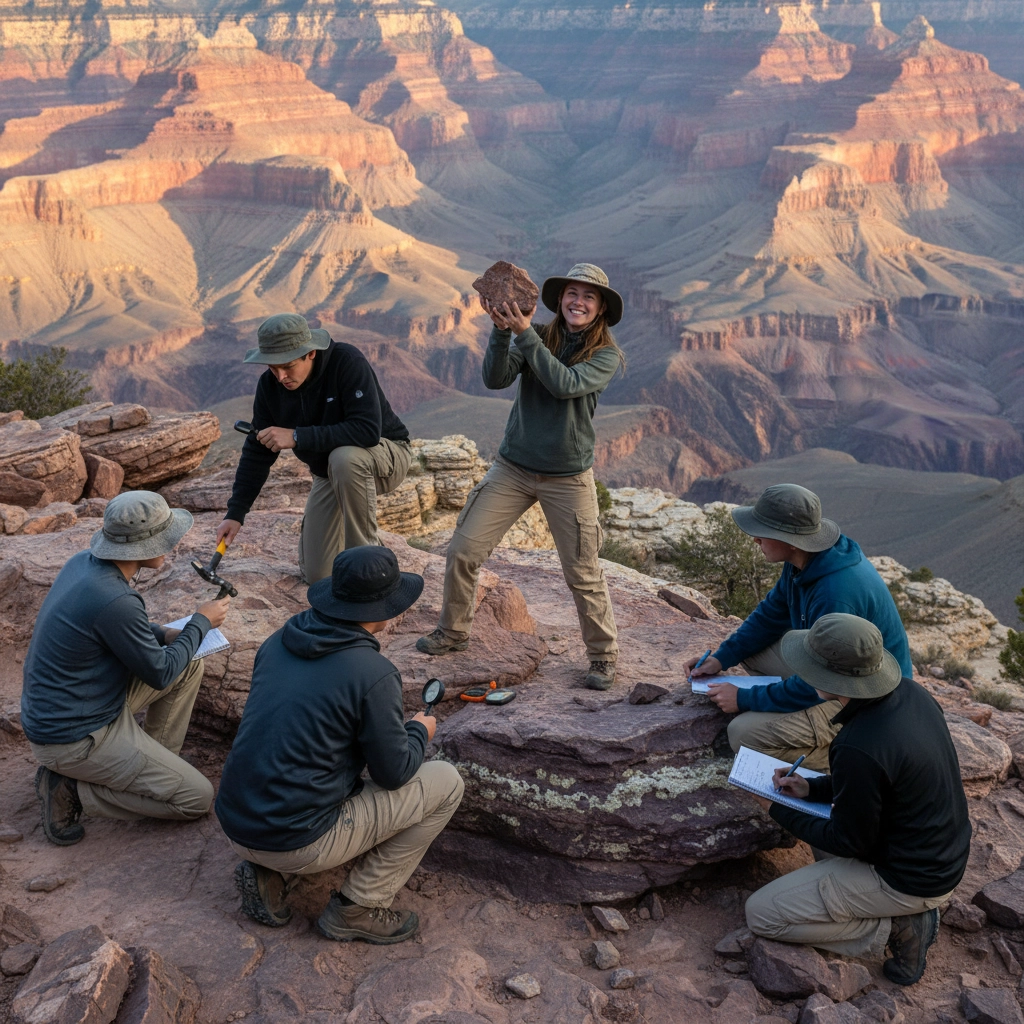
Field research experiences transform students from passive learners into active scientists. When students collect rock samples using professional geological tools, make detailed field observations with scientific instruments, and formulate hypotheses based on direct evidence, they develop genuine scientific confidence.
Professional geologists consistently report that conducting fieldwork creates confidence in physical abilities while teaching students to trust their scientific reasoning. Students begin identifying themselves as "real scientists" rather than merely students studying science, a fundamental shift that influences academic choices and career considerations.
Extended and Organic Learning Engagement
The Grand Canyon's natural classroom environment generates sustained intellectual engagement that extends far beyond formal instruction periods. Students continue discussing geological processes, scientific methodology, and career opportunities during meal periods, evening activities, and informal conversations throughout the expedition.
This organic extension of learning indicates genuine intellectual engagement rather than obligatory participation. Students demonstrate authentic curiosity by asking spontaneous questions, making independent observations, and connecting field experiences to broader scientific concepts without prompting from instructors.
Contextual and Cultural Understanding
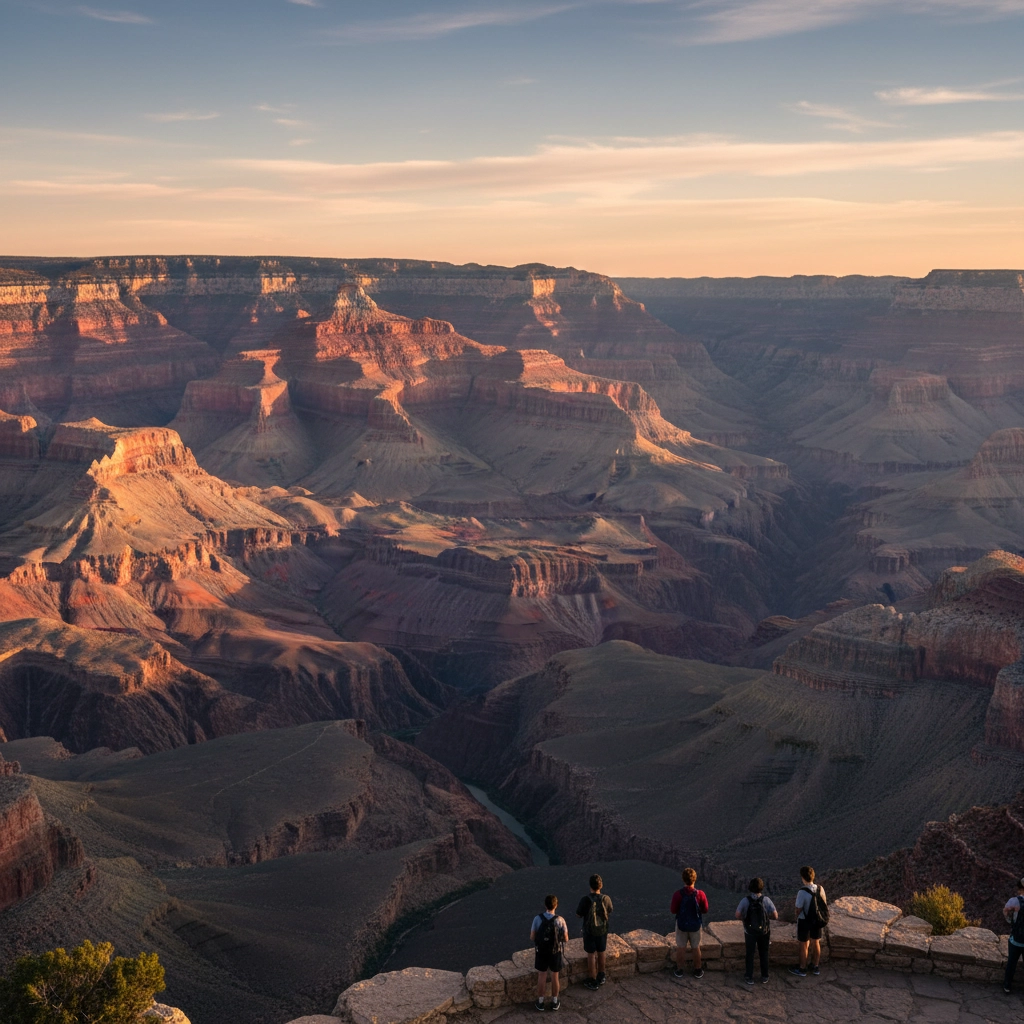
The Grand Canyon displays more than 20 distinct rock layers, each representing specific periods in Earth's 1.8-billion-year history. This geological timeline becomes accessible and comprehensible when students can physically trace layers across the canyon's expanse, understanding how different environments created distinct rock formations.
Place-based learning creates deeper scientific insight by grounding abstract concepts in specific geographical contexts. Students simultaneously learn about plate tectonics, climate change, erosion processes, and fossil formation while exploring Native American cultural history and contemporary conservation challenges.
Direct Comparison: Field Experience vs. Classroom Learning
Learning Dimension | Classroom Geology | Grand Canyon Field Trips |
Memory Formation | Single-pathway, passive processing | Multisensory, multiple neurological pathways |
Student Engagement | Time-limited, often obligatory | Extended, organic intellectual curiosity |
Scientific Identity | Abstract concepts separate from practice | Hands-on experience creates "real scientist" identity |
Assessment Performance | Standard achievement levels | Improved scores on state science tests |
Motivation Type | Extrinsic rewards and requirements | Intrinsic intellectual engagement |
Concept Retention | Rapidly forgotten after examinations | Vivid, long-lasting memories |
Skill Development | Theoretical knowledge only | Professional fieldwork techniques and instruments |
Career Influence | Limited impact on future choices | Significant influence on academic and career paths |
Implementation Strategy for Maximum Educational Impact
Pre-Trip Preparation Requirements
Begin by establishing foundational geological concepts through targeted textbook study, ensuring students understand basic terminology and processes before field application. Create specific observation objectives for each field location, providing students with structured goals that guide their attention during exploration.
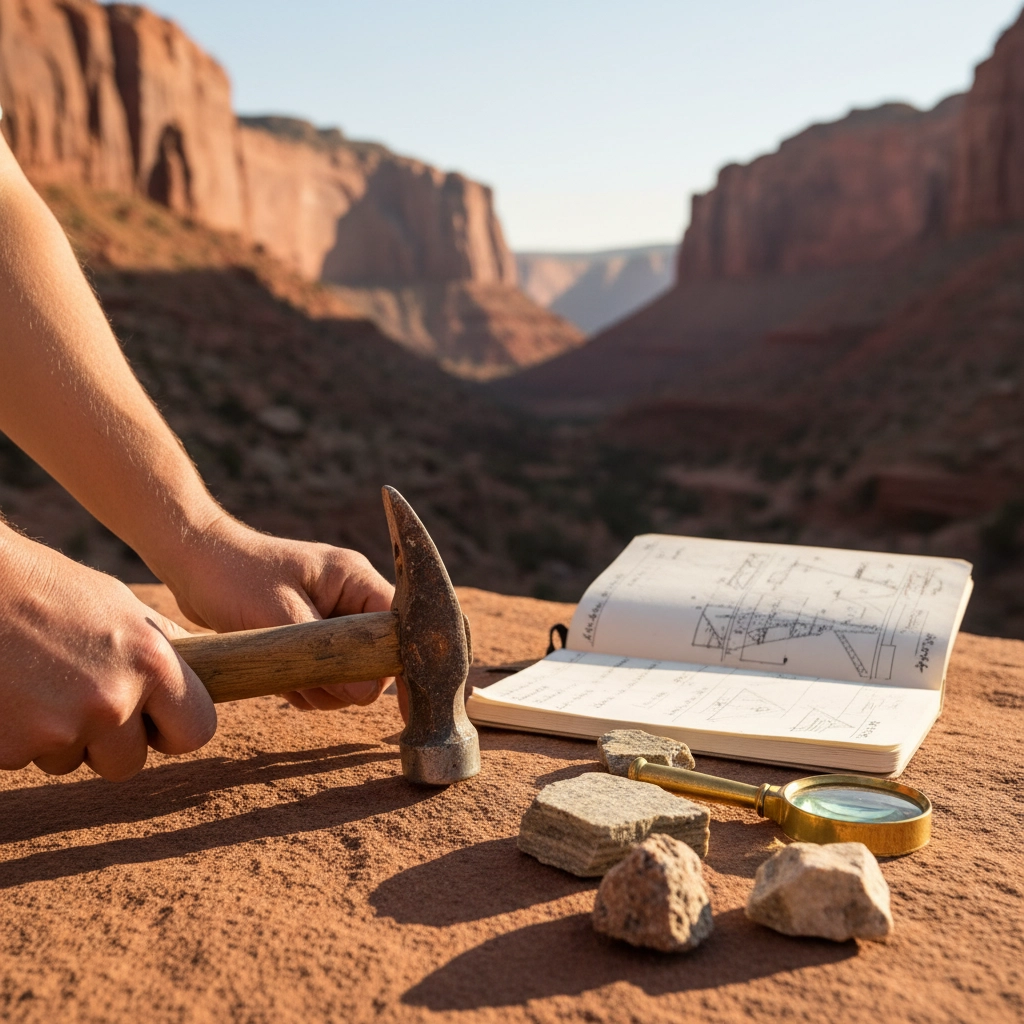
Introduce students to professional geological instruments they will use during the expedition, including rock hammers, magnifying glasses, pH test kits, and field notebooks. Develop hypothesis-testing frameworks that students can apply to field observations, connecting theoretical knowledge to empirical investigation.
During-Trip Optimization Strategies
Schedule extended periods for unstructured observation, allowing students to make independent discoveries without constant instructor guidance. These self-directed exploration periods often produce the most significant learning breakthroughs as students develop personal connections to geological concepts.
Incorporate professional scientist mentorship opportunities whenever possible, connecting students with working geologists who can share career insights and demonstrate advanced field techniques. Encourage collaborative research projects where students work in teams to investigate specific geological questions.
Document observations using professional geological techniques, teaching students to create accurate field sketches, collect representative samples, and maintain detailed scientific logs that mirror professional practices.
Post-Trip Integration Methods
Connect field observations to broader geological principles through structured reflection activities and follow-up research projects. Encourage students to present findings to the school community, sharing their discoveries and reinforcing learning through teaching others.
Maintain scientific discussions through ongoing projects that build upon field experiences, using textbooks to deepen theoretical understanding of concepts students observed firsthand. This reversal of the traditional teaching sequence: experience first, theory second: produces more robust comprehension.
Why Real Rock Formation Experience Matters for Student Success
The Grand Canyon's geological formations tell comprehensive stories of ancient environments, climate changes, and prehistoric life through fossils embedded within accessible rock layers. Students cannot fully grasp concepts like erosion rates, sedimentary deposition processes, or geological time scales through classroom diagrams alone.
Standing before a mile-deep canyon with colorful rock formations stretching across 18 miles provides visceral understanding of Earth's processes operating over millions of years. This concrete experience becomes the foundation upon which all future geological learning builds, creating mental frameworks that support advanced scientific understanding.
Students who experience authentic geological fieldwork develop problem-solving skills, scientific reasoning abilities, and environmental awareness that classroom instruction alone cannot provide. These capabilities extend far beyond geology, supporting success in mathematics, chemistry, physics, and engineering disciplines.
Ensuring Educational Excellence Through Field-Based Learning
Educational trips to the Grand Canyon represent essential investments in scientific literacy rather than optional enrichment activities. Research evidence consistently demonstrates that field experiences create the deep engagement necessary for fostering scientific careers and lifelong learning.
Prepare your students for transformative geological learning by prioritizing authentic hands-on experiences that connect textbook concepts to real-world applications. The Grand Canyon offers unparalleled opportunities for students to develop both professional scientific skills and genuine enthusiasm for earth science.
Transform your students from passive consumers of textbook knowledge into passionate scientists equipped with professional field experience and authentic scientific confidence. Learn more about our Grand Canyon educational expeditions designed specifically for student groups seeking comprehensive geological field experiences.

Comments