


Manatee 101: The Science Behind Florida's Gentle Giants in Crystal River

Crystal River stands as North America's premier destination for hands-on marine mammal education, earning its designation as the "Manatee Capital of the World." For science educators planning student expeditions, this unique ecosystem offers unparalleled opportunities to study mammalian physiology, aquatic ecology, and conservation biology in a living laboratory. Understanding the scientific principles that make Crystal River essential to manatee survival provides the foundation for meaningful educational experiences that inspire the next generation of marine scientists.
The Thermal Science Behind Manatee Habitat
The cornerstone of Crystal River's importance lies in fundamental thermal biology. The region's natural spring system maintains water temperatures at a constant 72°F year-round, creating critical thermal refugia for West Indian manatees. This consistent temperature regulation stems from groundwater emerging from the Floridan Aquifer System, where water remains insulated from surface temperature fluctuations.
Manatees exhibit profound physiological limitations in thermoregulation due to their exceptionally low metabolic rate: approximately 36% lower than predicted for mammals of their size. This adaptation, while energy-efficient in warm waters, severely compromises their ability to generate internal heat when water temperatures drop below 68°F. Students can observe firsthand how environmental physics directly impacts mammalian survival strategies.
The thermal dynamics create distinct behavioral patterns observable during educational visits. Winter aggregations in Kings Bay and Three Sisters Springs demonstrate thermophilic behavior, while summer dispersal patterns illustrate how environmental conditions influence animal distribution. These observations provide concrete examples of habitat selection theory and physiological ecology principles.
Manatee Anatomy and Physiology for Student Study
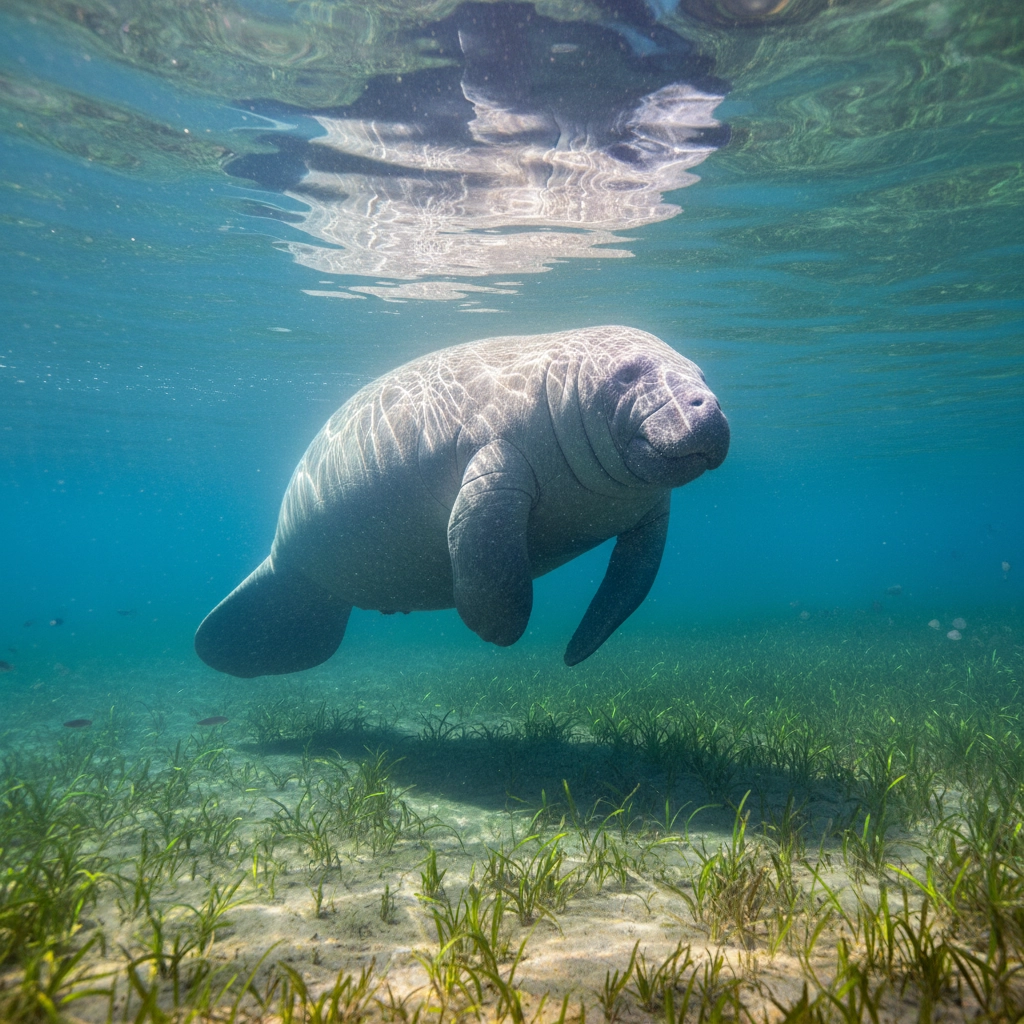
West Indian manatees present fascinating examples of evolutionary adaptation to aquatic environments. Adult specimens typically measure 10-12 feet in length and weigh between 800-1,200 pounds, with exceptional individuals reaching 1,500 pounds. Their fusiform body shape minimizes drag during swimming, while powerful paddle-like tails provide propulsion through modified vertebral structures.
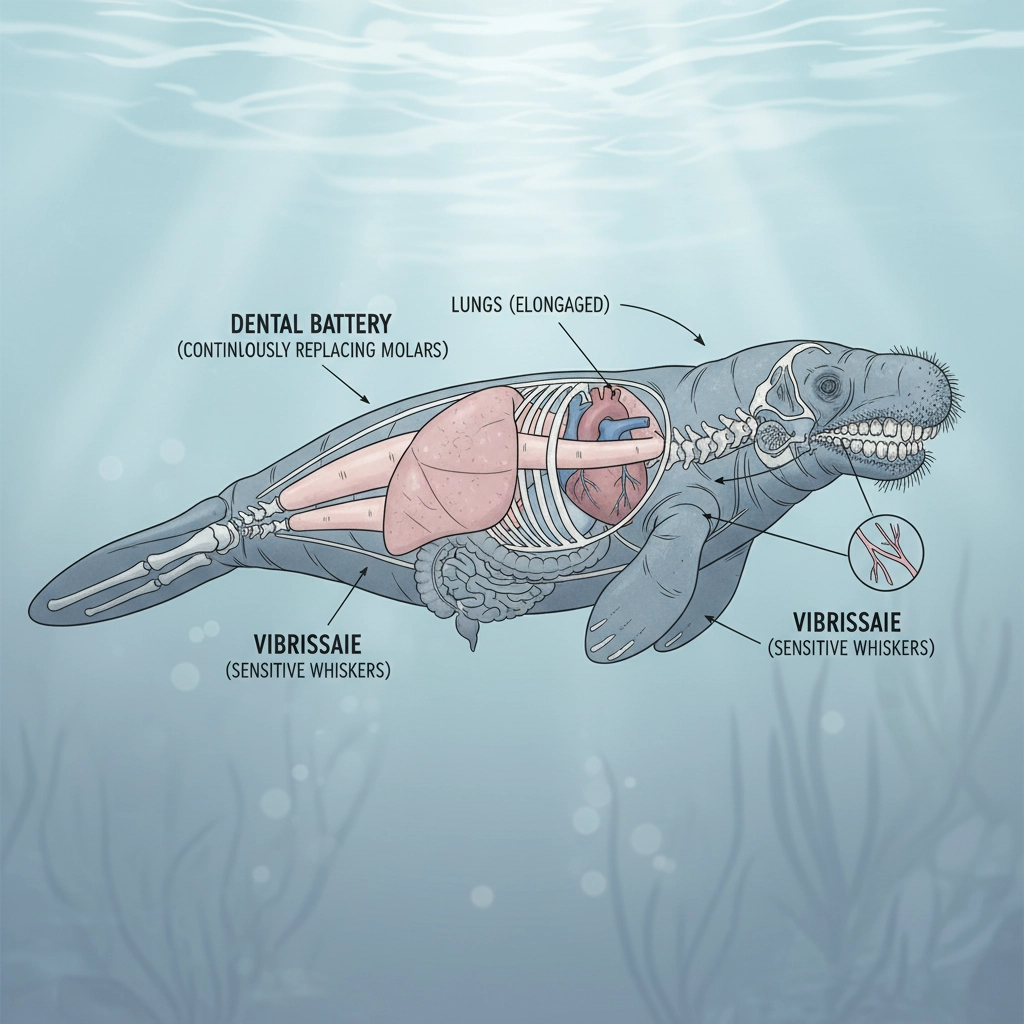
The manatee's respiratory system demonstrates remarkable adaptations for aquatic life. Their lungs extend horizontally along the spine, providing exceptional buoyancy control: a principle students can relate to submarine ballast systems. Manatees surface every 3-5 minutes during active periods, though they can remain submerged for up to 20 minutes when resting, showcasing physiological oxygen conservation mechanisms.
Examine the manatee's unique dentition system: they continuously replace their teeth throughout their lifetime, with new molars moving forward as older teeth wear down from processing abrasive vegetation. This dental conveyor belt system represents a specialized solution to the mechanical challenges of herbivory in aquatic environments.
Their sensory adaptations include highly sensitive vibrissae (whiskers) distributed across their face and body, creating a tactile sensory network essential for navigation and feeding in murky waters. These specialized hairs contain numerous nerve endings, demonstrating how mammals adapt sensory systems to environmental conditions.
Behavioral Science and Ecosystem Role
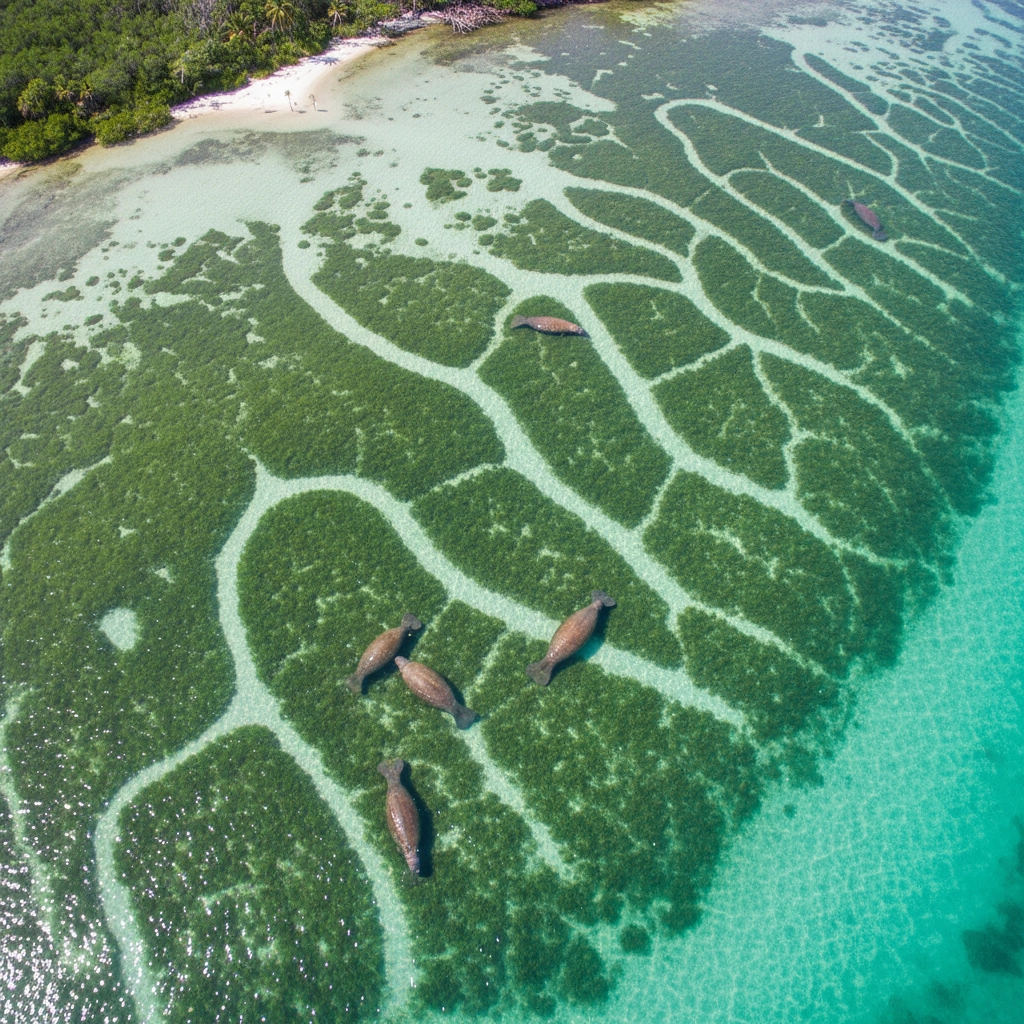
Manatees function as essential components of their aquatic ecosystem through their role as primary consumers and ecosystem engineers. An adult manatee consumes approximately 10-15% of its body weight daily: roughly 100-150 pounds of aquatic vegetation: requiring 6-8 hours of continuous grazing behavior.
This intensive herbivory serves critical ecological functions. Manatee feeding maintains seagrass bed health by preventing overgrowth and encouraging new shoot production. Their grazing patterns create a mosaic of vegetation heights, increasing habitat diversity for fish populations and invertebrates. Students can document these ecological relationships through field observations and data collection.
Manatee social behavior exhibits interesting patterns for behavioral ecology study. While generally solitary, they demonstrate aggregative behavior during thermal stress periods and reproductive seasons. Males compete for females through tactile interactions rather than aggressive displays, providing examples of alternative mating strategies in marine mammals.
Their communication system relies primarily on vocalizations underwater, with mothers and calves maintaining contact through specific call patterns. These acoustic behaviors can be studied using hydrophones, introducing students to bioacoustics research methods.
Conservation Science in Action
Crystal River serves as a living laboratory for conservation biology, where students can observe science-based management strategies in practice. The Crystal River National Wildlife Refuge: America's only federally designated manatee sanctuary: demonstrates how scientific research informs policy decisions and habitat protection measures.
Current manatee population monitoring employs photo-identification techniques, thermal imaging surveys, and GPS tracking systems. Students can participate in citizen science programs that contribute to ongoing research databases, learning proper data collection protocols while generating scientifically valuable information.
Water quality monitoring represents another critical conservation science component. Manatees serve as indicator species for ecosystem health, with their population trends reflecting broader environmental conditions. Students can measure parameters including temperature, dissolved oxygen, salinity, and turbidity, connecting chemistry concepts to wildlife conservation.
The human impact assessment provides opportunities to study anthropogenic effects on marine ecosystems. Boat strikes, habitat degradation, and pollution represent quantifiable stressors that students can investigate through data analysis and field observations.
Educational Opportunities and Research Methods
Crystal River expeditions offer unique advantages for science education through direct observation of marine mammals in their natural environment. Students can employ multiple research methodologies while contributing to conservation efforts through structured service learning components.
Behavioral observation protocols teach systematic data collection techniques essential for biological research. Students learn to record feeding behaviors, social interactions, movement patterns, and habitat utilization using standardized data sheets and timing protocols. These skills transfer directly to advanced biological research methods.
Water quality assessment provides hands-on experience with environmental monitoring equipment and analytical techniques. Students can measure physical parameters, collect samples for laboratory analysis, and correlate environmental conditions with manatee distribution patterns.
Photo-identification workshops introduce students to mark-recapture methodology and population estimation techniques. By learning to identify individual manatees through scar patterns and physical characteristics, students contribute to long-term population monitoring while mastering fundamental ecological research methods.
Geographic Information Systems (GIS) applications allow students to map manatee distribution patterns, analyze habitat utilization, and model environmental variables. These technical skills provide valuable preparation for advanced environmental science coursework.
Service Learning and Conservation Impact
Effective science education expeditions combine research experience with meaningful conservation service. Crystal River offers multiple opportunities for students to contribute directly to manatee protection while developing scientific literacy and environmental stewardship values.
Habitat restoration projects provide hands-on experience with ecosystem management principles. Students can participate in seagrass planting initiatives, invasive species removal, and shoreline stabilization efforts that directly benefit manatee populations. These activities demonstrate practical applications of ecological concepts while generating measurable conservation outcomes.
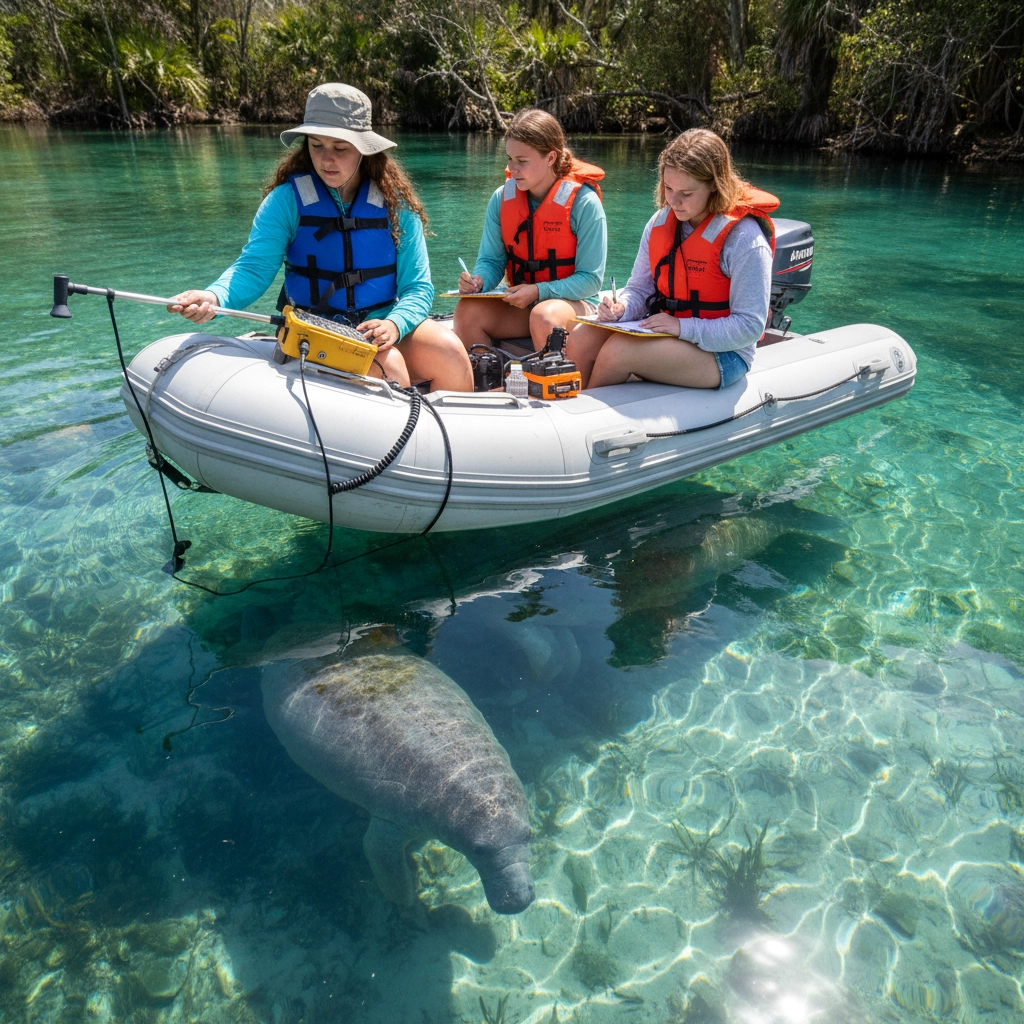
Water quality monitoring programs enable students to collect data for ongoing research projects while learning proper scientific protocols. Regular monitoring sites throughout the Crystal River system provide opportunities for longitudinal studies that track environmental changes over time.
Educational outreach components allow students to share their learning with younger students and community members, reinforcing their understanding while developing science communication skills. Preparing presentations and leading discussions about manatee conservation helps solidify scientific concepts while building confidence in public speaking.
Planning Effective Science Expeditions
Successful manatee science expeditions require careful consideration of seasonal patterns, regulatory requirements, and educational objectives. Peak viewing opportunities occur during official manatee season (November 15 through March 31), when hundreds of individuals congregate in the warm-water refugia.
Advance coordination with certified educational operators ensures compliance with federal wildlife protection regulations while maximizing learning opportunities. Professional naturalists provide scientific expertise and safety oversight essential for productive field experiences.
Pre-trip preparation should include background research on manatee biology, ecosystem relationships, and conservation challenges. Students benefit from understanding the scientific context before engaging in field observations and data collection activities.
Post-expedition analysis and reporting components help students synthesize their observations and connect field experiences to broader scientific concepts. Data analysis exercises, research presentations, and conservation project development extend learning beyond the field experience while developing critical thinking skills.
Crystal River's unique combination of accessible marine mammals, pristine spring ecosystems, and active conservation programs creates an ideal setting for transformative science education experiences. By engaging with these gentle giants in their natural environment, students develop both scientific literacy and environmental stewardship values that inspire lifelong learning and conservation commitment.

Comments