


Q&A: What makes the geology of Mammoth Hot Springs so unique?
- Caleb Mullenix
- Apr 7
- 6 min read

Introduction to a Living Laboratory
Yellowstone National Park is a massive volcanic caldera, famous for its geysers and mud pots. However, Mammoth Hot Springs, located in the northern section of the park, stands apart as a distinct geological anomaly. To understand why this area is a cornerstone of any Appleseed Expeditions science trip, we must look beyond the steam and into the chemical makeup of the earth beneath our feet.
The following Q&A explores the intricate geological processes, the unique chemical compositions, and the rapid environmental shifts that make Mammoth Hot Springs a premier destination for educators and students alike.
Q: What is the primary difference between Mammoth Hot Springs and other geothermal features in Yellowstone?
The most significant distinction lies in the type of rock through which the thermal water travels and the mineral it deposits upon reaching the surface. Most geysers in Yellowstone, such as Old Faithful, are located within the Yellowstone Caldera and sit atop rhyolitic volcanic rock. This rock is rich in silica, resulting in the deposition of "siliceous sinter."
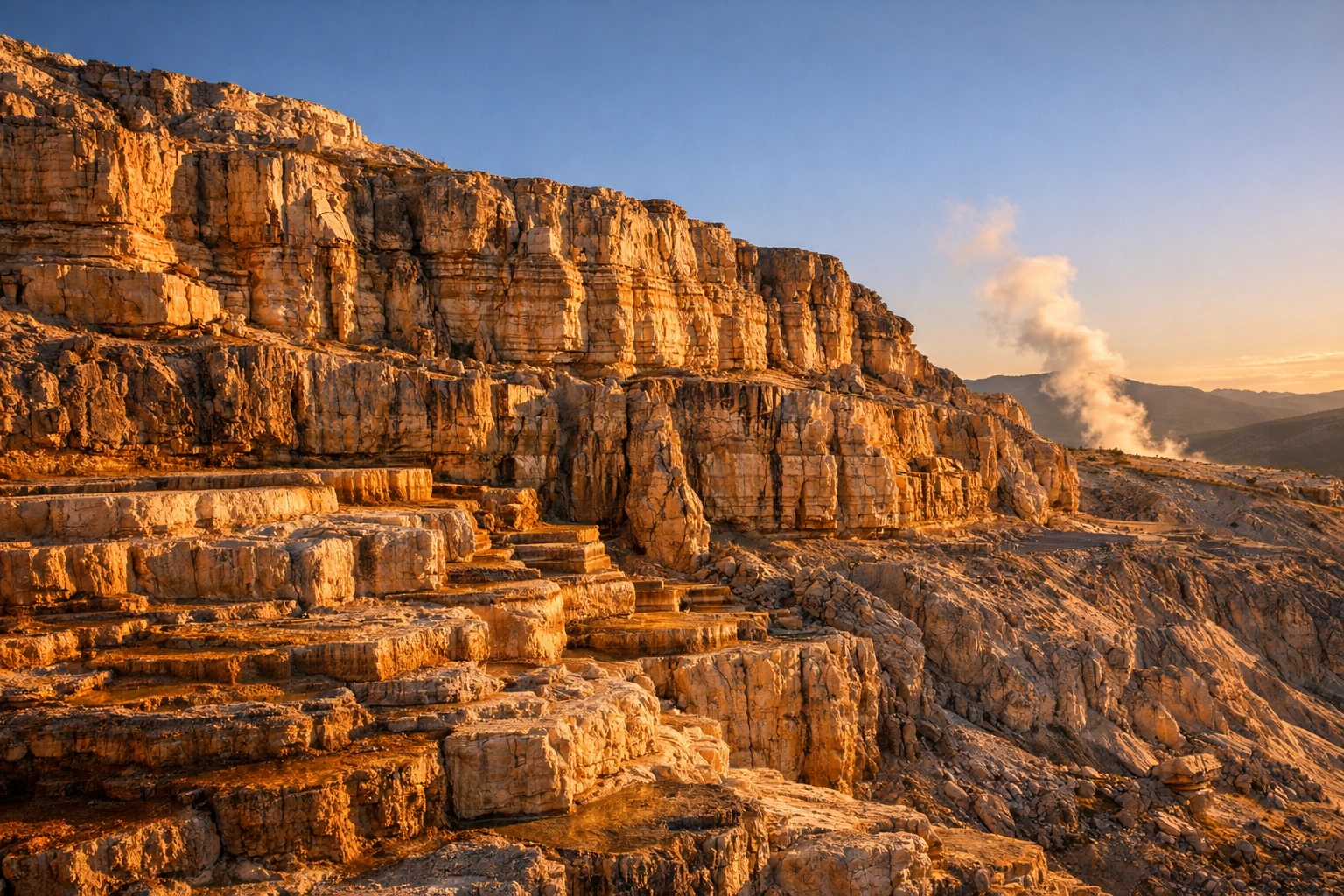
In contrast, Mammoth Hot Springs is located outside the primary caldera boundary. The water here travels through vast layers of limestone. Consequently, instead of silica, the springs at Mammoth deposit calcium carbonate, which forms a rock known as travertine. This fundamental difference in chemistry creates the iconic "stair-step" terrace formations that are found nowhere else in the park on such a massive scale.
Q: Where did all this limestone come from?
The limestone that fuels the formations at Mammoth Hot Springs is a remnant of an ancient era. Millions of years ago, a vast inland sea covered much of what is now the Western United States. Over eons, the remains of marine organisms settled on the seafloor, eventually compressing into thick layers of limestone.
As the Rocky Mountains rose and the Yellowstone plateau was shaped by volcanic activity, these ancient sedimentary layers were pushed upward and exposed. Today, they serve as the "raw material" for the terraces we see. Understanding this history is crucial for students to grasp the concept of deep time and the cycling of Earth’s crust.
Q: How does the chemical process of dissolving limestone work?
The creation of a travertine terrace is a masterpiece of natural chemistry. The process follows a specific, logical sequence that educators can easily demonstrate through scientific modeling:
Heat Source: Rain and snowmelt seep deep into the earth. Although Mammoth is outside the caldera, it is still powered by the same magmatic system. The water is heated by cooling magma bodies or basaltic intrusions deep underground.
Carbonation: As this water circulates, it absorbs carbon dioxide (CO2) from the surrounding rock and atmosphere, creating a weak carbonic acid.
Dissolution: This acidic, superheated water moves through the ancient limestone layers. Because limestone is highly soluble in acidic water, the water dissolves the calcium carbonate, carrying it in solution as it rises toward the surface along a complex fault system.
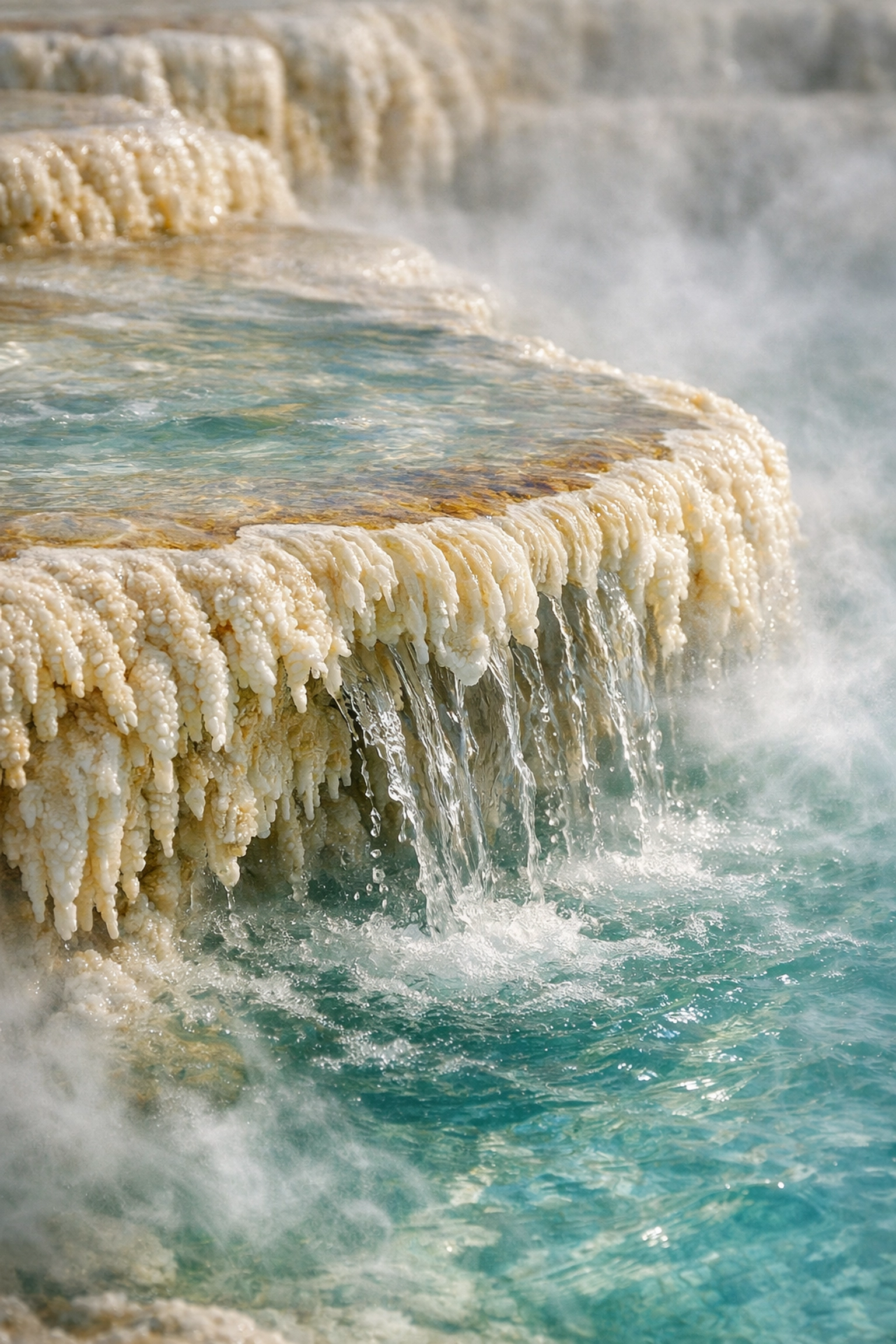
Deposition: When the water reaches the surface at approximately 170°F (80°C), the pressure drops and the CO2 is released into the air (a process called outgassing). Without the CO2 to keep it acidic, the water can no longer hold the dissolved calcium carbonate.
Crystallization: The minerals precipitate out of the water, crystallizing into the white, porous rock we call travertine.
Q: Why do the terraces form in a "stair-step" pattern?
The terrace structure is a result of gravity, water flow, and the rapid rate of mineral deposition. As the mineral-rich water flows over the edge of a slope, it slows down slightly, allowing more minerals to settle. These deposits build up into small dams or rims. As the water pools behind these rims and then spills over the next level, it creates a cascading series of pools and steps.
Terrace Mountain, located within the Mammoth complex, is actually the world's largest known carbonate-depositing spring. It serves as a monumental example of how thousands of years of this repeating process can build entire mountain-sized features.
Q: How rapidly does the landscape at Mammoth Hot Springs change?
One of the most exciting aspects for students on an Appleseed Expeditions Yellowstone trip is the opportunity to observe geologic change in real-time. In most geological contexts, changes take millions of years; at Mammoth, changes occur daily.
The springs are incredibly dynamic. It is estimated that nearly two tons of dissolved calcium carbonate are deposited onto the terraces every single day. Because the plumbing system underground is a fragile network of cracks and fissures, these paths can easily become "clogged" by the very minerals they carry. When a vent becomes blocked, the water finds a new path, often emerging several feet or even yards away.
This causes "active" terraces: vibrant with water and color: to suddenly go "inactive," turning into dry, crumbling grey-white rock. Conversely, a previously dry area may suddenly begin to flow, creating a brand-new terrace in a matter of months.
Q: What causes the vibrant oranges, reds, and greens on the terraces?
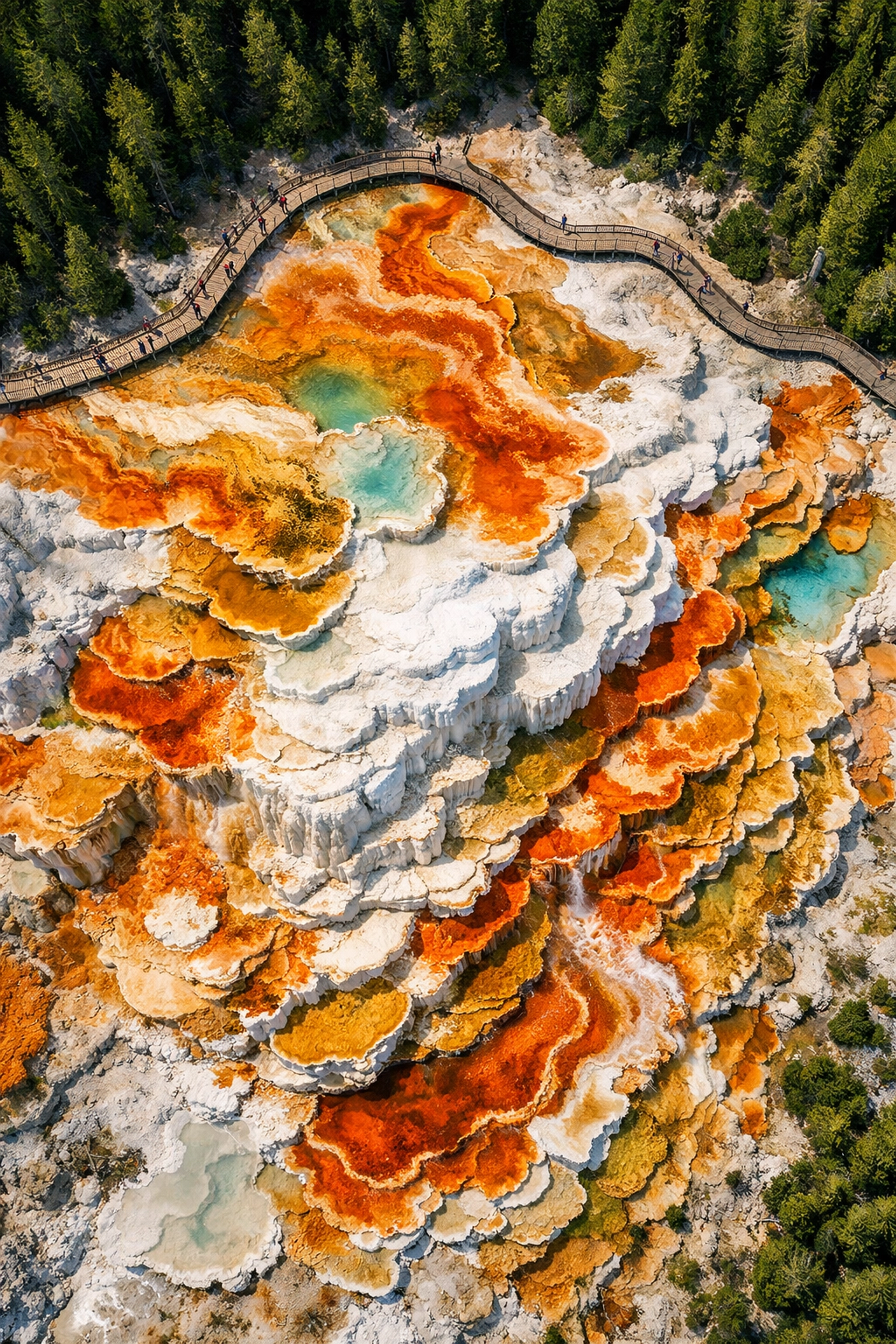
While the travertine itself is naturally white, the terraces are often a riot of color. These colors are not mineral-based but biological. They are created by thermophiles, or heat-loving microorganisms.
Cyanobacteria and Algae: These organisms thrive in specific temperature ranges.
Color Gradation: In the hottest water (closest to the source), the bacteria are often white or pale yellow. As the water flows away and cools, different species of bacteria take over, creating shades of orange, rust, and chocolate brown.
Green hues: These usually appear in the cooler edges of the pools where chlorophyll-producing organisms can survive.
By studying these colors, students can map the temperature of the water without ever touching it, providing a safe and visual way to study microbial ecology and thermal gradients.
Q: Is Mammoth Hot Springs safe to visit?
Ensuring the safety of students and educators is of paramount importance when visiting any geothermal area. Mammoth Hot Springs presents specific risks that require a meticulous and risk-averse mindset:
Fragile Crust: The travertine crust can be paper-thin. What looks like solid ground may actually be a thin shell over boiling water or a deep cavern.
Unpredictable Vents: Because the geology shifts so rapidly, new vents can open unexpectedly.
Strict Adherence to Boardwalks: It is mandatory for all visitors to remain on the designated boardwalks at all times.
Educators should emphasize the importance of vigilance and respect for these natural boundaries. Advise students that "the ground is alive," and any deviation from established paths can result in severe injury or permanent damage to the delicate formations.
Q: How can teachers use Mammoth Hot Springs to meet science standards?
Mammoth Hot Springs serves as an ideal outdoor classroom for various Earth Science and Biology standards. Instructors can focus on:
Earth Systems: The interaction between the hydrosphere (hot water), the atmosphere (CO2 exchange), and the geosphere (limestone dissolution).
Ecology: The study of extremophiles and how life adapts to harsh, high-temperature environments.
Chemistry: The concepts of pH, solubility, and precipitation of minerals.
Conservation: Discussing how human interaction and climate change might impact these fragile hydrothermal systems.
Experiencing Yellowstone with Appleseed Expeditions
While reading about travertine terraces is educational, nothing compares to the impact of standing before the roaring steam of Canary Spring or the massive heights of Liberty Cap. Appleseed Expeditions provides students and educators the opportunity to experience Yellowstone science trips firsthand. Our itineraries are designed to maximize learning opportunities while maintaining a professional and structured environment that prioritizes safety and academic rigor.
Whether you are investigating the fault lines that connect Mammoth to the Norris Geyser Basin or documenting the shifting flow of the terraces, our expeditions turn abstract geological concepts into tangible experiences.
Conclusion: A Meticulous Record of Earth’s Activity
The geology of Mammoth Hot Springs is unique because it is a "living" system. It is a place where the ancient past: in the form of Paleozoic limestone: meets the modern heat of the Yellowstone hotspot to create an ever-changing landscape.
For the prepared educator, Mammoth is more than a tourist stop; it is a complex laboratory for teaching chemistry, biology, and environmental stewardship. By understanding the chemical process of limestone dissolution and the rapid rate of mineral deposition, we can better appreciate the volatility and beauty of our planet.
As you plan your next educational journey, remember that thorough preparation and a focus on safety are the keys to a successful field study. We encourage you to explore the Appleseed Expeditions blog for more resources on educational travel and to view our Sitemap for a full range of available school trips.
Our core objective remains the same: to enrich the student experience through expertly guided, science-focused expeditions that inspire a lifelong respect for the natural world.
Comments