


Student Travel to Yellowstone: A Deep Dive into the World's First National Park

Planning a class trip to Yellowstone offers students an unparalleled opportunity to witness geological processes in action. As the world's first national park, established in 1872, Yellowstone represents more than a historic landmark: it serves as a living laboratory where earth science concepts become tangible, observable phenomena. Ensuring your students gain maximum educational value from student travel to Yellowstone requires careful preparation, structured learning objectives, and a thorough understanding of the park's geological significance.
The Geological Foundation of Educational Trips to Yellowstone
Yellowstone sits atop one of the world's most powerful volcanic systems, a supervolcano that has shaped the landscape over millions of years. Understanding this geological context is essential for educators preparing a class trip to Yellowstone. The park's nearly 3,500 square miles of volcanic wilderness contain the largest concentration of geysers and hydrothermal features on Earth: over 10,000 thermal features in total, representing more than half of all such features worldwide.
The Yellowstone Caldera, measuring approximately 45 by 30 miles, formed during the last major eruption 640,000 years ago. This massive volcanic event expelled more than 240 cubic miles of material, creating the depression that defines much of the park's central landscape. Students observing the park's topography witness the direct results of this cataclysmic geological event, making abstract concepts from textbooks immediately comprehensible.
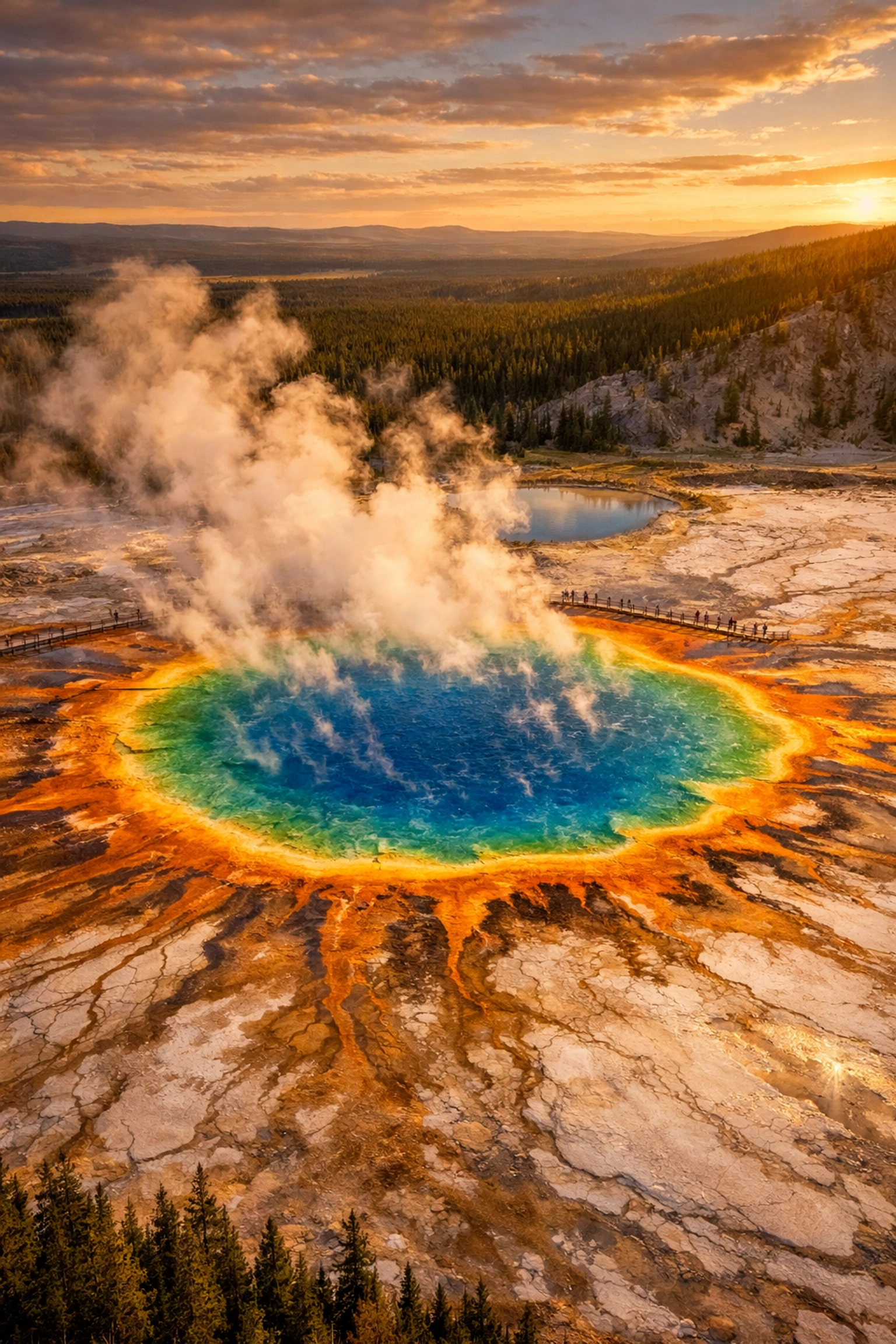
Beneath Yellowstone lies a magma chamber that fuels the park's extraordinary geothermal activity. Heat from this underground reservoir superheats groundwater, creating the spectacular geysers, hot springs, mudpots, and fumaroles that make student travel to Yellowstone such a valuable educational experience. Emphasize to your students that they are observing processes occurring continuously within Earth's dynamic systems: the same forces that shape our planet on a global scale.
Essential Geothermal Features for Student Observation
When planning educational trips to Yellowstone, prioritize specific geothermal features that illustrate distinct geological processes. Each feature type demonstrates different aspects of hydrothermal systems, providing comprehensive learning opportunities.
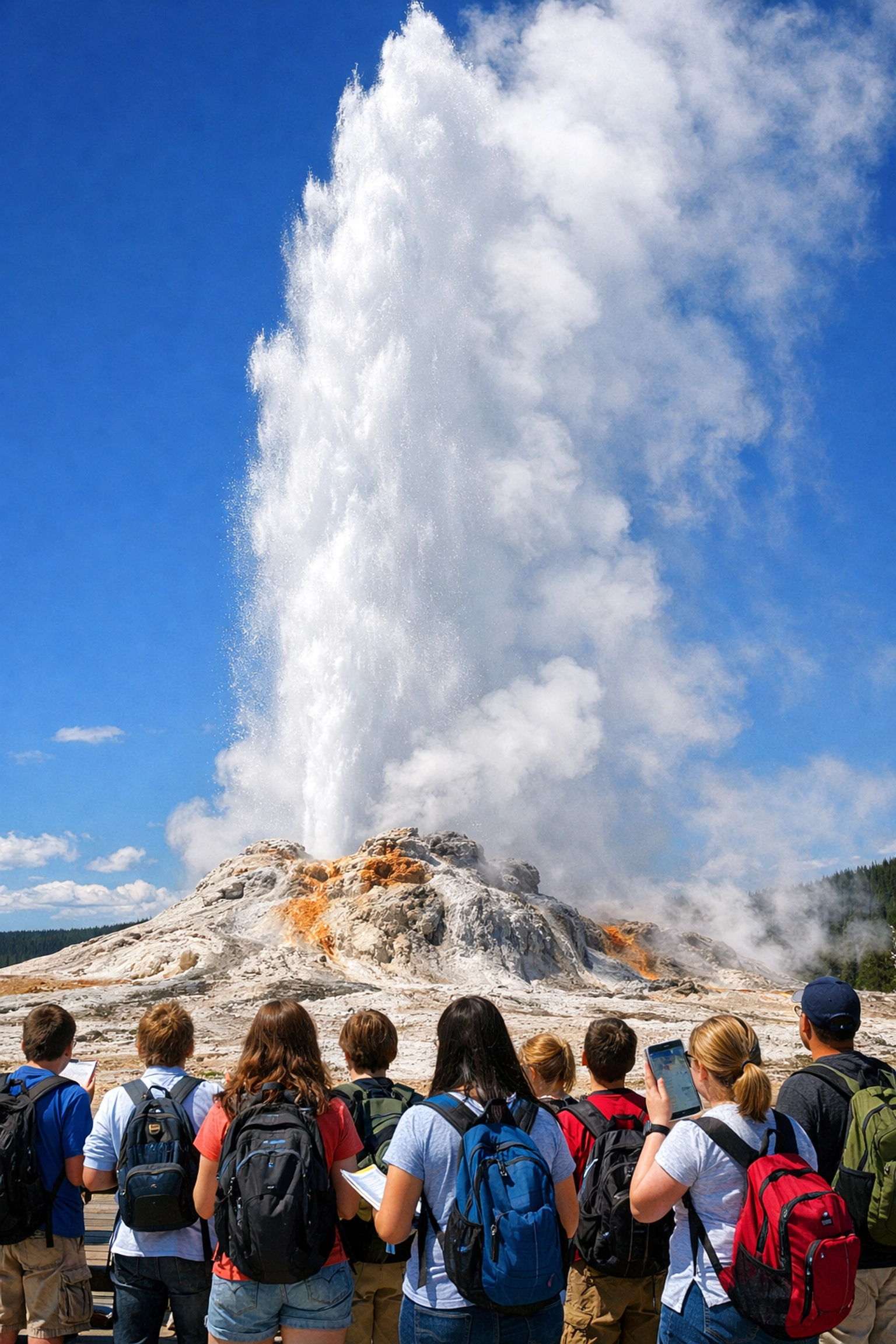
Geysers represent the most dramatic hydrothermal features. Old Faithful, erupting approximately every 90 minutes, provides a reliable demonstration of the geyser cycle: water accumulates in underground chambers, heat from volcanic sources raises the temperature above boiling point, pressure builds until it exceeds the weight of the overlying water column, and the superheated water explosively converts to steam. Ensure students understand that this cyclical process requires specific underground plumbing configurations: narrow constrictions that allow pressure to build before release.
Hot Springs differ from geysers in their underground structure. Without constrictions preventing water circulation, hot springs maintain continuous flow. The Grand Prismatic Spring, measuring 370 feet in diameter, demonstrates how thermophilic bacteria and algae create vivid color bands corresponding to different temperature zones. Direct students to observe how colors change from deep blue in the center (where temperatures exceed bacterial tolerance) through green, yellow, and orange bands (where different heat-tolerant organisms thrive) to brown at the cooler edges.
Mudpots and Fumaroles represent endpoints of the hydrothermal spectrum. Mudpots form where limited water mixes with volcanic gases and dissolved rock, creating bubbling clay. Fumaroles, or steam vents, occur where water is so limited that only steam and volcanic gases escape. These features demonstrate the relationship between water availability, heat, and chemical weathering processes.
Structuring a Class Trip to Yellowstone: Logistical Considerations
Organizing successful student travel to Yellowstone demands meticulous planning and adherence to clear safety protocols. The park's 142-mile Grand Loop Road, configured in a figure-eight pattern, provides access to major attractions, but educators must allocate sufficient time for meaningful observation and learning.
Plan for a minimum four-day visit. This duration allows thorough exploration without exhausting students or rushing through educational opportunities. Attempting to cover the park in fewer days compromises learning quality and student safety through excessive hurry.
Select appropriate entrance points. The North Entrance near Gardiner, Montana, remains open year-round and provides access to Mammoth Hot Springs and Lamar Valley. The South, East, West, and Northeast Entrances serve different regions but close during winter months. Coordinate your entrance selection with your planned itinerary to minimize transit time and maximize educational engagement.
Establish clear daily objectives. Each day should focus on specific geological or ecological concepts. For example:
Day One: Hydrothermal systems and geyser mechanics (Upper Geyser Basin, Old Faithful, Grand Prismatic Spring)
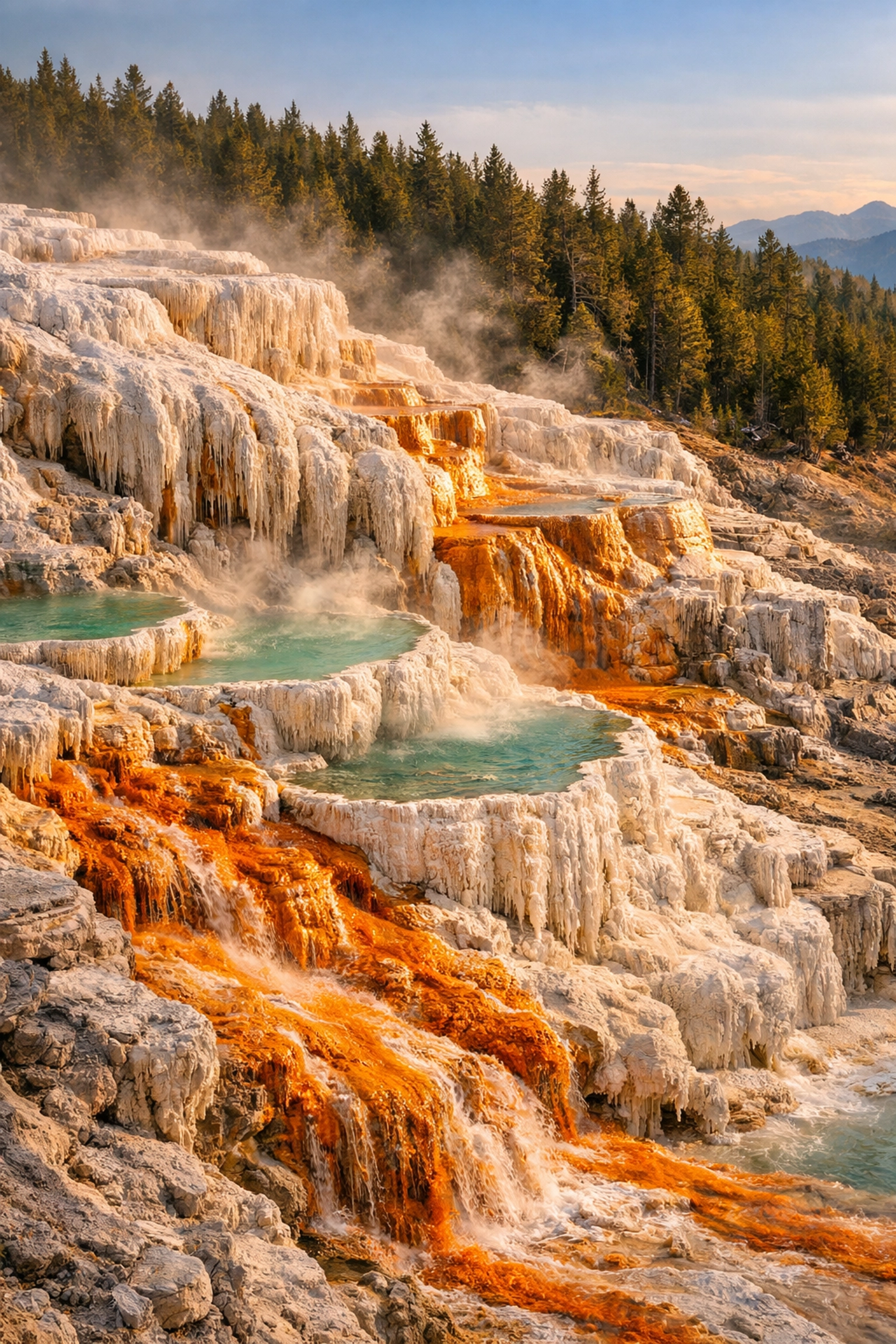
Day Two: Travertine formation and chemical deposition (Mammoth Hot Springs, Norris Geyser Basin)
Day Three: Canyon formation and erosional processes (Grand Canyon of the Yellowstone)
Day Four: Volcanic landscapes and calderas (Hayden Valley, park geology overview)
Implement rigorous safety protocols. Thermal features present serious hazards. Establish strict rules requiring students to remain on designated boardwalks and trails. The thin crust surrounding thermal features can collapse, and the superheated water beneath causes severe burns. Emphasize that thermal water temperatures commonly exceed 200°F, and even brief contact causes serious injury. Maintain constant supervision, establish buddy systems, and conduct regular headcounts at each location.
Implementing Structured Educational Frameworks
Educational trips to Yellowstone benefit significantly from formal learning frameworks that guide student observation and analysis. Establish clear essential questions before your class trip to Yellowstone, such as:
How do volcanic processes create and maintain hydrothermal systems?
What evidence in the landscape indicates past volcanic activity?
How have geological processes shaped Yellowstone over different timescales?
What role does water play in creating diverse thermal features?
Require detailed field journals. Direct students to maintain comprehensive documentation including:
Daily locations visited and geological features observed
Sketches or photographs of significant formations with detailed captions
Temperature observations (from informational signs, not direct measurement)
Questions arising from observations
Connections to classroom learning and textbook concepts
Hypotheses about geological processes creating observed features
Journals should contain minimum three pages of written observations per day and at least six captioned photographs or detailed sketches by trip conclusion. This documentation serves as both learning reinforcement and assessment material.
Utilize museum resources. The park's visitor centers contain exhibits, historical photographs, and interpretive displays that provide essential context. Before visiting thermal features, allocate time for students to examine geological cross-sections, timeline displays, and educational videos explaining volcanic and hydrothermal processes. This preparation enhances field observation quality by establishing conceptual frameworks students can reference during actual site visits.
Engage with ranger-led programs. National Park Service rangers offer specialized programs addressing geological topics. These programs provide expert interpretation and allow students to ask questions of professionals specializing in Yellowstone's unique geology. Schedule ranger programs strategically within your itinerary, ensuring they complement rather than duplicate your planned instruction.
The Grand Canyon of Yellowstone: A Study in Erosional Processes
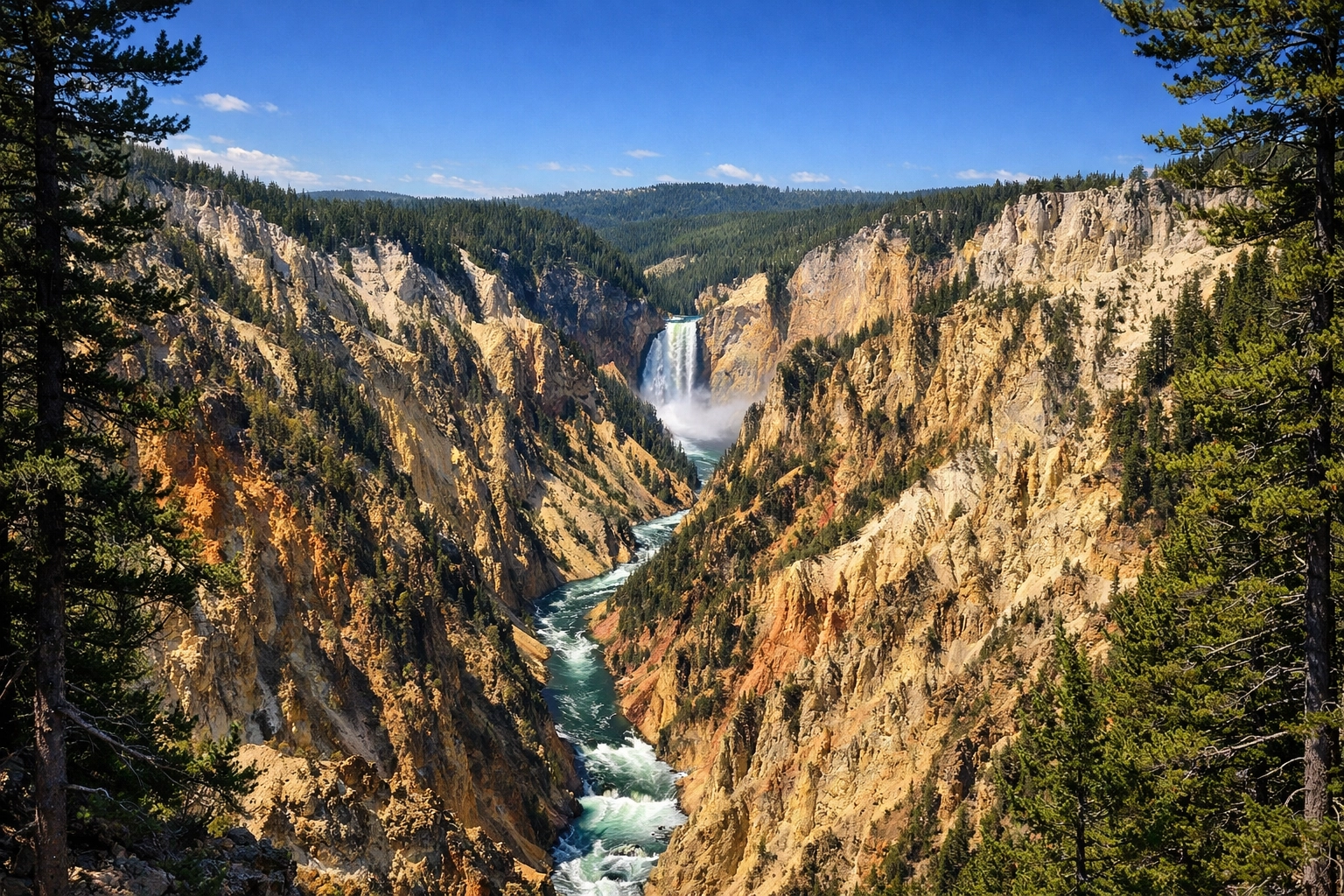
The Grand Canyon of the Yellowstone provides exceptional opportunities for students to observe erosional processes and volcanic rock weathering. The Yellowstone River has carved through volcanic rocks altered by hydrothermal activity, creating a canyon reaching depths of 1,000 feet with dramatic yellow, orange, and red walls.
Direct students to observe how hydrothermally altered rhyolite, weakened by acidic thermal water, erodes more readily than unaltered rock. The canyon's distinctive colors result from iron compounds oxidizing in different ways depending on heat and moisture exposure: a visible demonstration of chemical weathering processes.
The Lower Falls, plunging 308 feet, illustrate the relationship between water erosion, rock resistance, and landscape evolution. Students can observe how the falls gradually move upstream as erosion undercuts resistant rock layers, demonstrating that landscapes continuously evolve through ongoing geological processes.
Connecting Yellowstone's Past, Present, and Future
A class trip to Yellowstone provides opportunities to discuss geological time scales and ongoing Earth processes. The park's volcanic history includes three major caldera-forming eruptions over the past 2.1 million years, with the most recent occurring 640,000 years ago. Current monitoring indicates the magma chamber remains active, with measurable ground deformation, earthquake activity, and continuing hydrothermal output.
Emphasize to students that Yellowstone represents an active geological system, not a static museum. The geysers they observe, the hot springs they photograph, and the steam vents they study all result from ongoing volcanic processes. This understanding transforms student travel to Yellowstone from sightseeing into genuine scientific observation of Earth's dynamic systems.
Maximizing Educational Value Through Professional Guidance
Organizing comprehensive educational trips to Yellowstone requires extensive planning, safety coordination, and geological expertise. Appleseed Expeditions specializes in student travel to Yellowstone, offering structured science-focused programs that combine rigorous earth science instruction with carefully managed logistics and safety protocols. Professional educational travel organizations provide experienced guides who understand both geological concepts and effective teaching strategies, ensuring your students gain maximum educational benefit while maintaining safety throughout the experience.
Plan your class trip to Yellowstone with clear learning objectives, structured observation frameworks, and rigorous safety protocols. Student travel to Yellowstone offers unmatched opportunities to transform abstract geological concepts into concrete, memorable experiences that inspire scientific curiosity and deepen understanding of Earth's dynamic systems.

This was a very engaging read. The way the article explains student travel to Yellowstone highlights how learning outside the classroom can make subjects like geography and environmental science much more meaningful. Experiences like these help students develop a deeper understanding of the world through real-life exposure.
In a similar way, students researching international education often look into practical aspects such as mauritius mbbs fees for indian students to plan their studies better. I recently came across some useful information on Education Vibes that helped me understand the cost structure and overall planning involved. Informative posts like this make educational decision-making much easier for students.