


Why Your Students' First Educational Trip to Grand Canyon Will Change How They See Science Forever
- Caleb Mullenix
- Nov 18, 2025
- 4 min read

Ensuring that your students develop a genuine passion for scientific inquiry and discovery is of paramount importance for their academic success and future career trajectories. The Grand Canyon represents one of Earth's most powerful natural laboratories, offering transformative educational experiences that fundamentally alter how students perceive and engage with scientific concepts for the remainder of their lives.
Research consistently demonstrates that students who participate in immersive field experiences at the Grand Canyon develop deeper scientific understanding, stronger environmental stewardship values, and more robust career aspirations in STEM fields compared to their classroom-only counterparts. This transformation occurs through specific neurological, psychological, and educational mechanisms that classroom instruction alone cannot replicate.
The Science Behind Educational Transformation
Begin by understanding how multi-sensory learning environments create lasting neurological pathways that enhance scientific comprehension. When students observe geological formations extending across vast landscapes, feel temperature variations between canyon rim and floor, and witness erosional processes occurring in real-time, their brains simultaneously process information through multiple sensory channels.
This multi-sensory engagement accommodates diverse learning styles while reinforcing key concepts through various neurological pathways. Visual learners observe massive geological structures firsthand, kinesthetic learners engage through hiking and hands-on exploration, and auditory learners benefit from expert interpretation and guided discussions. The three-dimensional reality of geological formations provides spatial understanding that two-dimensional classroom materials simply cannot achieve.
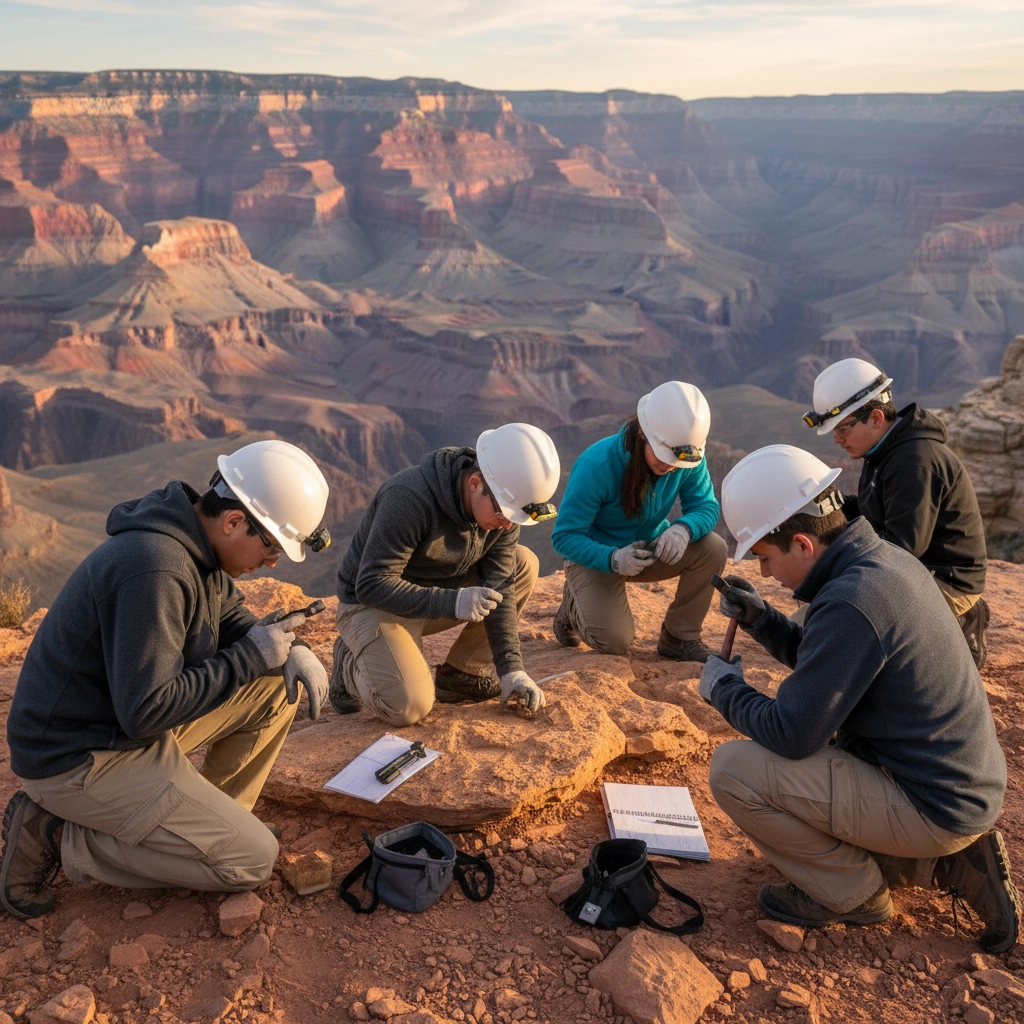
Create opportunities for students to engage with professional-grade scientific equipment in authentic field settings. When students collect rock samples using geological hammers, analyze stratigraphic layers with measuring tools, and document observations in field notebooks, they transition from passive learners to active scientists. This hands-on engagement with professional methodologies builds what geologists describe as "confidence in physical abilities" and teaches students "to trust their scientific mind."
Converting Abstract Concepts Into Tangible Reality
Establish clear connections between theoretical classroom concepts and observable field phenomena. The Grand Canyon serves as a living textbook where students can directly observe millions of years of geological history preserved in rock layers. Concepts such as deep time, stratigraphic relationships, and erosional processes transform from abstract theories into tangible, measurable realities.
Encourage students to formulate hypotheses based on direct observation rather than textbook descriptions. When students examine the Colorado River's cutting action through solid rock, witness different erosional patterns on north-facing versus south-facing slopes, or observe how vegetation patterns change with elevation, they develop scientific reasoning skills that classroom instruction cannot provide.
Emphasize the importance of authentic scientific practice during field experiences. Students should engage in data collection, hypothesis formation, peer review, and presentation of findings using the same methodologies employed by professional geoscientists. This authentic engagement creates fundamental identity shifts where students begin viewing themselves as real scientists rather than merely studying science as an academic subject.
Fostering Extended Scientific Engagement
Recognize that transformative learning extends far beyond structured instruction periods. During Grand Canyon expeditions, scientific discussions naturally continue throughout boat rides, meal periods, and informal conversations. This organic extension of learning indicates genuine intellectual engagement rather than obligatory participation in classroom assignments.
Prepare students to recognize how immersive environments generate intrinsic motivation for scientific inquiry. When surrounded by the subject matter they study, students develop educational momentum that textbooks cannot generate. The authentic context transforms science from an abstract academic requirement into lived experience that shapes personal identity and career aspirations.
Document how students' questions evolve throughout the expedition experience. Initial surface-level inquiries about rock colors or canyon depth typically develop into sophisticated investigations of geomorphic processes, climate change impacts, or conservation strategies. This progression demonstrates the deepening scientific engagement that occurs during immersive field experiences.
Building Environmental Stewardship and Scientific Identity
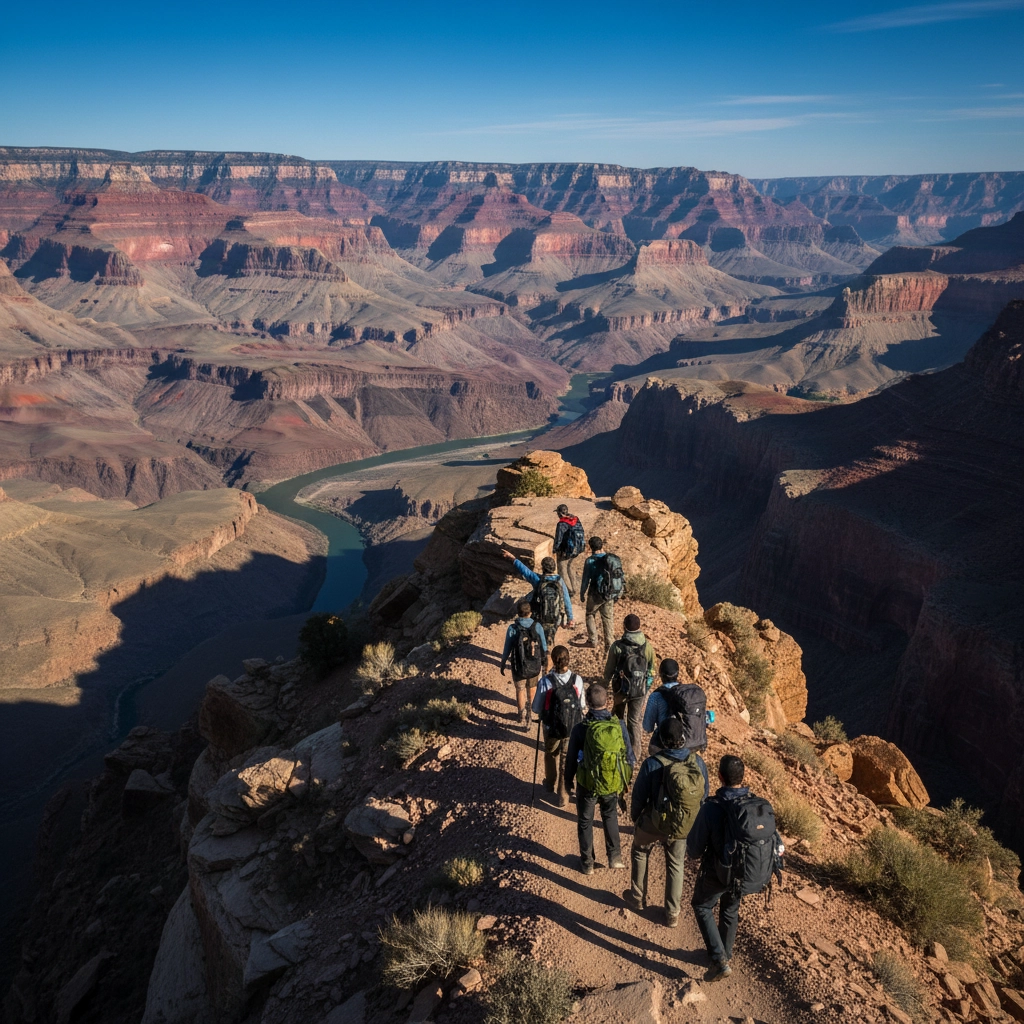
Establish strong connections between scientific understanding and environmental responsibility. Students who witness the Grand Canyon's natural beauty while learning about conservation challenges develop emotional connections to environmental protection that classroom instruction alone cannot achieve. This combination of scientific knowledge and emotional engagement creates lasting commitment to environmental stewardship.
Encourage students to consider scientific careers they may never have previously contemplated. Field experiences expose students to diverse scientific professions including geology, hydrology, ecology, conservation biology, and environmental education. Many students discover professional possibilities that spark lifelong career trajectories toward STEM fields.
Create opportunities for students to present their findings to authentic audiences including park rangers, university researchers, and fellow expedition participants. This professional presentation experience builds confidence in scientific communication while reinforcing their emerging identity as legitimate scientific practitioners.
Maximizing Long-Term Educational Impact
Prepare comprehensive pre-trip preparation that establishes clear learning objectives and scientific frameworks. Students should arrive at the Grand Canyon with foundational knowledge that enables them to recognize and interpret the phenomena they will observe. This preparation ensures maximum educational benefit from the immersive experience.
Develop structured reflection activities that help students process and integrate their field experiences with previously learned concepts. Regular journaling, group discussions, and collaborative analysis sessions enable students to construct meaningful connections between field observations and scientific principles.
Establish follow-up activities that extend learning beyond the expedition timeframe. Students should present their findings to school communities, conduct related research projects, or mentor younger students preparing for similar expeditions. These extension activities reinforce learning while sharing transformative experiences with broader audiences.
Implementing Safety and Risk Management Protocols
Ensure comprehensive safety planning that addresses all potential risks associated with Grand Canyon field experiences. This includes detailed emergency procedures, communication protocols, weather contingency plans, and medical response strategies. Safety preparation demonstrates professional responsibility while enabling maximum educational engagement.
Coordinate with experienced educational travel specialists who understand both scientific learning objectives and wilderness safety requirements. Professional expedition leaders can facilitate authentic scientific experiences while maintaining appropriate safety standards for student groups.
Communicate detailed safety protocols and emergency procedures to all participants including students, parents, and chaperones. Everyone involved must understand their roles and responsibilities in maintaining group safety while maximizing educational opportunities.
Partner With Appleseed Expeditions for Transformative Experiences
Appleseed Expeditions specializes in creating immersive educational experiences that transform how students engage with scientific concepts throughout their academic careers and beyond. Our expert guides combine professional scientific expertise with comprehensive safety protocols, ensuring your students receive maximum educational benefit while maintaining appropriate risk management.
Schedule a consultation to discuss how Appleseed Expeditions can design a Grand Canyon experience tailored to your students' specific learning objectives and grade-level requirements. Our comprehensive approach includes pre-trip preparation, immersive field experiences, and post-expedition follow-up activities that extend learning throughout the academic year.
Contact Appleseed Expeditions today to begin planning the educational experience that will fundamentally change how your students perceive science, approach learning, and envision their future career possibilities. The transformative power of immersive field education awaits your students at one of Earth's most spectacular natural laboratories.
Comments