


Yellowstone vs Grand Canyon school trip

Choosing between Yellowstone National Park and the Grand Canyon for an educational expedition is a significant decision that requires a thorough understanding of curriculum goals, safety protocols, and student capabilities. Both locations offer unparalleled opportunities to witness the majesty of the natural world, yet they serve as distinct outdoor classrooms with unique academic focuses.
Ensuring that your selection aligns with your educational objectives is of paramount importance. While the Grand Canyon provides an exceptional look at geologic time and erosion, Yellowstone serves as a massive, living laboratory for geothermal activity and complex ecosystem interactions. This guide provides a detailed comparison to assist educators in making an informed, safe, and academically rigorous choice for their students.
1. Educational Focus: Geology vs. Ecosystems
The primary distinction between these two parks lies in the scientific disciplines they highlight. Educators must determine whether their curriculum priorities lean toward Earth’s history or the mechanics of a functioning ecosystem.
The Grand Canyon: A Window Into Geologic Time
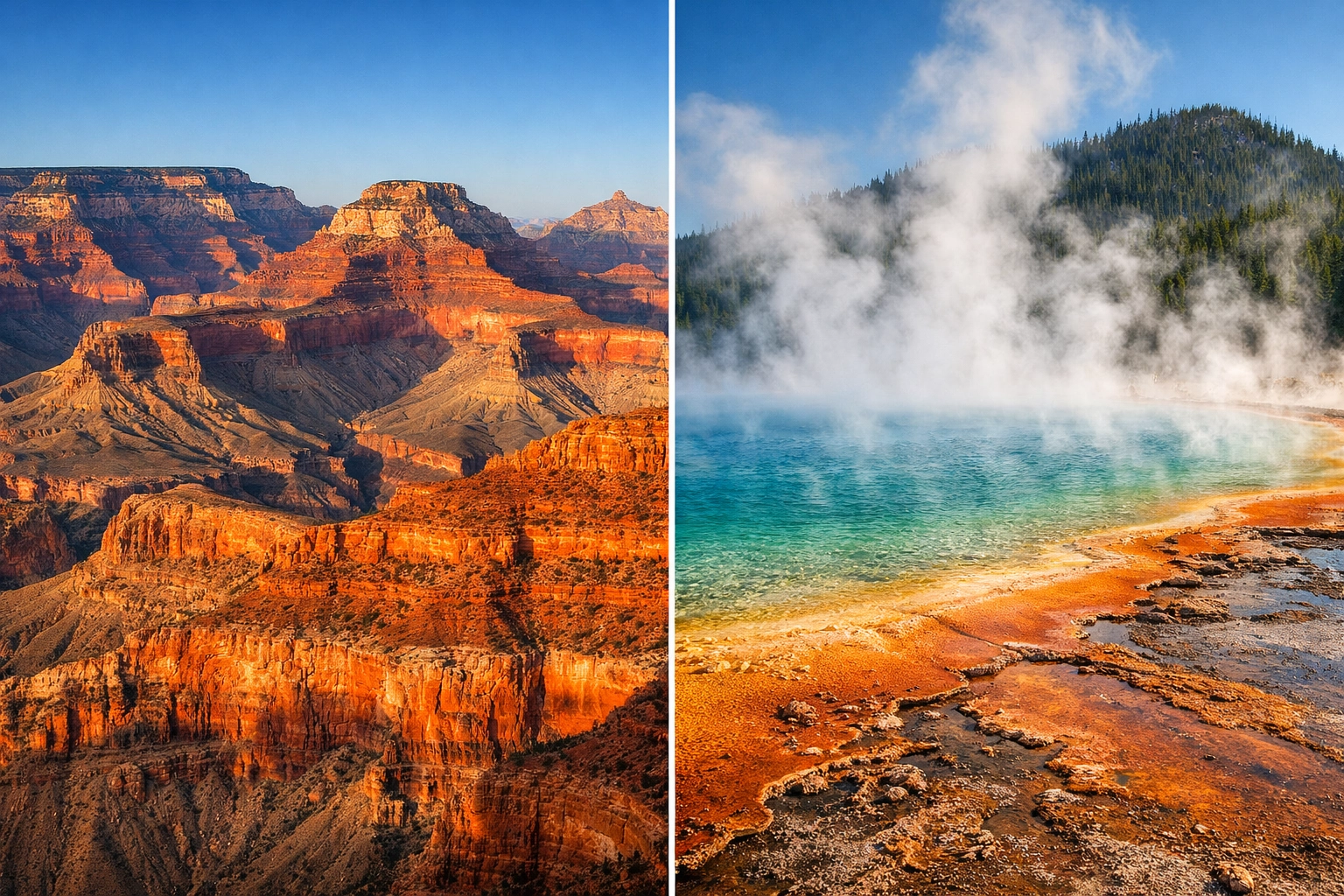
The Grand Canyon is the ultimate classroom for studying geology and earth science. Students can observe nearly two billion years of Earth's history exposed in the canyon walls.
Stratigraphy: Students can visually identify different rock layers (strata), learning how sediment is deposited over millions of years.
Erosion and Weathering: The power of the Colorado River serves as a primary example of how water shapes the landscape.
Paleontology: Many layers contain fossils, allowing students to study ancient marine and terrestrial environments.
Yellowstone: A Living Laboratory of Change
Yellowstone focuses on dynamic, active Earth processes. It is less about the "stillness" of the past and more about the "energy" of the present.
Geothermal Activity: With over 10,000 thermal features, students witness the immediate effects of a "supervolcano" through geysers, mud pots, and fumaroles.
Ecology and Trophic Cascades: Yellowstone is the premier location to study the reintroduction of wolves and how a single species can alter an entire ecosystem.
Microbiology: The colorful thermophiles in the hot springs provide a rare opportunity to study extremophiles and the origins of life.
2. Curriculum Alignment with NGSS
When planning a school trip, it is essential to ensure the destination supports Next Generation Science Standards (NGSS). Both parks offer robust alignment, but in different areas of the Middle and High School standards.
Yellowstone Alignment:
MS-LS2 Ecosystems: Interactions, Energy, and Dynamics: Excellent for studying predator-prey relationships and energy flow in the Greater Yellowstone Ecosystem.
HS-ESS2 Earth’s Systems: Focuses on the role of heat and energy in Earth’s interior through the lens of volcanism and plate tectonics.
HS-LS2-6: Evaluate the claims, evidence, and reasoning that the complex interactions in ecosystems maintain relatively consistent numbers and types of organisms in stable conditions.
Grand Canyon Alignment:
MS-ESS1 Earth’s Place in the Universe: Utilizing rock strata to determine the relative ages of rock layers and the history of Earth.
MS-ESS2-2: Construct an explanation based on evidence for how geoscience processes have changed Earth’s surface at varying time and spatial scales.
HS-ESS1-5: Evaluate evidence of the past and current movements of continental and oceanic petals and the theory of plate tectonics to explain the ages of crustal rocks.
3. Activity Levels and Physical Requirements
The physical demands of each park vary significantly. Educators must assess the fitness levels of their students and chaperones to ensure a safe and productive experience.
Grand Canyon Activity Profile
The Grand Canyon is characterized by extreme verticality.
Rim Walking: The South Rim offers relatively flat, paved trails that are accessible and safe for large groups.
Canyon Hiking: Descending into the canyon is physically taxing. It is crucial to remember that "going down is optional, but coming up is mandatory." Heat exhaustion is a severe risk during the ascent.
Safety Note: Students must be strictly supervised near the rim. Use of designated overlooks with railings is a mandatory safety protocol.
Yellowstone Activity Profile
Yellowstone’s activities are generally more varied and horizontal, making them accessible to a wider range of physical abilities.
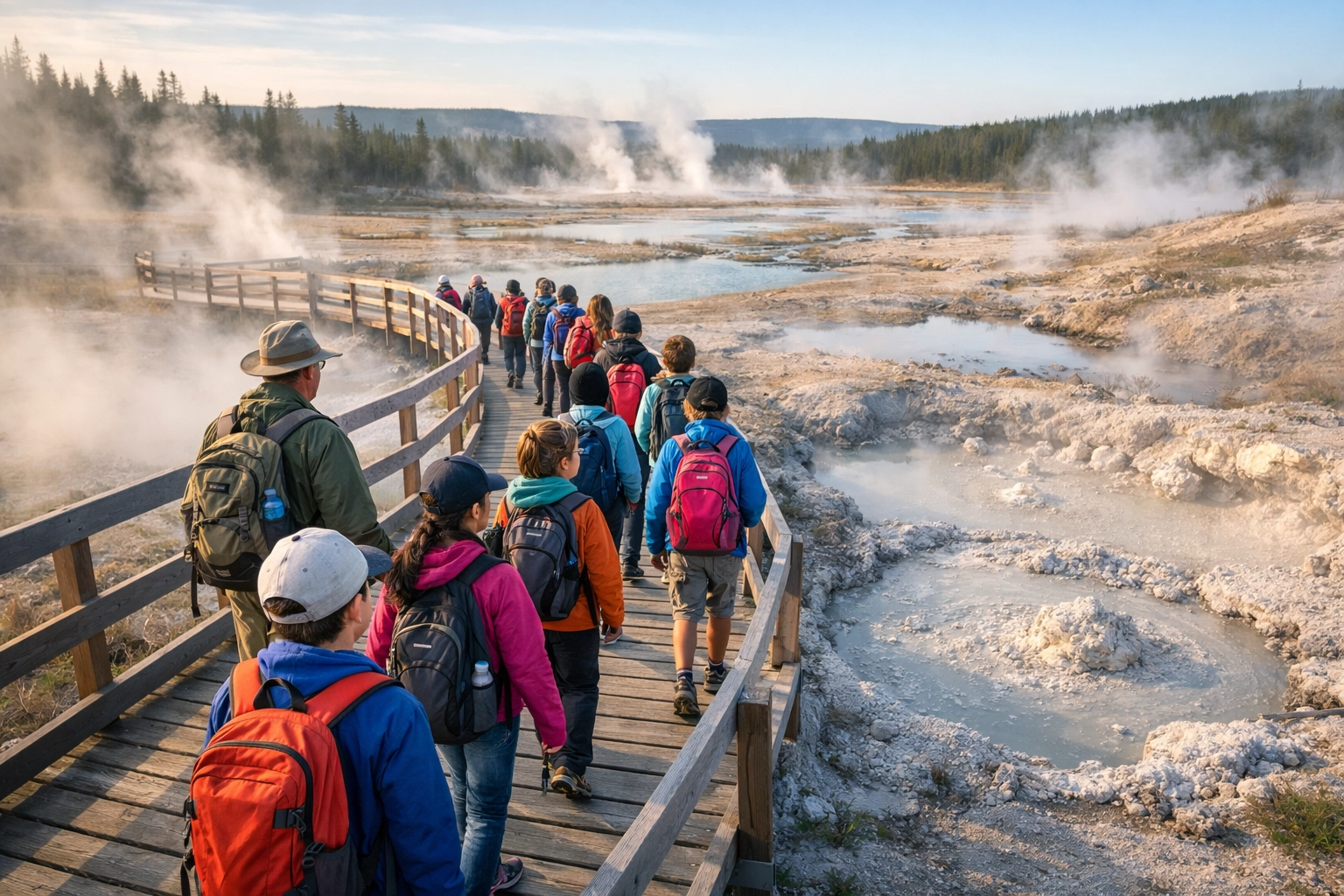
Boardwalk Tours: Most geyser basins are navigated via boardwalks. This provides a controlled environment for groups but requires strict adherence to the rule of "never stepping off the boardwalk" due to thin crust and boiling water.
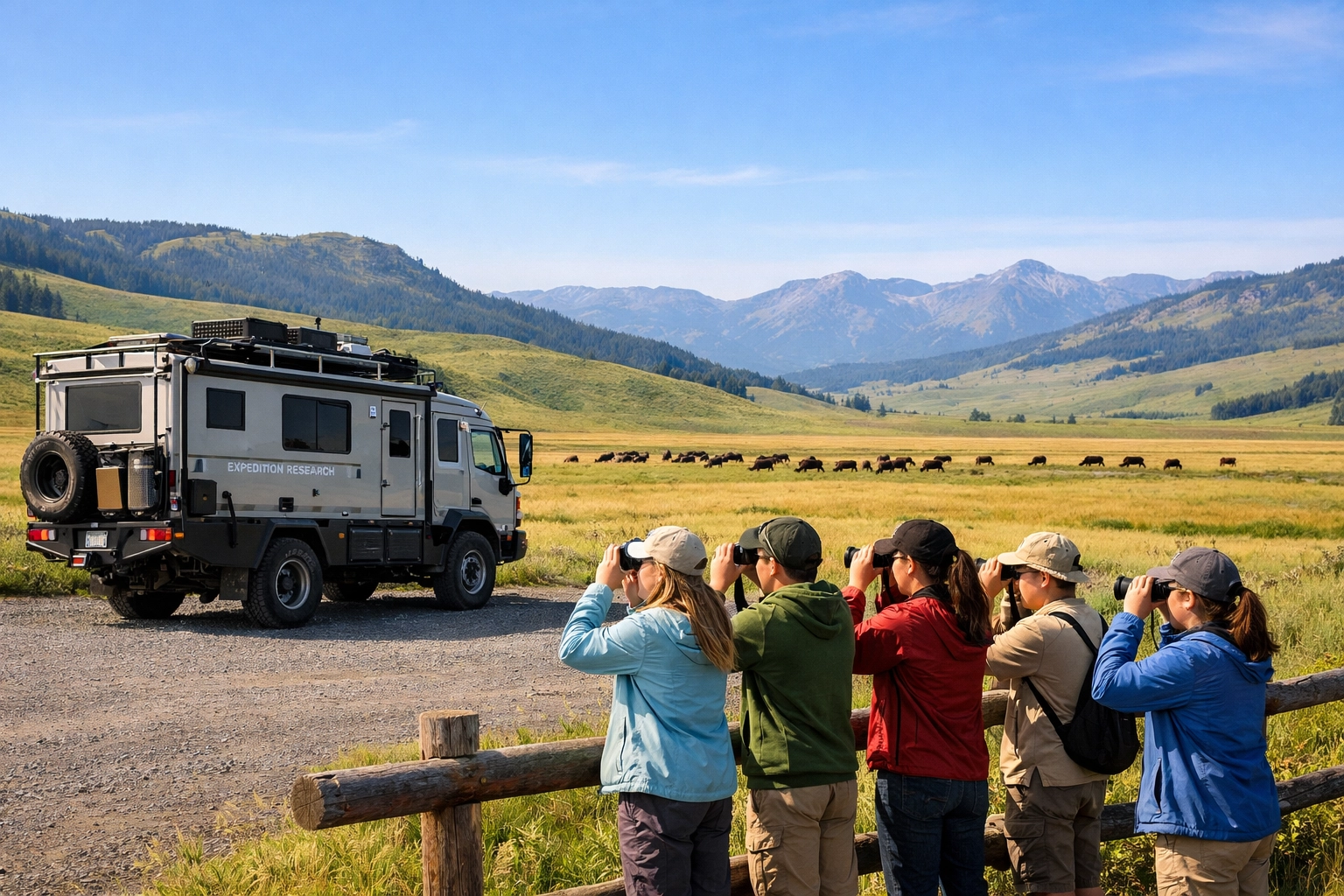
Wildlife Observation: Much of the learning occurs from the bus or roadside pullouts in the Lamar Valley, which allows for frequent breaks and less physical strain.
Diverse Terrain: Opportunities for birding and light hiking through meadows and forests offer a balanced physical experience.
4. Safety and Risk Management
Maintaining a risk-averse mindset is the cornerstone of a successful educational expedition. Both parks present unique hazards that require meticulous preparation.
Wildlife Hazards in Yellowstone
Yellowstone is home to grizzly bears, black bears, wolves, and bison.
Mandatory Distances: Maintain a minimum of 100 yards from bears and wolves, and 25 yards from all other wildlife, including bison and elk.
Bear Spray: Ensure all leads and chaperones are trained in the proper deployment of bear spray.
Supervision: Students must never wander alone; use the "buddy system" at all times.
Environmental Hazards in the Grand Canyon
The primary risks at the Grand Canyon are environmental and atmospheric.
Hydration Protocols: Dehydration and hyponatremia are common. Implement a mandatory "water break" schedule where students are required to drink water even if they do not feel thirsty.
Sun Exposure: The high altitude and lack of shade on many trails necessitate high-SPF sunscreen, wide-brimmed hats, and UV-protective clothing.
Elevation Sickness: Educators should be aware that the South Rim is at approximately 7,000 feet, which may affect students from sea-level regions.
5. Logistical Considerations and Itinerary Planning
Efficient movement of a school group requires a structured and logical approach to logistics.
Yellowstone Logistics
Yellowstone is massive, covering nearly 3,500 square miles. The "Grand Loop Road" is organized into two main loops.
Travel Time: Distances between attractions are significant. Educators should plan for long drives and use that time for educational briefings or reflection.
Crowd Management: Popular sites like Old Faithful require early arrival to secure viewing areas for large groups.
Service Opportunities: Integrating alternative breaks or service-learning into a Yellowstone itinerary can deepen the student's connection to the land.
Grand Canyon Logistics
The Grand Canyon is often part of a larger North American regional tour.
Concentrated Viewing: The South Rim provides multiple world-class viewpoints within a relatively small geographic area, making it efficient for one-day visits.
Gateway Cities: Logistics are often simpler due to the proximity of towns like Tusayan, which offer group-friendly dining and lodging.
6. Seasonal Availability
Weather patterns dictate the "operational window" for school trips.
Yellowstone: The primary season is late May through September. Many roads are closed to wheeled vehicles in the winter, and snow can persist well into June.
Grand Canyon: The South Rim is open year-round. However, summer temperatures can be dangerously high (exceeding 100°F inside the canyon), making spring and fall the optimal times for educational groups.
Summary Comparison Table for Educators
Feature | Yellowstone | Grand Canyon |
Primary Science | Biology, Ecology, Volcanology | Geology, Paleontology, Hydrology |
Wildlife Presence | High (Bears, Wolves, Bison) | Moderate (Elk, Condors, Mules) |
Physical Intensity | Low to Moderate | Moderate to High |
Accessibility | High (Boardwalks) | High (Rim) / Low (Canyon Floor) |
Risk Focus | Wildlife and Thermal Safety | Heat, Hydration, and Elevation |
Best For | Multi-day immersive science | Geologic study or regional tour |
Conclusion: Preparing for the Expedition
Whether you choose the steaming thermal basins of Yellowstone or the ancient depths of the Grand Canyon, preparation is the key to a transformative experience. Begin by researching your specific state standards and identifying which park provides the most direct evidence for those concepts. Create an itinerary that balances academic rigor with physical safety, and always have a contingency plan for weather or road closures.
Emphasize the importance of respect for the natural environment to your students. By modeling vigilant and responsible behavior, you ensure that the next generation of scientists and citizens understands the value of these protected spaces.
Experience the Science of the West Firsthand Preparing your students for a career in the sciences involves more than just classroom study; it requires field experience. Appleseed Expeditions specializes in creating custom Yellowstone science trips that bridge the gap between textbooks and the real world. From tracking wolves to analyzing hydrothermal chemistry, we provide the expert guides and safety protocols necessary for a premier educational journey.
Ensure that your next school trip is as safe as it is inspiring. Share a detailed itinerary with parents, discuss emergency procedures with your students, and get ready to explore the wonders of our National Parks.

Comments