


Q&A: Stargazing and Astronomy in Yellowstone
- Caleb Mullenix
- Apr 3
- 5 min read

Establishing a profound connection between students and the natural world requires looking beyond the terrestrial landscape. While Yellowstone National Park is globally renowned for its geothermal features and megafauna, its nocturnal environment offers an equally critical classroom for scientific inquiry. Integrating astronomy into a Yellowstone Science Program for Schools provides a rare opportunity for students to experience a "Class 1" or "Class 2" Bortle scale sky: levels of darkness that are increasingly disappearing across the globe.
Preparing for a celestial expedition requires meticulous planning, a focus on safety, and a structured curriculum. This Q&A guide serves as a foundational resource for educators looking to elevate their high school science field trips by exploring the physics, history, and wonder of the Yellowstone night sky.
Why is Yellowstone considered a premier destination for student astronomy?
Yellowstone is uniquely positioned as a premier astronomical classroom due to its vast geography and isolation from urban development. Most students living in metropolitan or suburban areas are accustomed to "sky glow," where light pollution obscures all but the brightest stars. In the heart of Yellowstone, light pollution is virtually non-existent.
Key Educational Benefits:
Atmospheric Clarity: The high elevation and low humidity of the park result in less atmospheric interference, providing sharper views of celestial bodies.
Full Spectrum Visibility: Students can observe the Milky Way in high definition, seeing the Great Rift and various nebulae with the naked eye.
Scientific Context: Studying the stars in a pristine environment allows students to discuss the biological importance of "darkness" for nocturnal ecosystems and the environmental impact of light pollution.
What are the best locations for group stargazing within the park?
Selecting a site for a large student group requires balancing optimal darkness with accessibility and safety. Educators should prioritize locations with wide horizons and stable footing.
Lamar Valley: Often referred to as the "Serengeti of North America," this wide-open valley offers a 360-degree view of the horizon. It is an exceptional site for viewing the Milky Way and tracking satellite movements.
Mount Washburn / Dunraven Pass: At an elevation of nearly 8,900 feet, this is the highest road point in the park. The thin atmosphere here provides unparalleled clarity, though educators must account for significantly lower temperatures and wind.
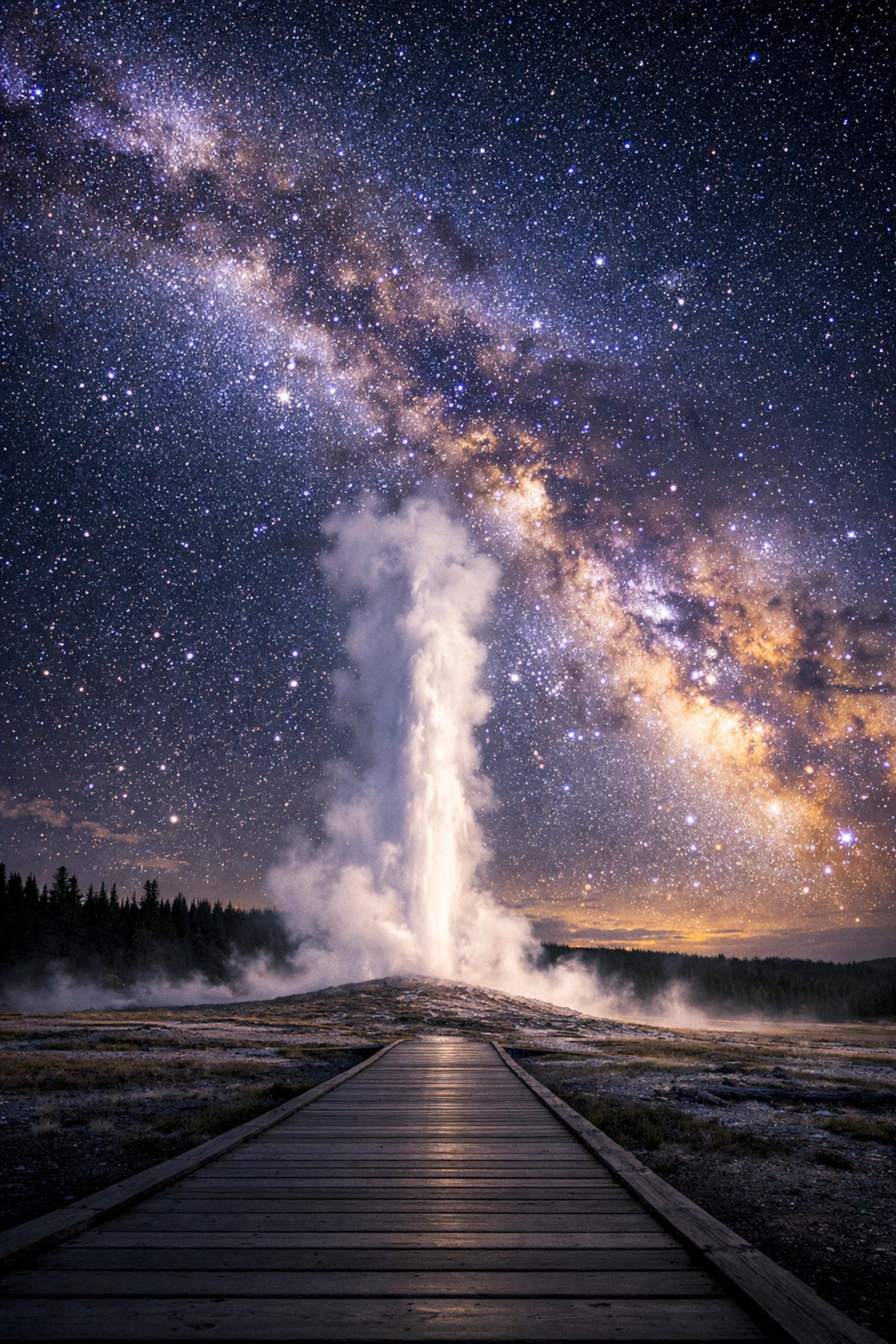
Upper Geyser Basin (Old Faithful): For a multi-disciplinary approach, observing the stars while waiting for a geyser eruption combines geology with astronomy. The boardwalks provide a stable surface for telescope setups, though students must be instructed to stay on the paths at all times.
Mammoth Hot Springs: The white travertine terraces provide a surreal foreground for astrophotography, making it a favorite for students interested in the intersection of art and science.
How does astronomy fit into a high school science field trip curriculum?
Astronomy should not be a passive activity; it should be integrated as a rigorous component of the Yellowstone Science Program for Schools. Educators can utilize the night sky to address several Next Generation Science Standards (NGSS).
Earth’s Place in the Universe: Use the movement of the stars to explain Earth’s rotation, axial tilt, and orbital path.
Physics of Light: Discuss the electromagnetic spectrum by observing the different colors of stars (indicating temperature) and using filters on telescopes.
Data Collection: Students can participate in "citizen science" by recording the number of stars visible in a specific constellation to help monitor light pollution levels over time.
For programs that explore diverse ecosystems, such as our Amazon rainforest student expeditions, comparing the Southern Hemisphere constellations to those seen in Yellowstone provides an excellent lesson in global perspective and celestial navigation.
When is the optimal time for student stargazing?
Timing is the most critical variable in planning an astronomy session. To maximize the experience, educators must coordinate with lunar cycles.
The New Moon Phase: Always schedule primary stargazing sessions during or near a New Moon. The absence of moonlight allows the faintest stars and the Milky Way to become visible.
Seasonal Visibility: The core of the Milky Way is best seen from April through October.
Meteor Showers: The Perseids in mid-August offer a high-volume "shooting star" experience that is highly engaging for students, though this often falls outside the traditional school year.
Early Spring/Late Fall: These shoulder seasons offer longer nights and crisper air, though they require more intensive cold-weather preparation.
What safety protocols are necessary for night-time field work?
Safety is of paramount importance when operating in a wilderness area after dark. Yellowstone is an active wildlife corridor, and visibility is limited.
Mandatory Safety Procedures:
The "Sweep" Method: Before the group exits the vehicle, instructors must use high-powered flashlights to sweep the surrounding area for "eye-shine" (reflectivity from animal eyes).
Noise Discipline: While keeping noise low for the experience, students should be instructed to stay in a tight group and occasionally make their presence known to avoid startling wildlife, particularly bears or bison.
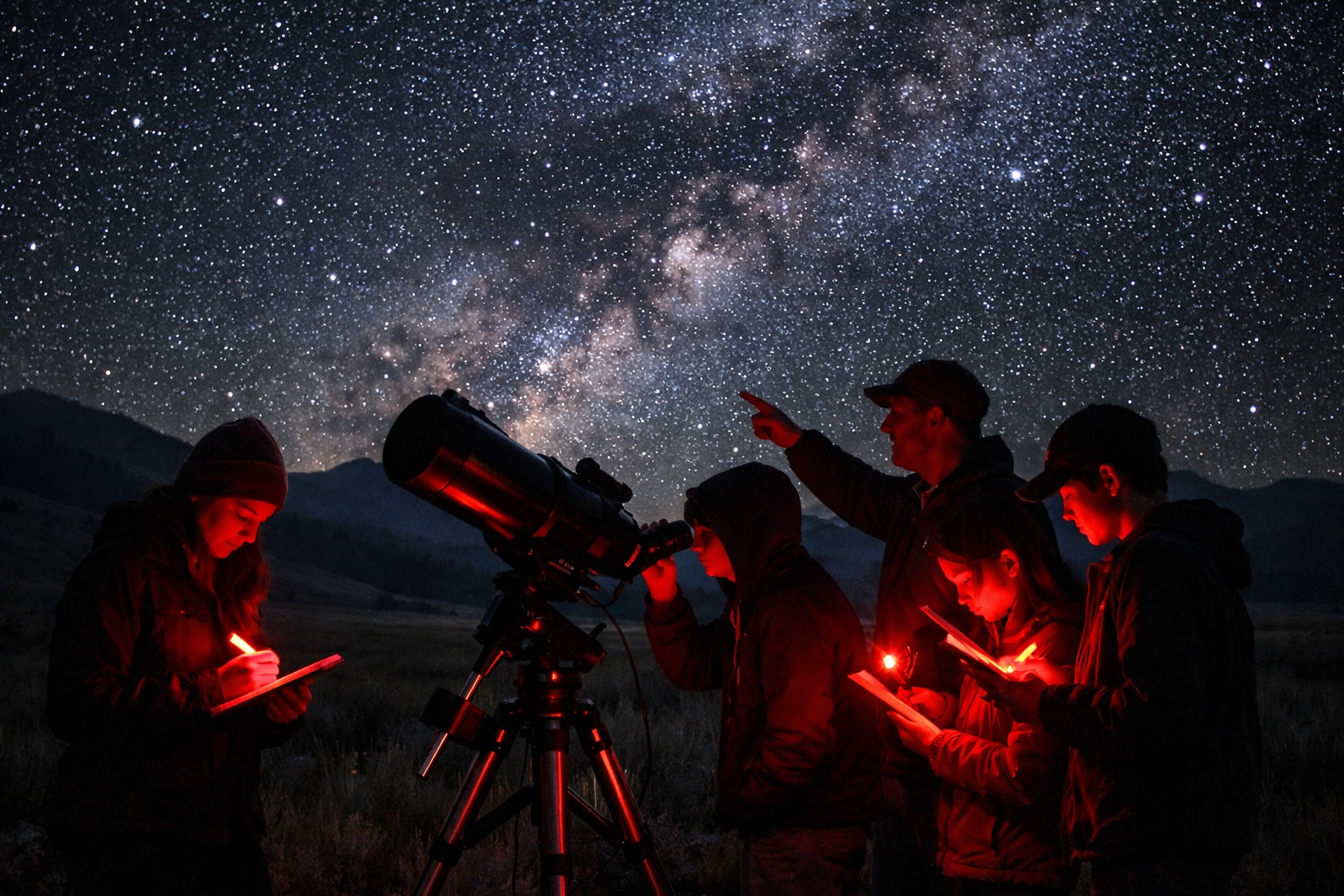
Red-Light Only: To preserve night vision (which takes approximately 20-30 minutes to fully develop), only red-light flashlights should be permitted during the observation period. White light should only be used in emergencies.
Boardwalk Adherence: In geothermal areas, students must never step off the boardwalks. The darkness hides unstable ground and boiling water.
What equipment is required for a successful astronomy session?
While the naked eye is sufficient for many observations, professional equipment enhances the educational value of high school science field trips.
Telescopes: A 6-inch or 8-inch Dobsonian telescope is portable yet powerful enough to view Saturn’s rings, Jupiter’s moons, and deep-space objects like the Andromeda Galaxy.
Binoculars: Providing several pairs of 7x50 or 10x50 binoculars allows students to scan the Milky Way and observe star clusters simultaneously.
Star Charts and Apps: Digital tools like SkySafari or Star Walk are helpful, but physical star wheels (planispheres) are excellent for teaching students how to navigate the sky manually.
Environmental Protection: High-quality layers, including thermal underwear, gloves, and hats, are mandatory. Temperatures in Yellowstone can drop below freezing even in the summer months.
How can students contribute to conservation through astronomy?
Astronomy in Yellowstone isn't just about looking up; it’s about understanding the environment we are protecting. Students can engage in service-learning by documenting light levels or advocating for "Dark Sky" designations.
Similar to how students work on restoring rainforests in Costa Rica or mangrove conservation in the Florida Keys, protecting the "nightscape" is a vital part of modern conservation. Educators should emphasize that darkness is a natural resource that requires active management and protection.
Experience the Wonders of Yellowstone with Appleseed Expeditions
At Appleseed Expeditions, we specialize in transforming standard trips into immersive scientific journeys. Our Yellowstone Science Program for Schools is designed to meet the rigorous demands of educators while providing students with life-changing experiences under the stars. We handle the complex logistics: from site selection and safety protocols to providing expert-led instruction: ensuring that your focus remains on the students.
Whether you are comparing the geology of the north to the Grand Canyon geology student programs or seeking a standalone astronomy intensive, our team is ready to coordinate your next expedition.
Conclusion: Reaffirming the Educational Objective
The goal of integrating astronomy into a student expedition is to foster a sense of stewardship and curiosity. By removing the veil of light pollution, we allow students to confront the scale of the universe and their role within it.
Ensuring the safety and preparation of your students during these night sessions is the cornerstone of a successful trip. Through careful site selection, adherence to safety protocols, and the use of proper equipment, you can provide an educational experience that resonates long after the students return to the classroom. Preparing your students for the vastness of the Yellowstone sky involves more than just a telescope; it involves a commitment to rigorous scientific inquiry and a deep respect for the natural world.
Comments